
Wondering how to clean an air fryer without damaging the coating?
The safest way is warm water with a small amount of plant-based dish soap and a soft brush for the removable parts, plus a damp microfiber cloth for the interior.
Match the method to how greasy the appliance actually is, from a two-minute wipe after roasted vegetables to a longer soak for baked-on chicken wings.
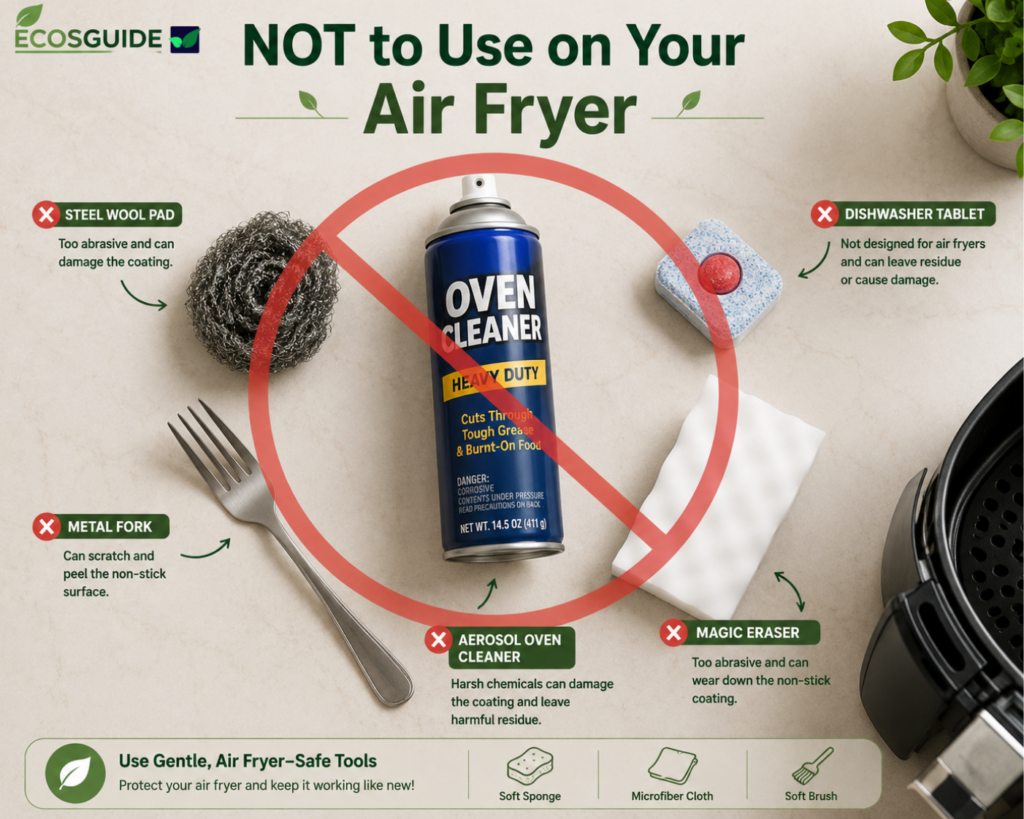
Skip metal utensils, steel wool, aerosol oven cleaner, and dishwasher tablets. All of those either damage the non-stick coating or send harsh chemistry down the drain.
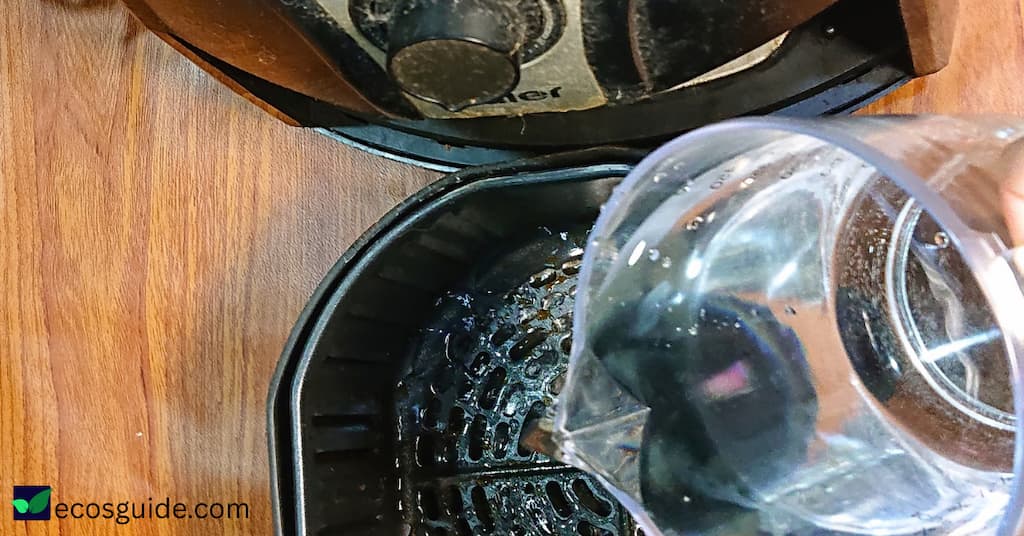
When I clean an air fryer, I think less about the appliance and more about what’s leaving with the rinse water.
Aerosol propellants, synthetic fragrance, detergent surfactants, all of that goes somewhere once it leaves the sink.
That’s what shaped the method I’m about to walk you through. It’s what I actually do in my own kitchen, and it changes depending on how greasy things have got.
Key Takeaways
- Match the method to the mess: a two-minute wipe for light use, a 15-minute soak for baked-on residue, and a baking soda paste with oil pre-treatment for polymerized grease.
- Never use metal utensils, steel wool, Magic Erasers, aerosol oven cleaners, or dishwasher tablets. All of them damage the non-stick coating.
- Skip aerosol cooking spray. Its soy lecithin and propellants bake into a sticky film that ruins the coating faster than almost any other single cause.
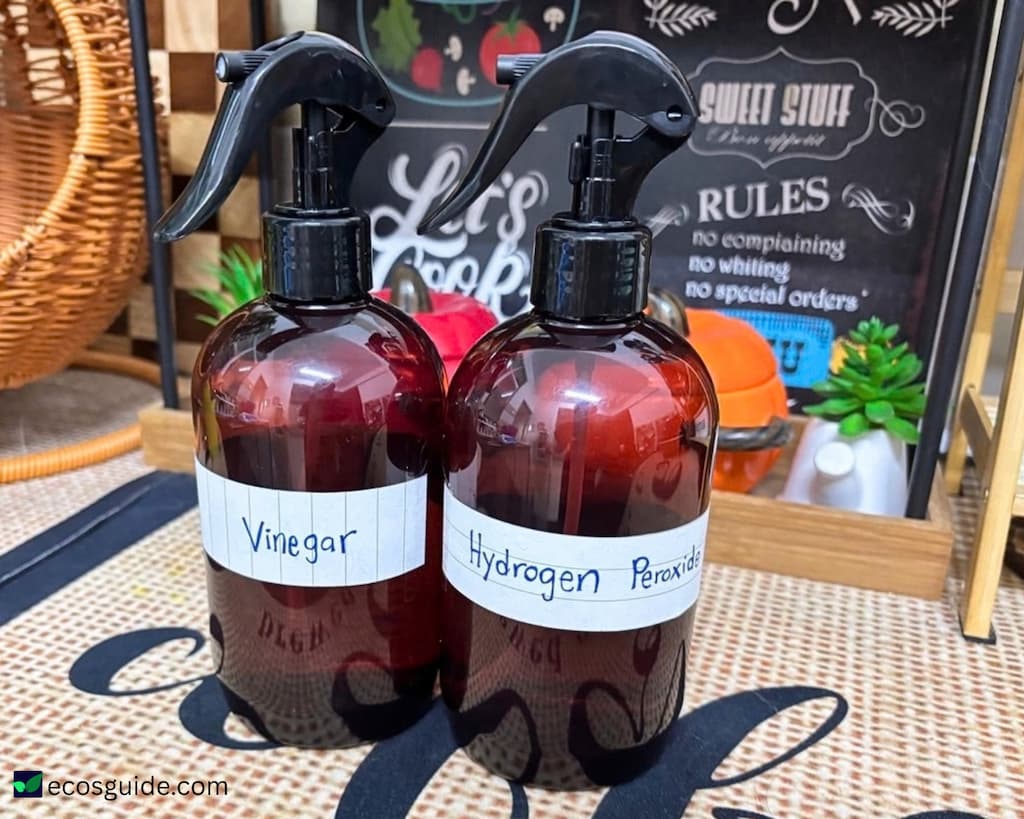
- For a low-toxicity deodorizing finish, spray white vinegar then 3% hydrogen peroxide from separate bottles, one after the other, never mixed.
Prefer to Watch? Here’s My Overall Method
This short video shows my usual air fryer cleaning routine from start to finish.
It’s the general approach, not a tier-by-tier walkthrough, so head to the steps below if your air fryer needs a specific level of clean.

What Not to Use When Cleaning Your Air Fryer
Some cleaning tools shorten an air fryer’s life every time you reach for them.
Metal utensils, steel wool, and hard-bristled brushes physically scratch the non-stick coating.
Magic Erasers are micro-abrasive, so they wear the coating down a little more with each pass, and a well-maintained microfiber cloth does the same lift-and-wipe job without the damage.
Aerosol oven cleaners are caustic enough to eat into the coating outright, and the propellants they use are exactly the chemistry most eco-conscious readers are trying to keep out of their kitchens.
Dishwasher tablets soaked in the basket sound clever, but the chemistry they contain degrades the coating and leaves residue behind (more on that in the myths section below). And cooking spray, going forward, causes more baked-on buildup than almost anything else you can put in the appliance.
Metal utensils, steel wool, Magic Erasers, aerosol oven cleaners, and dishwasher tablets should not be used on an air fryer.
Each one damages the non-stick coating, shortens the appliance’s life, and sends unnecessary chemistry down the drain.
| Avoid | Why | Use Instead |
| Metal utensils, steel wool, hard-bristled brushes | Physically scratch the non-stick coating | Bamboo or sisal brush, silicone tools |
| Magic Eraser | Micro-abrasive; wears the coating down with each use | Damp microfiber cloth |
| Aerosol oven cleaner | Caustic chemistry eats into the coating; propellants are exactly what eco readers avoid | Plant-based dish soap plus a baking soda paste |
| Dishwasher tablet soaked in the basket | Abrasive pod chemistry erodes the coating and leaves residue | 15-minute soak with warm water and dish soap |
| Aerosol cooking spray | Lecithin and propellants bake into a sticky film that ruins the coating | Refillable glass oil mister, silicone brush, or silicone liners |
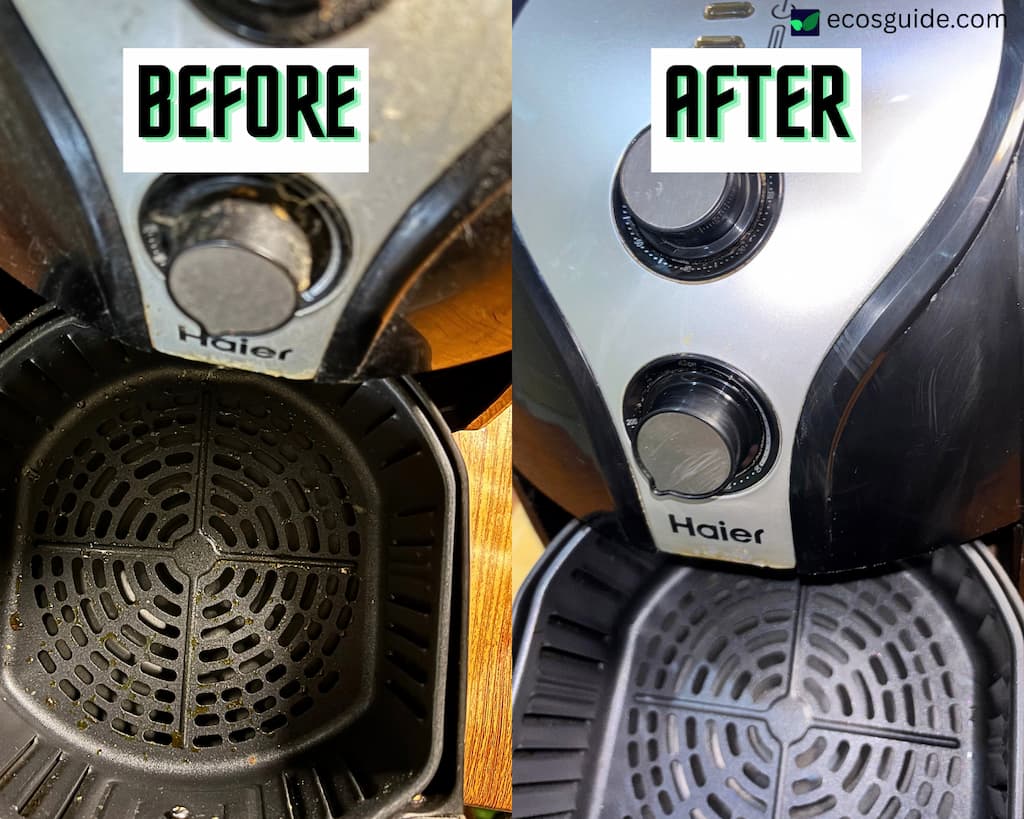
How to Clean an Air Fryer, Level by Level
Grease in an air fryer doesn’t behave like grease in a pan. At the temperatures most air fryers hit (usually 180 to 200°C, or 350 to 400°F), oils oxidize and harden into a sticky brown film called polymerized grease.
Once it’s baked on, soap and water alone often won’t shift it. Tom’s Guide has a clear breakdown of the chemistry if you want to go deeper.
That’s why the method has to match the mess: a two-minute wipe is enough after roasted vegetables, but yesterday’s chicken wings need a soak, and a neglected brown patch needs a completely different approach.
Polymerized grease is the sticky brown film that forms when cooking oils oxidize and harden at air fryer temperatures. It bonds to the non-stick surface and won’t fully lift with dish soap and water alone, which is why heavier residue needs a longer soak or a baking soda paste dwell.
| Tier | Best for | Method | Time |
| Light | Roasted vegetables, bread, reheated leftovers, anything low-fat | Warm water, plant-based dish soap, soft microfiber cloth | ~2 min |
| Medium | Bacon, chicken wings, breaded foods, anything greasy | 15-minute soak, bamboo or sisal brush, baking soda paste on stubborn spots | ~20 min |
| Heavy | Polymerized brown patches after weeks of no cleaning | Oil pre-treatment, 20-minute soak, baking soda paste dwell, optional vinegar and hydrogen peroxide finish | ~45+ min |
Light Tier: The After-Batch Wipe-Down
For anything low-fat (roasted vegetables, bread, reheated leftovers), a two-minute clean is all you need.
- Unplug the air fryer and let it cool for about ten minutes.
- Remove the basket and tray, and shake loose crumbs into the trash.
- Wash with warm water and a small drop of a plant-based dish soap, using a soft microfiber cloth.
- Wipe the interior with a damp microfiber cloth. Never spray water directly into the appliance.
- Air-dry everything for 15 minutes before reassembling.
That’s genuinely all it takes if you get to it before the residue has time to bake on.
Medium Tier: How to Clean a Greasy Air Fryer with Baked-On Residue
For how to clean a greasy air fryer with baked-on residue from bacon, chicken wings, or anything breaded, add a soak step.
- Unplug the appliance and let it cool fully.
- Fill the basket and tray with warm water and a squirt of plant-based dish soap. Let them soak for 15 minutes.
- Work the mesh, corners, and crossbars with a bamboo or sisal dish brush. Soft plant bristles get into the grid without scratching the coating.
- For any spots the soak didn’t lift, apply a small amount of baking soda paste (baking soda mixed with a little water, no vinegar) and let it dwell for 10 minutes before wiping off.
- Rinse thoroughly, dry with a clean cloth, and let everything air-dry before reassembling.
Heavy Tier: How to Deep Clean an Air Fryer with Polymerized Grease
For how to deep clean an air fryer with polymerized grease, the brown patches you get after months of no cleaning, you need to soften the residue chemically before you scrub. This is what to do when you’ve been ignoring it.
- Unplug the appliance and let it cool.
- Rub a small amount of neutral cooking oil (canola, sunflower, or avocado) onto the brown patches using a paper towel. The chemistry principle is “like dissolves like”: fresh oil helps loosen polymerized oil. Leave it for 5 minutes.
- Wipe away the softened residue. It should come off much more easily than before.
- Fill the basket and tray with warm water and dish soap, and soak for 20 minutes.
- Apply a baking soda paste to any remaining spots and let it dwell for 10 minutes. This is the same baking soda paste approach that works on burnt pans.
- Scrub gently with a bamboo brush.
- Rinse thoroughly, dry, and reassemble.
- For lingering odors after a heavy clean, finish with the sequential vinegar and hydrogen peroxide method in the next section.
The Eco Deodorizing Finish: Sequential Vinegar and Hydrogen Peroxide
Once the basket and interior are clean, you can finish with a low-toxicity disinfecting step. This is especially useful after cooking raw poultry or when the appliance smells even after washing.
The method comes from work by Dr. Susan Sumner at Virginia Tech in the mid-1990s. She found that when white vinegar and 3% hydrogen peroxide are applied one after the other (not mixed), they kill more bacteria together than either does alone, and more than most conventional kitchen disinfectants.
The one rule is that they must stay in separate spray bottles.
The Susan Sumner sequential method uses white vinegar and 3% hydrogen peroxide applied one after the other from separate bottles, never mixed, as an effective, low-toxicity way to deodorize and lightly disinfect an air fryer after cleaning.
How to do it:
- Lightly spray the cooled, clean, unplugged air fryer with white vinegar. Wipe with a microfiber cloth.
- Lightly spray with 3% hydrogen peroxide from a separate bottle. Wipe with a clean microfiber cloth.
- Let it air-dry completely.
| Warning: Do not mix vinegar and hydrogen peroxide in the same bottle. Mixed, they form peracetic acid, which can irritate skin and lungs. Sequential means one, wipe, then the other. |
Used correctly, this is a lower-toxicity way to disinfect kitchen appliances than reaching for synthetic disinfectant sprays.
How to Clean the Inside Top of an Air Fryer (the Heating Element)
If your air fryer smells bad or starts smoking, the heating element is probably dirty.
This is the part most people neglect, and grease building up on the coil is exactly what causes odors, smoke, and eventually flavor transfer into whatever you’re cooking next.
To clean the inside top of an air fryer safely, unplug the appliance and let it cool, tilt or invert it to reach the heating element, wipe with a damp microfiber cloth, apply diluted vinegar for light grease, and use a baking soda paste with a soft-bristled brush for stubborn patches.
Never spray liquid directly into the appliance or use abrasive tools.
- Unplug the air fryer and let it cool completely.
- Remove the basket and any trays.
- Tilt the air fryer or turn it upside down over a towel or the sink so you can see and reach the heating element on the inside top surface where the heating coil sits.
- Wipe the heating element with a damp microfiber cloth to lift loose residue.
- For baked-on grease patches, dampen a soft cloth with white vinegar and gently wipe the affected areas. Vinegar’s acetic acid cuts light grease without damaging the coating around the element.
- For stubborn spots, apply a small amount of baking soda paste (baking soda and water only, no vinegar) with an old soft-bristled toothbrush. Let it dwell for 5 to 10 minutes.
- Wipe clean with a fresh damp cloth. Rinse the cloth in clean water and wipe again to remove all baking soda residue.
- Let the interior air-dry completely, usually 20 to 30 minutes, before flipping the unit upright and reassembling.
| Warning: Never spray water or any liquid directly into the appliance. Always apply cleaner to the cloth or brush first. |
Myths and Viral Hacks: Why We Don’t Recommend Them
Air fryer cleaning is one of the most viral topics on TikTok, which means a lot of what’s trending will damage your appliance.
Here are the three biggest hacks I keep seeing, and why to skip them.
Does baking soda and vinegar clean an air fryer?
No, not when they’re mixed together. The fizzing reaction is a real chemistry lesson: baking soda (a base) and vinegar (an acid) neutralize each other into carbon dioxide gas and salt water, which is why the fizz feels dramatic and the cleaning power is disappointing afterward.
The Kitchn’s test of five air fryer cleaning methods scored a Dawn plus baking soda plus vinegar combination highly, but noted the cleaning was almost entirely the Dawn.
Baking soda and vinegar mixed together do not clean an air fryer effectively. They neutralize each other into carbon dioxide and salt water, leaving little cleaning power behind.
They work best used sequentially: a baking soda paste for scrubbing, and a separate vinegar wipe for light grease.
Should you soak an air fryer basket with a dishwasher tablet?
No. Chowhound has a clear write-up on this: dishwasher tablets contain abrasive chemistry designed for a hot, agitated dishwasher cycle, not a cold basket soak, and that chemistry erodes the non-stick coating.
The Kitchn tested it and reported the basket came out with pod residue caked on, actually dirtier than before. The trade-off is coating damage for no real cleaning gain.
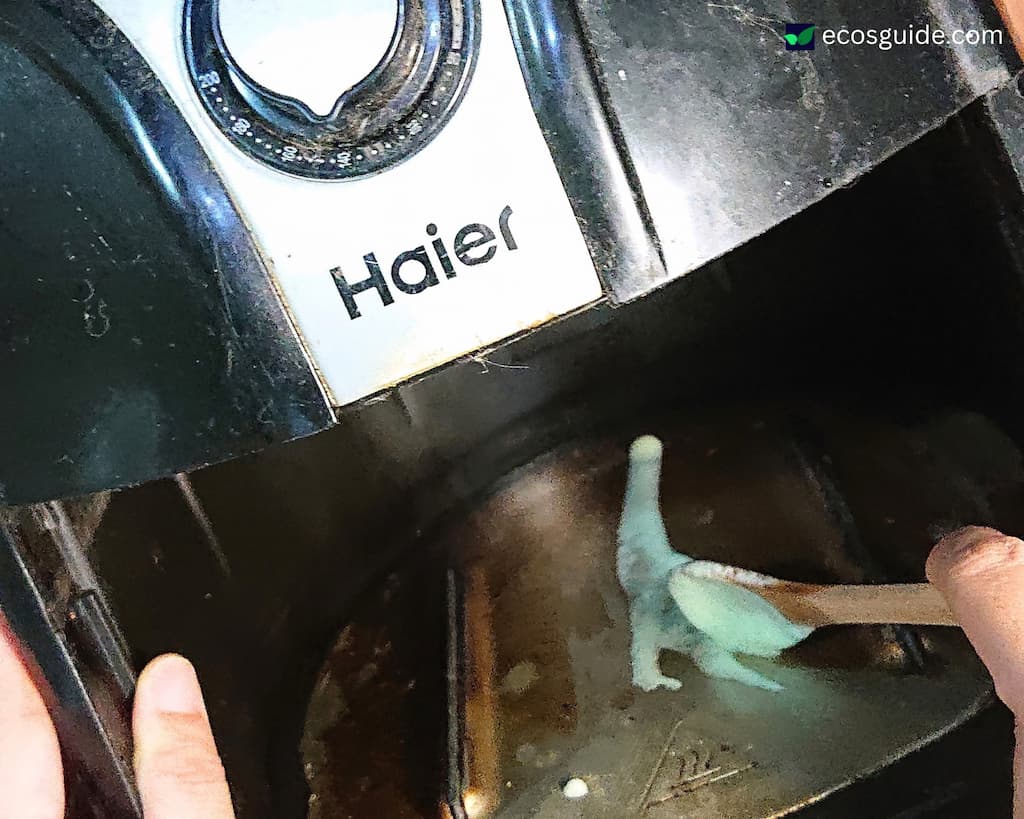
Should you run the air fryer with soapy water inside?
No. Good Housekeeping’s appliance lab measured the water in this viral TikTok hack reaching only 72°F after three minutes, and 130°F after ten minutes. Neither is hot enough to soften real grease.
It’s also genuinely dangerous: carrying a bowl of hot soapy water from the appliance to the sink risks scalding, some baskets can fall out when tipped, and running the heating element in contact with pooled water can damage the appliance itself.
How to Keep Your Air Fryer Cleaner in the First Place
The single biggest cause of hard-to-clean air fryer buildup isn’t the food. It’s aerosol cooking spray.
If you check the can, you’ll see soy lecithin as an emulsifier, dimethyl silicone as an anti-foaming agent, and a propellant (usually butane or propane) to push it out.
Under air fryer heat, that combination bakes into a nearly unremovable sticky film and destroys the non-stick coating faster than almost any other single cause.
Food Republic’s breakdown of what’s actually in the can is worth reading if you want the ingredient-by-ingredient picture.
Aerosol cooking sprays should be avoided in air fryers because their soy lecithin and propellant ingredients bake into a sticky film that damages the non-stick coating.
A refillable oil mister, a silicone brush, or reusable silicone liners are safer alternatives.
Better eco-alternatives:
- A refillable glass oil mister you fill with your own oil (no propellants, no additives).
- A silicone pastry brush for direct application when you want more control.
- Oiling the food, not the basket.
- Reusable silicone or parchment liners for anything sticky or breaded.
Less baked-on residue means less aggressive cleaning, which means less chemistry down the drain and a longer-living appliance.
Where the Rinse Water Goes
It’s easy to forget that everything we rinse off an air fryer basket has to go somewhere. Surfactants, fragrance, aerosol propellants: they leave the sink and end up somewhere further downstream.
That’s why the eco version of this method isn’t about avoiding chemistry entirely. It’s about not adding more than the job actually needs.
A soft brush and a plant-based soap are almost always enough. The rest is knowing when to soak, when to reach for baking soda, and when to leave the appliance alone until next time.
The Eco Cleaning Tools I Use for My Own Air Fryer
If you’re building your air fryer cleaning kit from scratch, four things do most of the work.
The criteria I care about are plant-based ingredients where relevant, minimal or recyclable packaging, no synthetic fragrance, and no materials that shed microplastic into the appliance (which rules out cheap synthetic bristles).
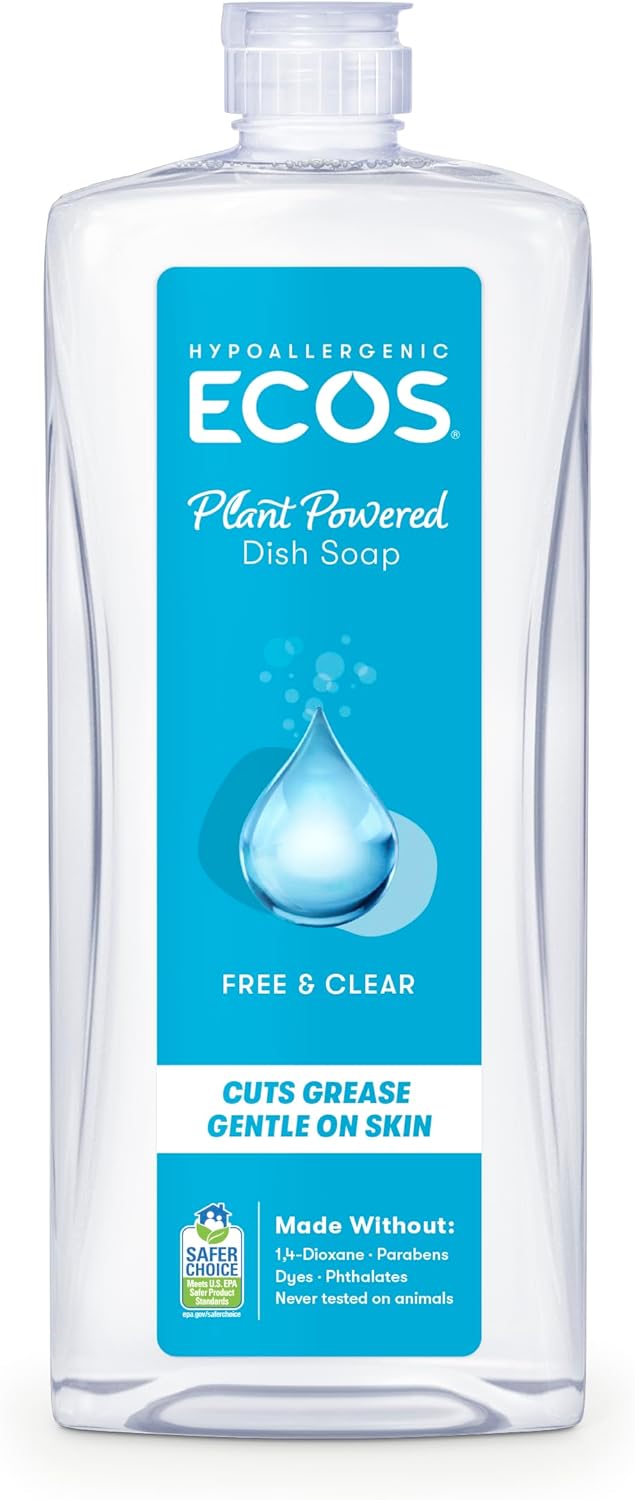
For the light and medium cleaning tiers, ECOS Dish Soap is my default.
It’s U.S. EPA Safer Choice certified, uses coconut-derived surfactants (not petroleum), and is fully biodegradable. Made in a carbon-neutral, TRUE Platinum Zero Waste factory.
A quarter-sized amount on a damp cloth cuts air fryer grease without leaving synthetic residue you’d taste next time. I use the Free and Clear version.
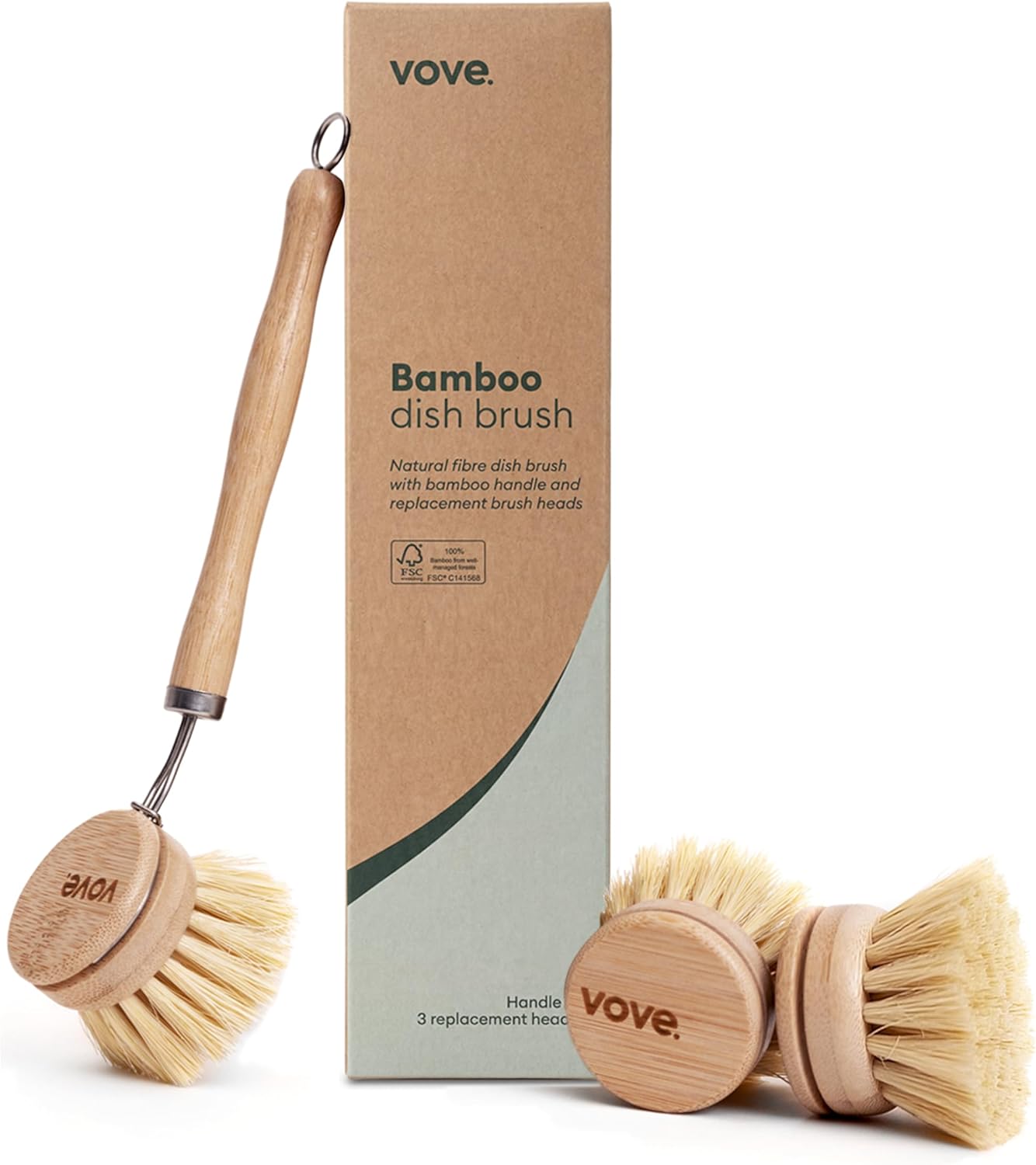
The Vove Bamboo Dish Brush uses an FSC-certified bamboo handle and natural sisal-fiber bristles that are biodegradable and compostable.
The replaceable heads mean the handle outlasts several brushes. A rare kitchen tool that generates less waste the longer you own it. Stiff enough for basket mesh and crossbars, soft enough not to scratch the coating.
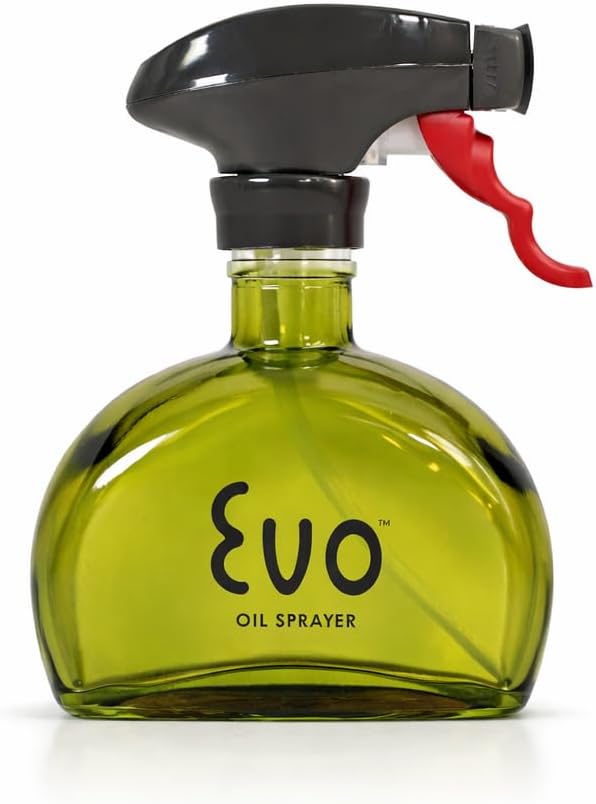
The Evo Glass Oil Sprayer replaces aerosol cans entirely. Fill the glass bottle with your own oil (avocado or a high-smoke-point olive oil for me), pump the top, and get a fine mist with zero propellants.
Non-aerosol, BPA-free, DEHP-free, refillable indefinitely. Evo has been the standard for non-aerosol misters in professional kitchens for years.
Conclusion
The version of eco-friendly cleaning I actually believe in isn’t about doing more. It’s about not doing more than the job needs.
A soft brush, a good dish soap, and the right method for how greasy things really are will keep an air fryer in service for years and keep a lot of unnecessary chemistry out of the drain in the meantime.
If cleaning small kitchen appliances the eco way is where you’re headed, my gas stove-top method uses the same principles.
- Prefer to Watch? Here’s My Overall Method
- What Not to Use When Cleaning Your Air Fryer
- How to Clean an Air Fryer, Level by Level
- The Eco Deodorizing Finish: Sequential Vinegar and Hydrogen Peroxide
- How to Clean the Inside Top of an Air Fryer (the Heating Element)
- Myths and Viral Hacks: Why We Don’t Recommend Them
- How to Keep Your Air Fryer Cleaner in the First Place
- Where the Rinse Water Goes
- The Eco Cleaning Tools I Use for My Own Air Fryer
- Conclusion
- Frequently Asked Questions
Find More Tips At:


Frequently Asked Questions
How often should I clean my air fryer?
The basket and tray need cleaning after every use, even if you only cook something low-fat like reheated leftovers. Wipe the interior weekly if you use the appliance regularly. Do a full deep clean (heating element plus interior) every one to two months, or sooner if you notice smoke or a burnt smell.
Can I put my air fryer basket in the dishwasher?
Check the manufacturer’s manual first. Some air fryer baskets are labeled dishwasher-safe, but repeated dishwasher cycles wear down the non-stick coating faster than hand-washing does. If the coating matters to you (and it should, for both cost and eco reasons), hand-washing extends the appliance’s life significantly. That’s part of the case for hand-washing over the dishwasher more broadly.
Most air fryer baskets are technically dishwasher-safe, but repeated dishwasher cycles wear down the non-stick coating faster than hand-washing, shortening the appliance’s usable life.
Can I clean my air fryer with vinegar?
Yes, in moderation. Diluted white vinegar (equal parts vinegar and water) on a cloth wipes down the interior effectively and cuts light grease. Never spray vinegar directly into the appliance, never mix it with baking soda in the same bottle, and never leave it in contact with the heating element for extended periods.
Does baking soda and vinegar clean an air fryer?
No, not when mixed. Baking soda and vinegar neutralize each other into carbon dioxide and salt water, leaving very little cleaning power. Use them sequentially instead: a baking soda paste for scrubbing, and a separate vinegar wipe for grease and odors.
How do I get rid of the smell in my air fryer?
Clean the basket, tray, and heating element first. Most smells come from stuck-on grease rather than the appliance itself. Then finish with the sequential vinegar and hydrogen peroxide method (spray one, wipe, spray the other, wipe, never mix). A small dish of baking soda left inside the cooled, unplugged appliance overnight also absorbs residual odors.
How do I clean an air fryer without damaging the non-stick coating?
Use only soft-bristled brushes (bamboo, sisal, or old toothbrushes), microfiber cloths, and warm water with plant-based dish soap. Avoid metal utensils, steel wool, Magic Erasers, dishwasher tablets, and aerosol oven cleaners. All of these strip or scratch the non-stick coating over repeated use.
