
To remove rust from knives with baking soda, mix the baking soda with a little dish soap and water into a thick paste, then spread it over the rust.
Leave it on for 10 to 30 minutes, scrub gently with a sponge or an old toothbrush, and dry the blade completely.
This lifts light, surface rust without harsh chemicals and without scratching the steel.
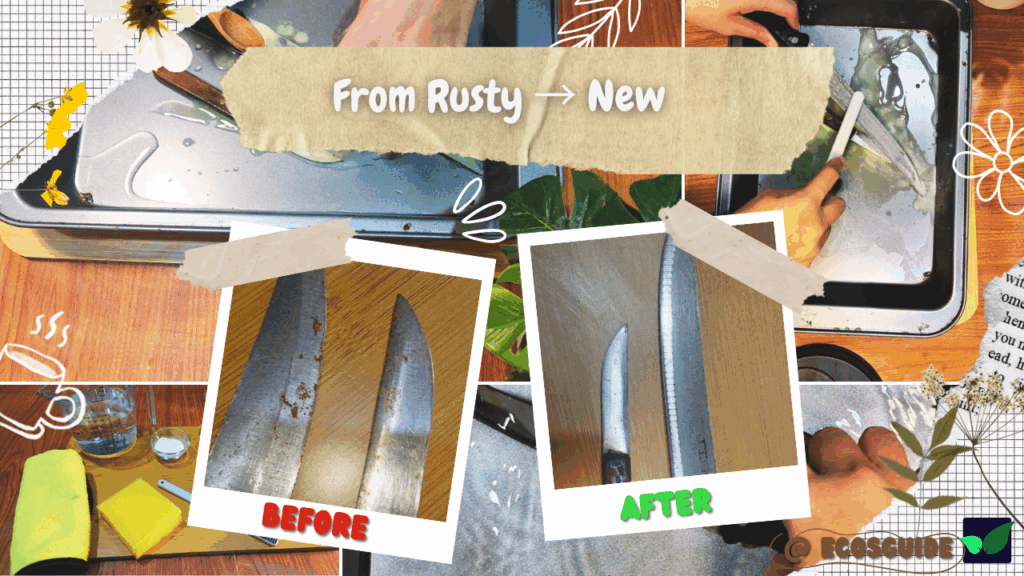
You reach for your favorite knife, the one that handles everything from onions to crusty bread, and there it is: a dull orange bloom creeping along the edge. Rust.
That little sinking feeling is real, because a good knife starts to feel like a small loss the moment it corrodes.
I’m Hajar, and I started EcosGuide because I believe the smallest kitchen choices, like reaching for baking soda instead of a chemical rust remover, are where real change begins.
When a knife rusts, the quiet temptation is just to replace it. I can’t do that without thinking about where the old one ends up, or about what I would be rinsing down the sink to fix it the harsh way.
A blade you bring back to life is one fewer thing in the landfill, and choosing baking soda keeps oxalic acid and solvents out of your drain.
So before you write that knife off, let’s look at why it rusted, and how to bring it back.
Why Rusty Knives Are So Frustrating
A rusty knife is frustrating because it feels like a small betrayal from a tool you trusted, and because rust raises a real question: is the blade still safe to use on food?
Rust is not just cosmetic. It changes the surface of the steel, and on a knife that touches your dinner, that matters.
When Your Favorite Knife Starts to Rust
The knives that rust first are usually the ones we love most: the carbon-steel chef’s knife, or the well-used paring knife that lives by the cutting board.
These blades hold a sharper edge than stainless steel, but the same high carbon content that makes them cut beautifully also makes them quick to rust if they sit damp.
Rust is a porous, uneven layer of iron oxide, and those microscopic pits can trap food residue and harbor bacteria that ordinary washing does not fully reach.
That is why it is worth removing properly before the blade meets food again. Food-safety guidance from NC State Extension recommends working into crevices with a soft toothbrush when cleaning kitchen items.
That is exactly why a gentle paste and a small brush beat a quick wipe on a rusted blade.
Key Takeaways
- Light, surface rust on a knife is usually fixable at home with a simple baking soda paste.
- Rust is porous and can trap bacteria, so it is worth removing before the blade touches food again.
- Carbon-steel knives rust fastest because their high carbon content reacts quickly with moisture.
What Causes Rust in the First Place?
Rust forms when the iron in steel reacts with oxygen and moisture, a process called oxidation that produces iron oxide (Fe2O3).
The more water and air a blade is exposed to, the faster it rusts. In a home kitchen, three everyday habits cause almost all of it:
- Moisture left on the blade. Air-drying a knife or dropping it back in a damp block leaves just enough water for rust to start.
- Storage. A humid drawer or a wooden block that never fully dries keeps the steel damp between uses.
- The dishwasher. Prolonged heat, moisture, and harsh detergent are hard on knife steel and speed up corrosion.
Rust vs. Patina: Don’t Scrub Off the Good Stuff
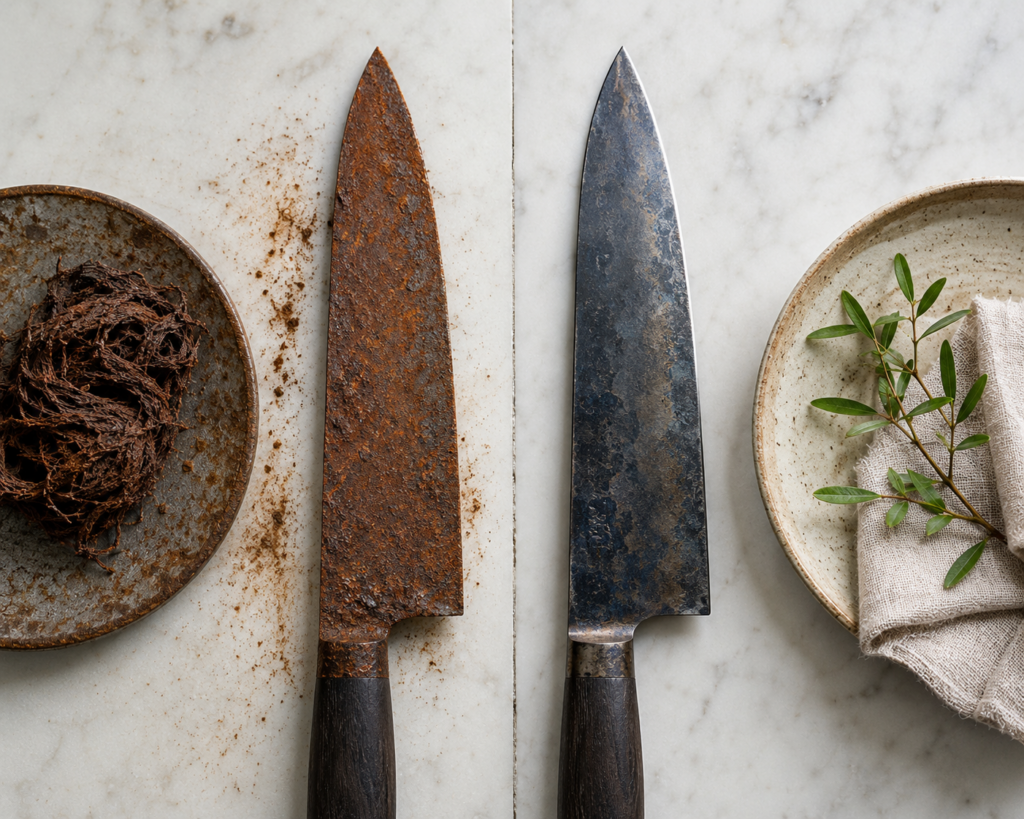
Rust is iron oxide: flaky, orange-brown, and corrosive, while patina is a thin, stable, grey-black layer that actually protects carbon steel. Rust should be removed; a healthy patina should be left alone.
Telling them apart is simple once you know what to look for.
| What to check | Rust | Patina |
| Color | Orange to reddish-brown | Grey, blue, or near-black |
| Texture | Rough to the touch | Smooth |
| Wipe test | Comes away on a cloth or sponge | Stays put when you wipe it |
| What it means | Corrosion: remove it | Protective layer: leave it alone |
This is exactly why I never reach for steel wool on a good carbon-steel blade: it can strip a healthy patina along with the rust and leave fine scratches behind.
Gentle is almost always the smarter first move
The Eco-Friendly Way to Restore Your Knives
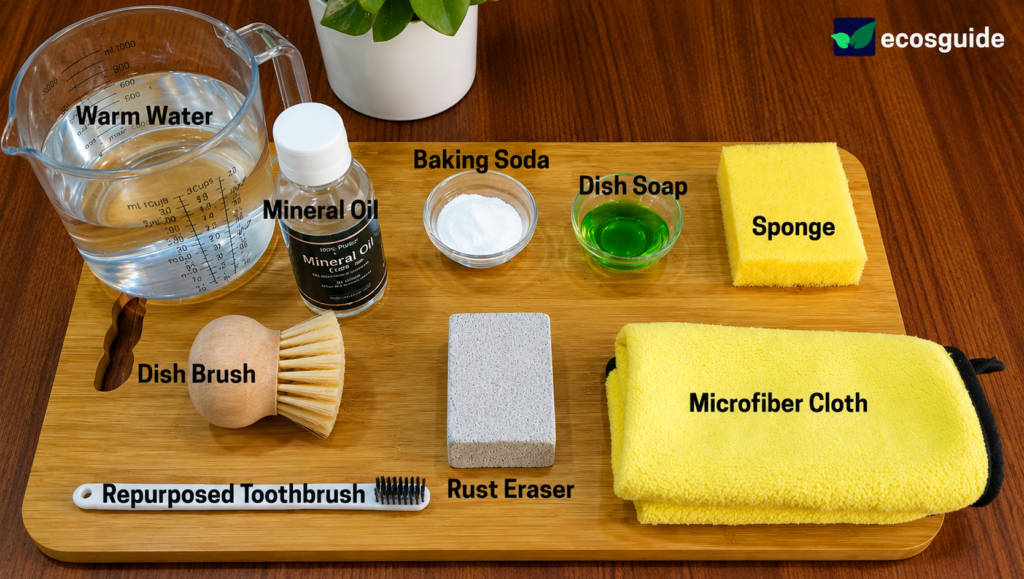
The whole method relies on things you almost certainly already have, plus a couple of soft, non-scratch options for the stubborn spots.
Gather everything first so you are not hunting for a toothbrush with paste-covered hands.
Let’s Gather Your Supplies
- Baking soda (sodium bicarbonate)
- A little dish soap
- Warm water
- A soft sponge, an old toothbrush, or a soft bamboo dish brush
- For stubborn spots, a non-scratch option: a food-safe rust eraser, a wine cork, or a ball of aluminum foil
- A clean, dry cloth for drying the blade fully
- Optional: food-grade mineral oil to protect the blade afterward
How to Remove Rust from Knives with Baking Soda
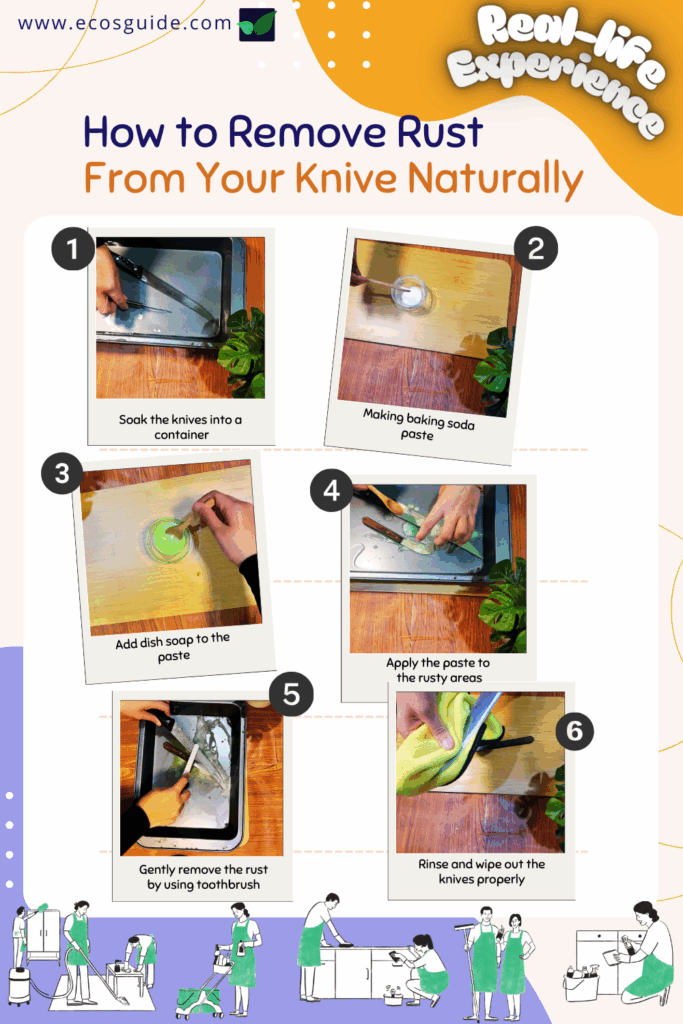
The basic ratio is about 3 tablespoons of baking soda to 1 tablespoon of dish soap, with just enough water to make a thick, spreadable paste. From there it is seven gentle steps:
- Wash and dry the knife first, so the paste works on the rust and not on grease or food.
- Mix the paste: roughly 3 parts baking soda to 1 part dish soap, adding water a little at a time until it holds like toothpaste.
- Spread the paste over the rusted areas, covering them completely so the whole spot stays wet.
- Let it sit for 10 to 30 minutes, longer for heavier rust. For stubborn patches, gently work a non-scratch tool over the area: a wet rust eraser, a wine cork, or a balled piece of foil, using light, circular pressure.
- Scrub gently in small circles with a sponge, an old toothbrush, or a gentle eco scrubber. Let the paste do the work, not force.
- Rinse thoroughly and inspect the blade. Repeat on any rust that remains rather than scrubbing harder.
- Dry the blade completely, and if you like, rub on a thin film of food-grade mineral oil to protect it.
Watch It in Action
I filmed myself cleaning one of my own rusted knives with this exact method, because seeing it helps more than reading it.

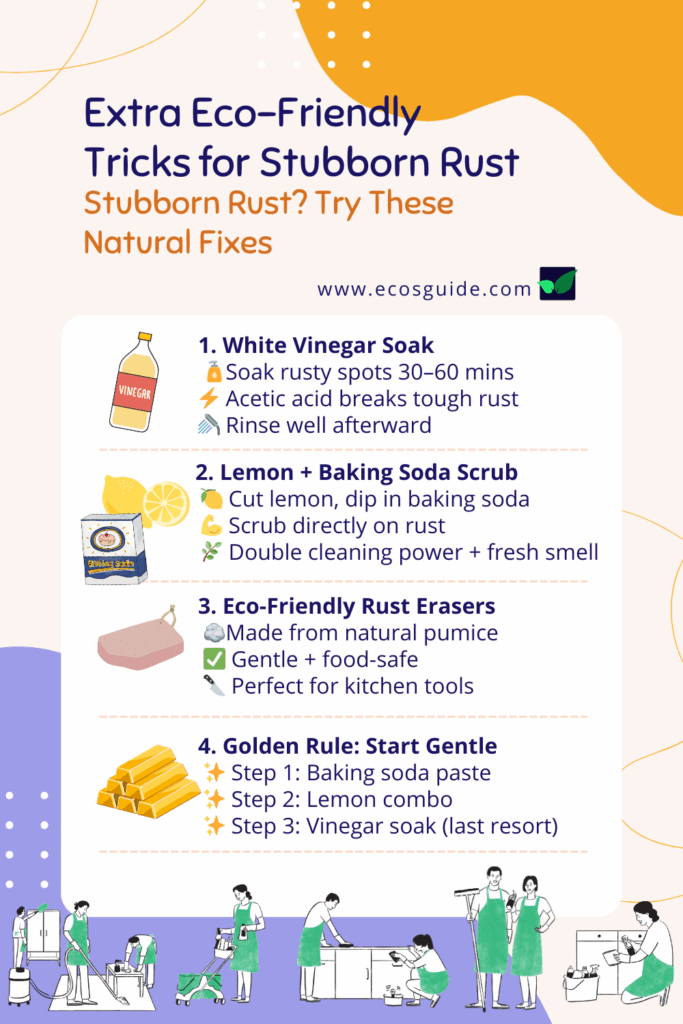
Extra Eco-Friendly Tricks for Stubborn Rust
Baking soda is a mild abrasive and a mild alkali, which makes it excellent on light, surface rust. Deep or pitted rust is different: it needs an acid assist like lemon or vinegar, or a food-safe rust eraser.
And any pitting left behind may be permanent.
The trick is to climb the ladder slowly, starting with the gentlest option and only stepping up if you need to.
- White vinegar soak. The acetic acid in vinegar dissolves rust. Soak the rusted section for 30 minutes to a couple of hours, then scrub with your baking soda paste and rinse well.
- Lemon and baking soda. Sprinkle baking soda on the blade, then rub with a cut lemon. The mild citric acid plus the gentle abrasive lifts spots that water alone leaves behind.
- A food-safe rust eraser. A based rust eraser handles tougher rust without the harsh solvents, and it is reusable, so one tool lasts a long time.
If the blade is pitted after all that, the rust may have eaten into the steel for good. That is not a failure of the method, it is just where home rust removal honestly ends.
Why I Skip Bar Keepers Friend, WD-40 & Naval Jelly on Food Knives
All three remove rust effectively, but none are food-grade, so each needs thorough rinsing before a blade touches food again.
I want to be fair, because these products do work. Bar Keepers Friend is genuinely effective on tough rust and stains, and its own maker explains that oxalic acid does the heavy lifting and tells you to rinse the surface thoroughly after use.
WD-40 is a brilliant penetrant for hinges and tools, but WD-40’s own FAQ states plainly that none of its standard products are safe for possible food contact. So I apply one simple test to a knife that meets my dinner: would I want this on my food? For a blade, baking soda is the better default.
| Method | Active ingredient | Food-safe as-is? | Best for | My take |
| Baking soda paste | Sodium bicarbonate | Yes | Light / surface rust | First choice |
| Bar Keepers Friend | Oxalic acid | No, rinse fully | Tougher rust and stains | Skip on food knives |
| WD-40 | Petroleum solvent | No | Tools, hinges, garage | Not for kitchen blades |
| Naval jelly | Phosphoric acid | No | Heavy industrial rust | Overkill and not food-safe |
Why Baking Soda Is a Gentle but Effective Fix
Used as a wet paste, baking soda is soft enough, about 2.5 on the Mohs hardness scale, to lift rust without scratching hardened knife steel.
It works in two ways at once: the fine grains give just enough mechanical scrub to loosen the rust, while its mild alkalinity helps break down the oxide layer.
That gentleness is the whole point. You get enough lift to clear surface rust, but not so much that you gouge the blade or strip a good patina.
If you want to understand why baking soda is such a reliable natural cleaner across the rest of your kitchen, it comes down to that same balance of mild abrasion and mild alkalinity.
The Eco-Friendly Gear That Makes Rust Removal (and Prevention) Easier
You can do everything above with what is already in your cupboard. But a couple of low-waste tools make the job easier and help stop rust coming back.
What matters in a kitchen rust tool is simple: food-safe materials, no harsh solvents, gentle enough not to scratch, and something you will actually reuse.
When a product carries a recognized certification like the EPA’s Safer Choice program, that is a useful shortcut for knowing it was screened for safer ingredients.
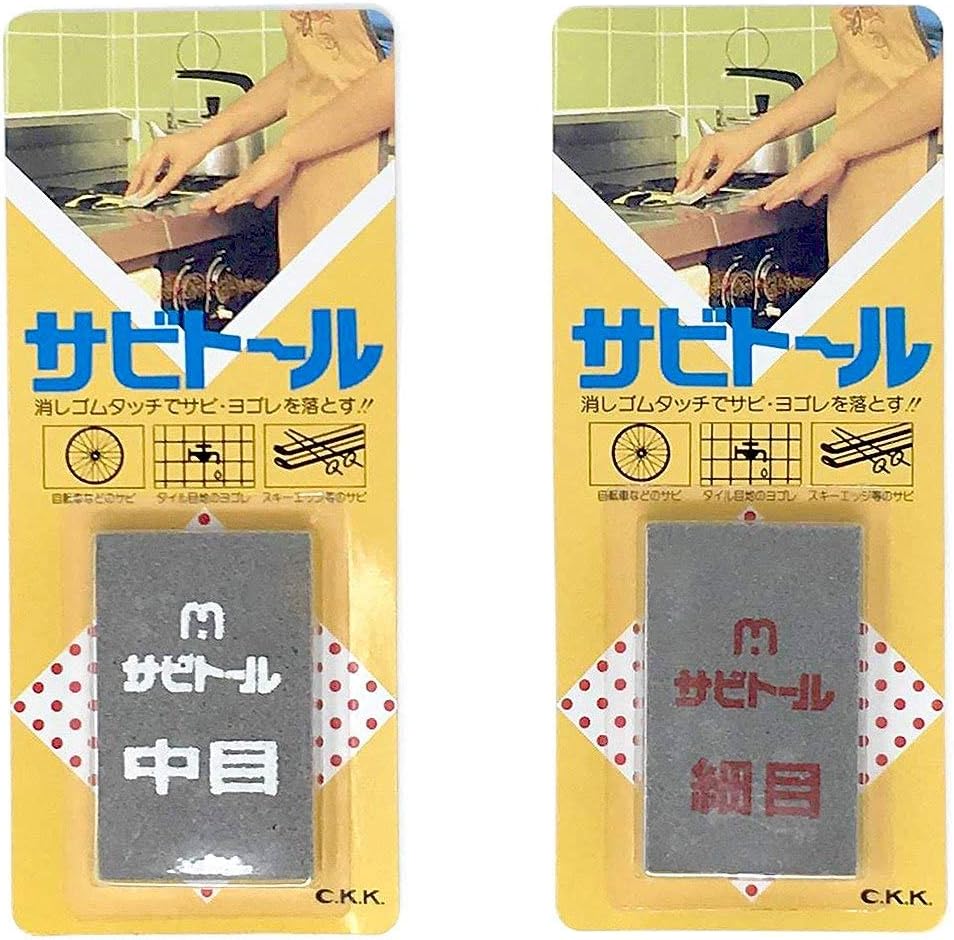
A rust eraser is a soft block with fine abrasive worked through it, a bit like a gritty pencil eraser, that rubs off the rust your baking soda paste cannot quite finish. The Japanese “Sabitoru” style is the one I keep reaching for: wet it, rub gently along the grain, and the rust lifts.
You might see natural pumice sticks sold for rust too, but I skip those on knives. Pumice is harder than your blade and can leave fine scratches, so it is better saved for cookware or cast iron.
This eraser is chemical-free, needs only water, and is reusable as fresh grit wears through, so one small block lasts a long time. It is far gentler on a blade than steel wool, which makes it my pick for stubborn spots and pitted edges.
I haven’t tested this exact one in my own kitchen, but based on its fine-grit, chemical-free design and the reviews from eco-minded buyers, it checks the right boxes.
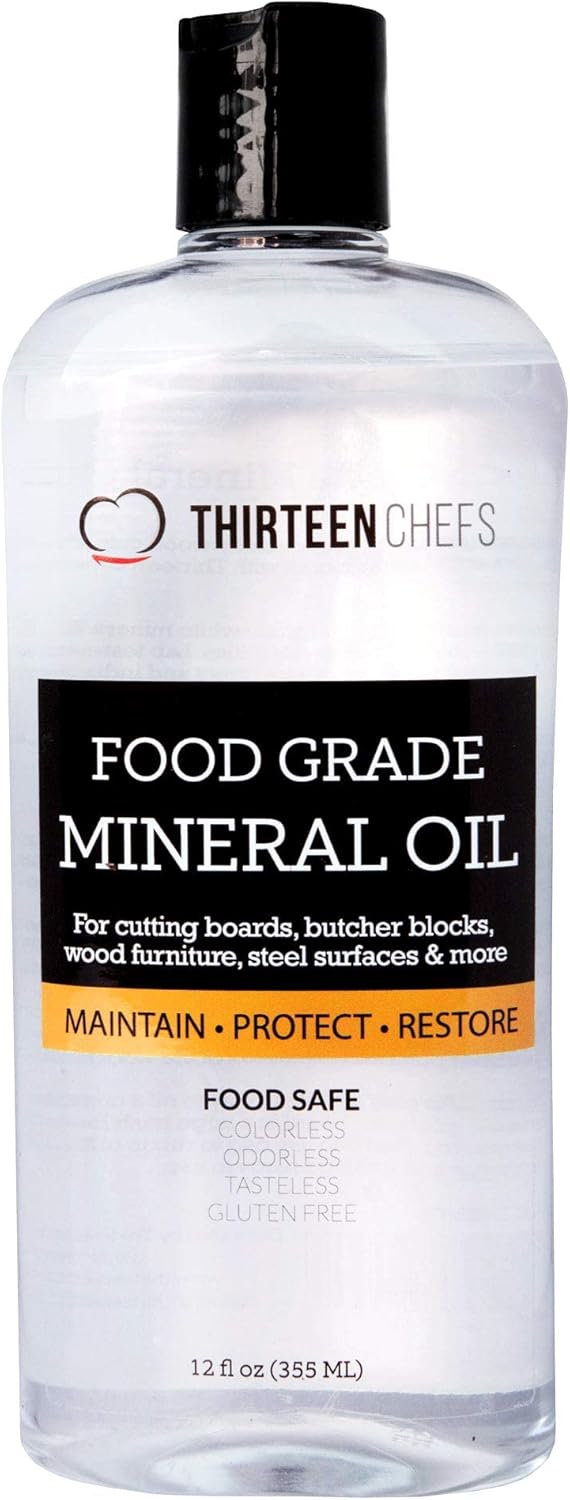
Food-grade mineral oil is a tasteless, odorless oil that is safe for surfaces that touch food, which is why it is the standard choice for protecting kitchen knives and wooden tools.
Unlike cooking oils, it will not turn rancid, and a tiny amount lasts for months. It ties straight into the monthly-oil habit above: a thin wipe after drying gives the blade a moisture barrier that keeps rust from starting in the first place.
A few smaller things help too, without needing their own shelf. A fresh microfiber cloth set makes the 30-second dry rule effortless.
A magnetic knife strip or in-drawer sheath fixes the storage-humidity problem at its source.
And a soft bamboo dish brush or a gentle eco scrubber is all you need for the scrub step. I skip steel wool entirely: it is too easy to scratch a good blade with it.
Small Knife, Smaller Footprint
A knife you bring back to life is one fewer blade in the landfill, and choosing baking soda over a chemical rust remover keeps oxalic acid and solvents out of your sink and out of the water system.
That is the whole idea behind EcosGuide: small kitchen choices that quietly add up.
So the next time something in your kitchen looks ruined, try the gentle fix first. More often than not, it works, and you get to keep the tool you already love.
If a scorched pot is your next battle, the same baking-soda paste that rescues a burnt pan will see you through that one too.
- Why Rusty Knives Are So Frustrating
- What Causes Rust in the First Place?
- Rust vs. Patina: Don’t Scrub Off the Good Stuff
- The Eco-Friendly Way to Restore Your Knives
- How to Remove Rust from Knives with Baking Soda
- Watch It in Action
- Extra Eco-Friendly Tricks for Stubborn Rust
- Why I Skip Bar Keepers Friend, WD-40 & Naval Jelly on Food Knives
- Why Baking Soda Is a Gentle but Effective Fix
- The Eco-Friendly Gear That Makes Rust Removal (and Prevention) Easier
- Small Knife, Smaller Footprint
- Frequently Asked Questions
Find More Tips At:


Frequently Asked Questions
Does baking soda really remove rust from knives?
Yes, for light, surface rust. As a wet paste, baking soda gives just enough gentle abrasion and mild alkalinity to loosen and lift rust without scratching the steel. For deep or pitted rust you will need an acid assist like lemon or vinegar, or a food-safe rust eraser.
How long should I leave baking soda on a rusty knife?
Leave the paste on for 10 to 30 minutes. Light rust often lifts toward the shorter end, while heavier rust benefits from the full half hour. If rust remains after rinsing, reapply and wait again rather than scrubbing harder.
Can I mix baking soda and vinegar to remove rust?
You can, but use them in sequence rather than mixing them into one bubbling paste, because together they neutralize each other and lose strength. Soak the rust in white vinegar first, then scrub with a baking soda paste afterward to get the benefit of both.
Will baking soda scratch my knife?
No. Used as a wet paste, baking soda is soft, about 2.5 on the Mohs hardness scale, and lifts rust without scratching hardened knife steel. Use light, circular pressure and let the paste do the work.
Is Bar Keepers Friend safe for kitchen knives?
Bar Keepers Friend does remove rust well, but its active ingredient is oxalic acid, which is not food-grade, so it must be rinsed off thoroughly before the blade touches food. For a knife that meets your dinner, a baking soda paste is the gentler default.
Does WD-40 remove rust from knives?
It can loosen rust, but standard WD-40 is a petroleum-based solvent that is not food-safe, so it is the wrong choice for a blade that touches food. Its maker confirms none of its regular products are safe for possible food contact. Save it for hinges and tools, not kitchen knives.
Can baking soda remove deep or pitted rust?
Baking soda handles light, surface rust well, but deep or pitted rust needs an acid assist such as lemon or vinegar, or a food-safe rust eraser. Any pitting left in the steel afterward may be permanent, since the rust has corroded the metal itself.
