
You probably do not think twice about your dish soap, but you use it more than almost anything else in your kitchen.
That daily habit is exactly why switching matters.
My 6 best eco-friendly dish soap picks for 2026, plus the ingredients I always avoid, are in the key takeaways below.
Key Takeaways
- Blueland Dish Soap Powder is the best overall: triple certified (EPA + Cradle to Cradle + EWG-A), zero plastic, refillable
- Blueland Dishwasher Tablets are the best for dishwashers: plastic-free, no PVA film, EPA Safer Choice certified
- ECOS Dishmate is the best budget pick: EPA Safer Choice, plant-powered, ~$3-6 per bottle
- No Tox Life Dish Block is the top bar soap: zero plastic packaging, one bar replaces 2-3 bottles
- Avoid dish soaps containing SLS, synthetic fragrance, and MIT/BIT preservatives•
- Look for EPA Safer Choice or EWG Verified certifications as your quickest shortcut to a safe pick
It is easy to forget that what leaves our kitchen sinks has to go somewhere.
When I started looking into what is actually inside conventional dish soap, and where those chemicals end up once they swirl down the drain, I could not look away.
Surfactants that do not break down. Preservatives that are toxic to fish and aquatic plants. All of it flowing quietly into the same waterways we depend on.
That is why I spent weeks researching which dish soaps are worth your trust, and which ones are just green packaging over the same old formula.
Quick Picks at a Glance
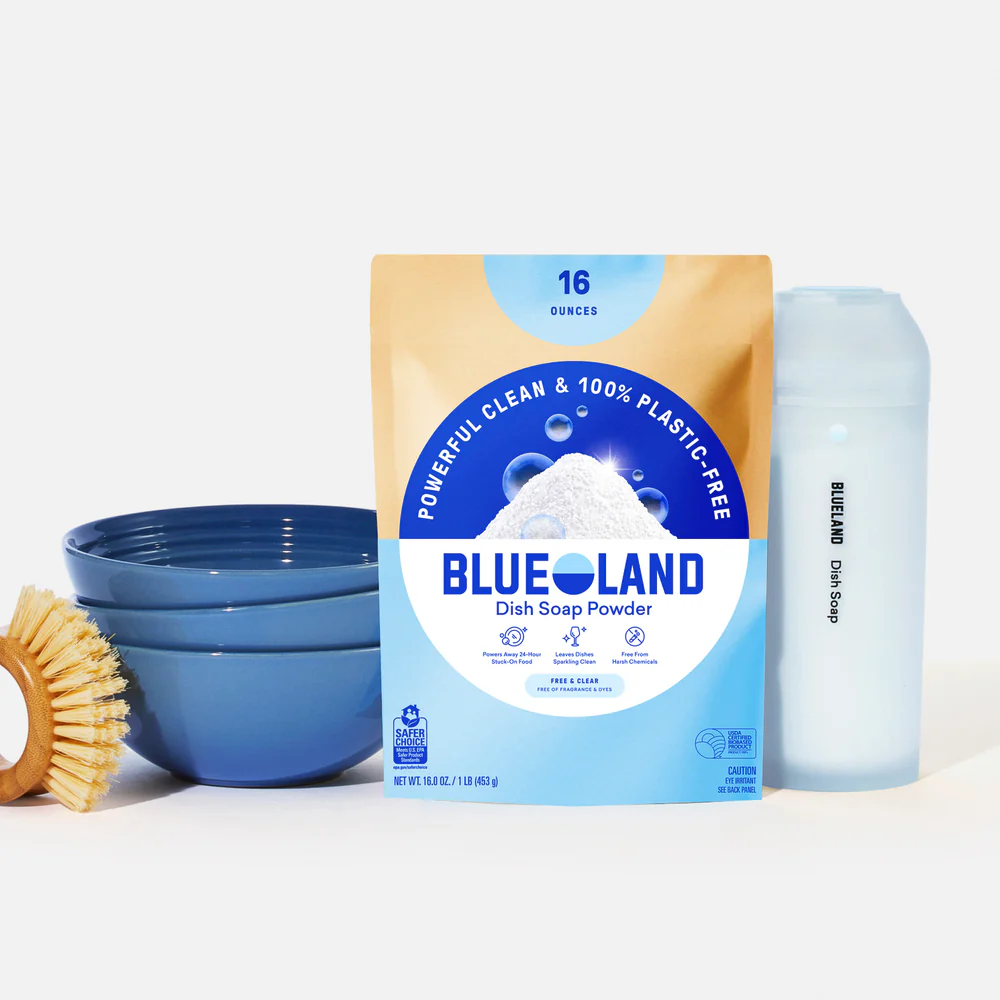
Blueland Dish Soap Powder
Triple certified (EPA + C2C + EWG-A), refillable shaker, zero plastic, no shipping water.
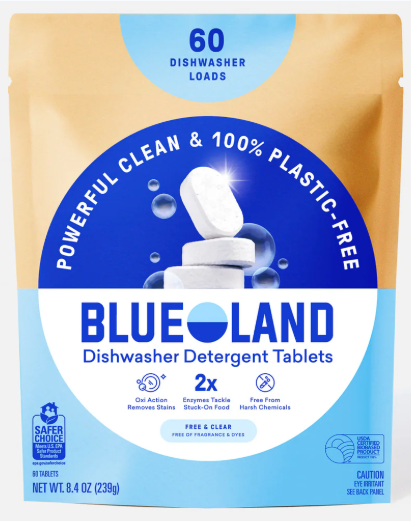
Blueland Dishwasher Tablets
100% plastic-free, no PVA film, EPA Safer Choice, Cradle to Cradle certified.
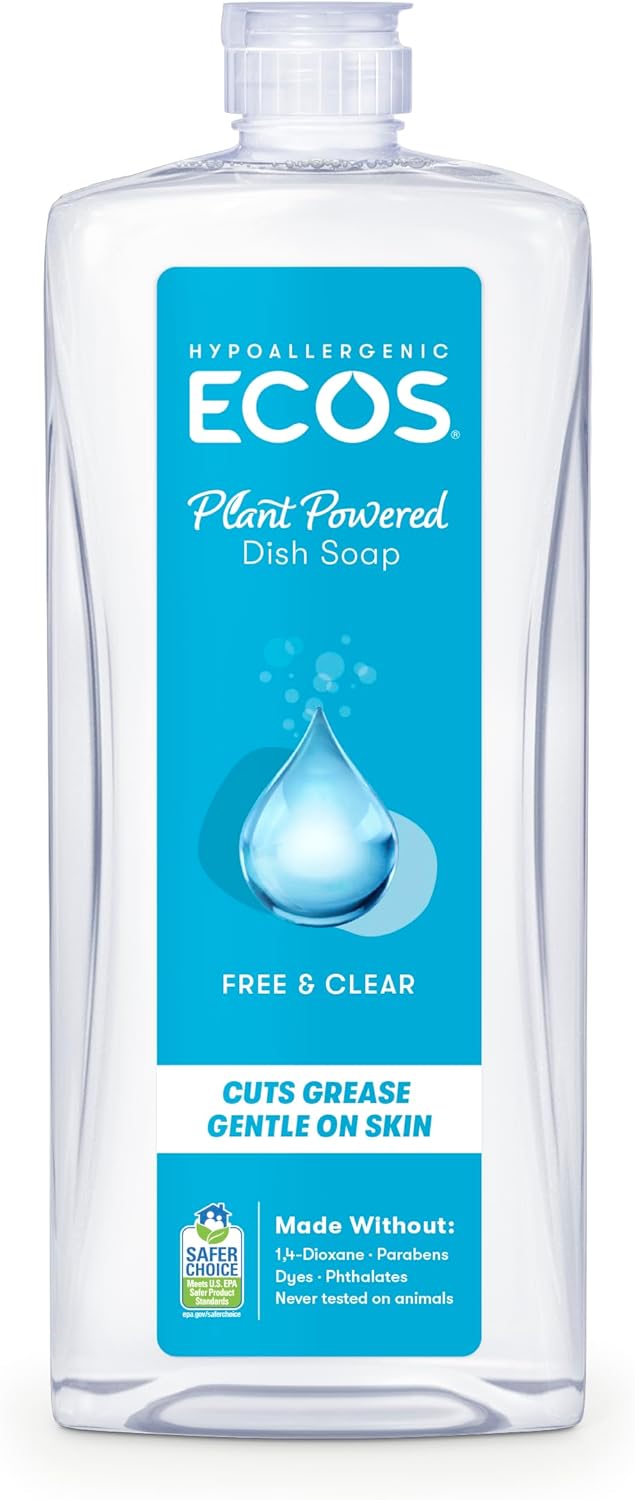
ECOS Dishmate (Free & Clear)
EPA Safer Choice, Leaping Bunny, plant-powered.
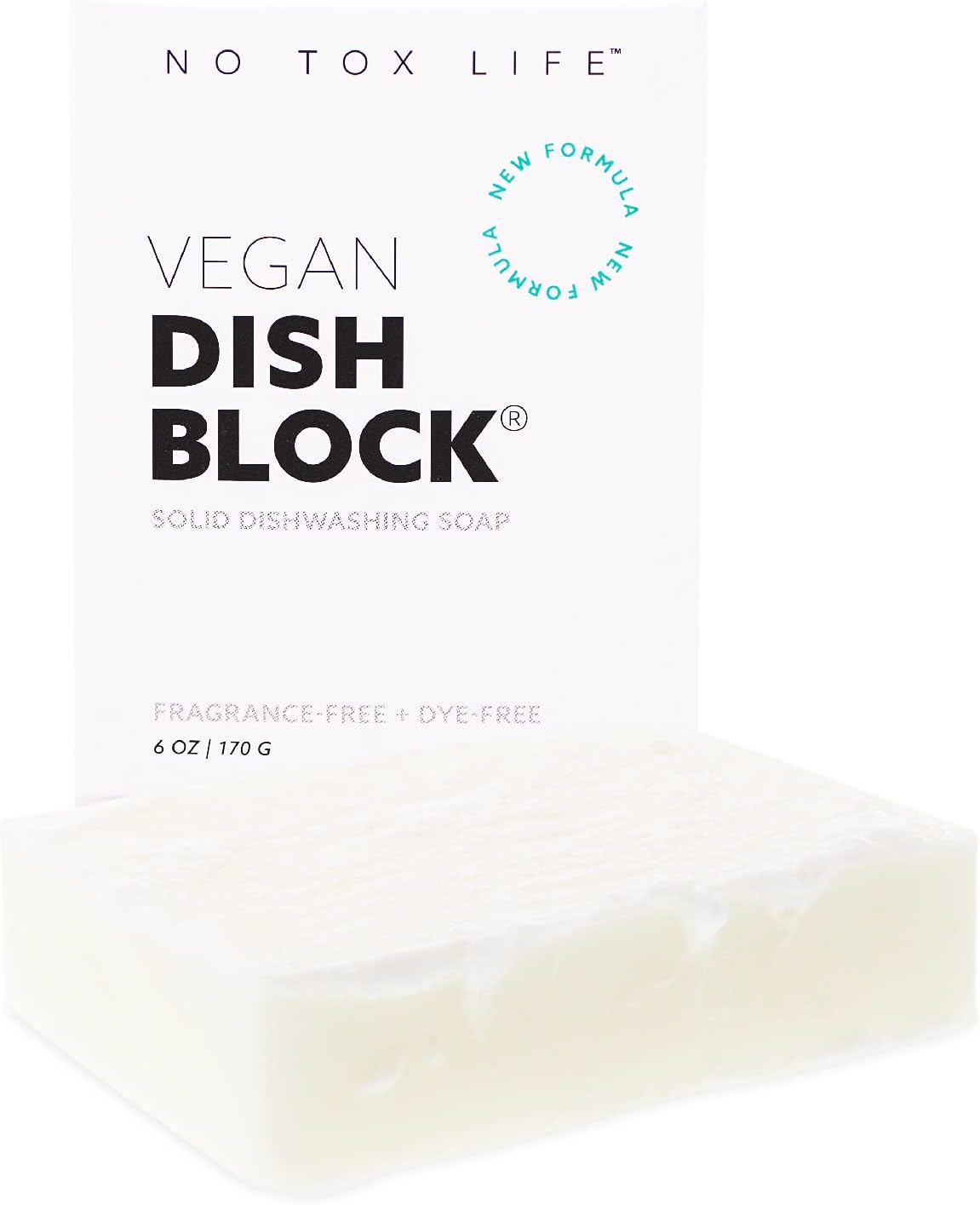
No Tox Life Dish Block
Zero plastic packaging, palm-oil free, 1 bar replaces 2-3 bottles.
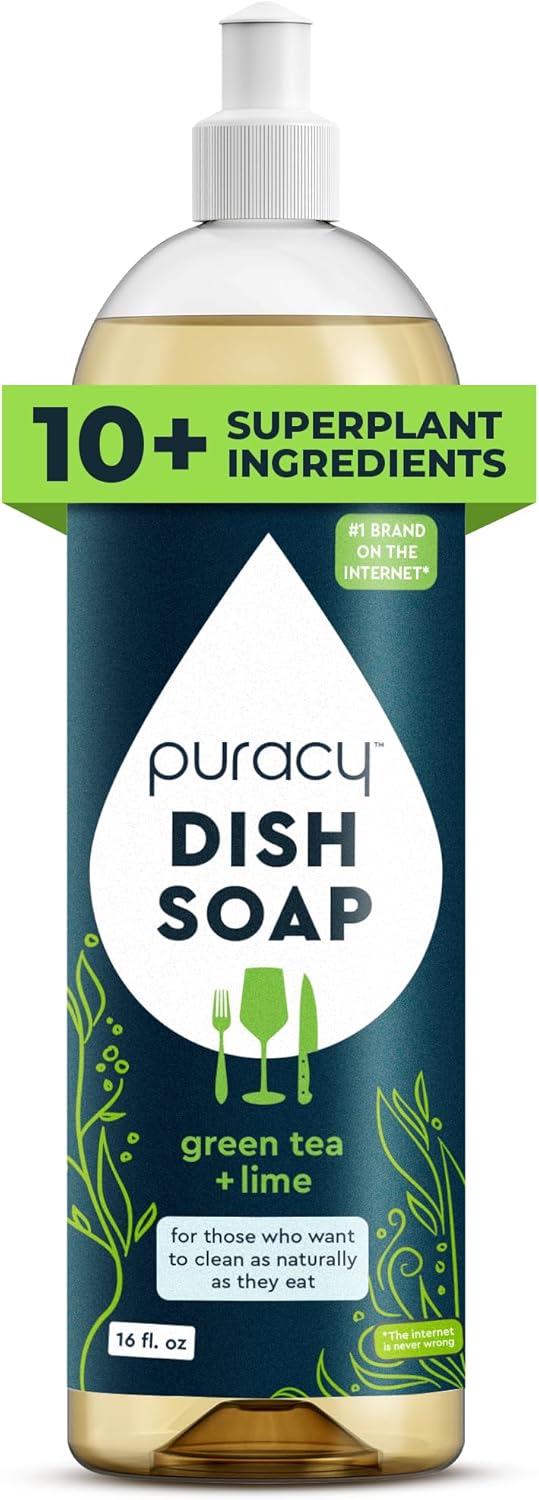
Puracy (Green Tea & Lime)
99.96% plant-based, sulfate-free, EWG Verified, refill pouch cuts plastic 90%.
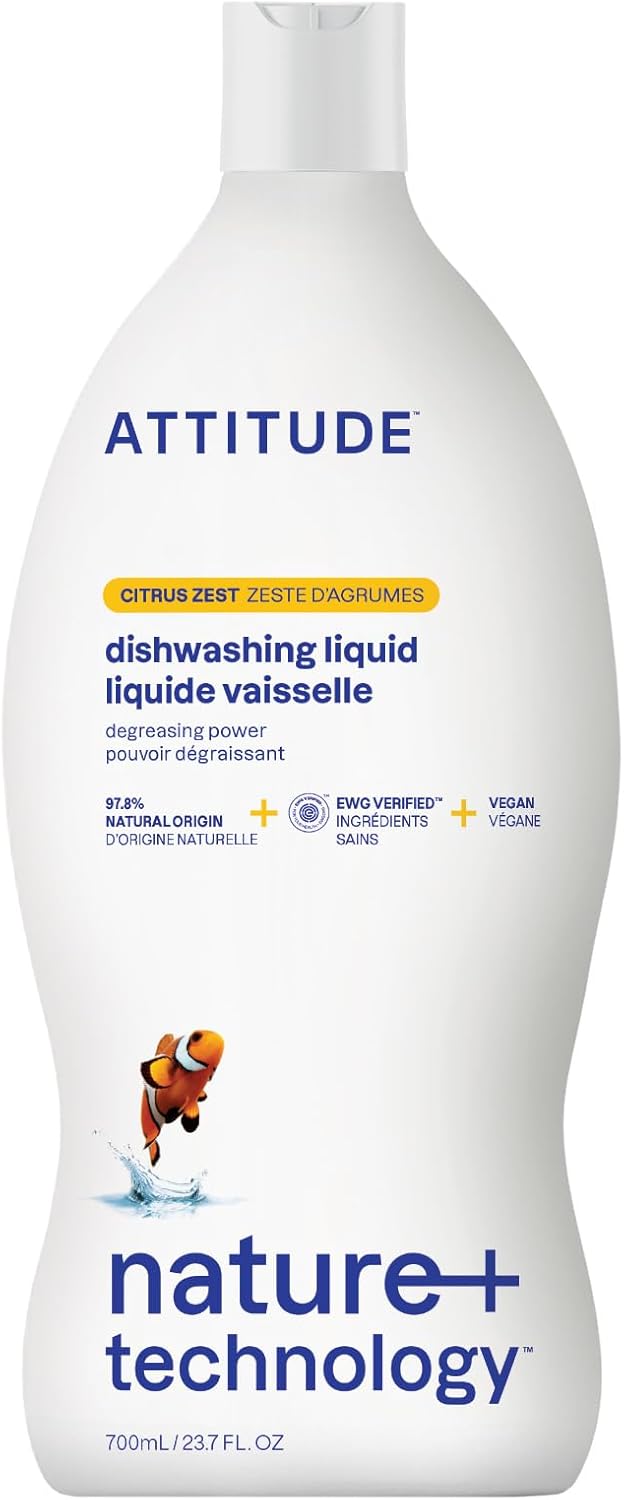
Attitude (Citrus Zest)
EWG Verified, hypoallergenic, dermatologist-tested, safe for baby bottles.
What Makes a Dish Soap Truly Eco-Friendly?
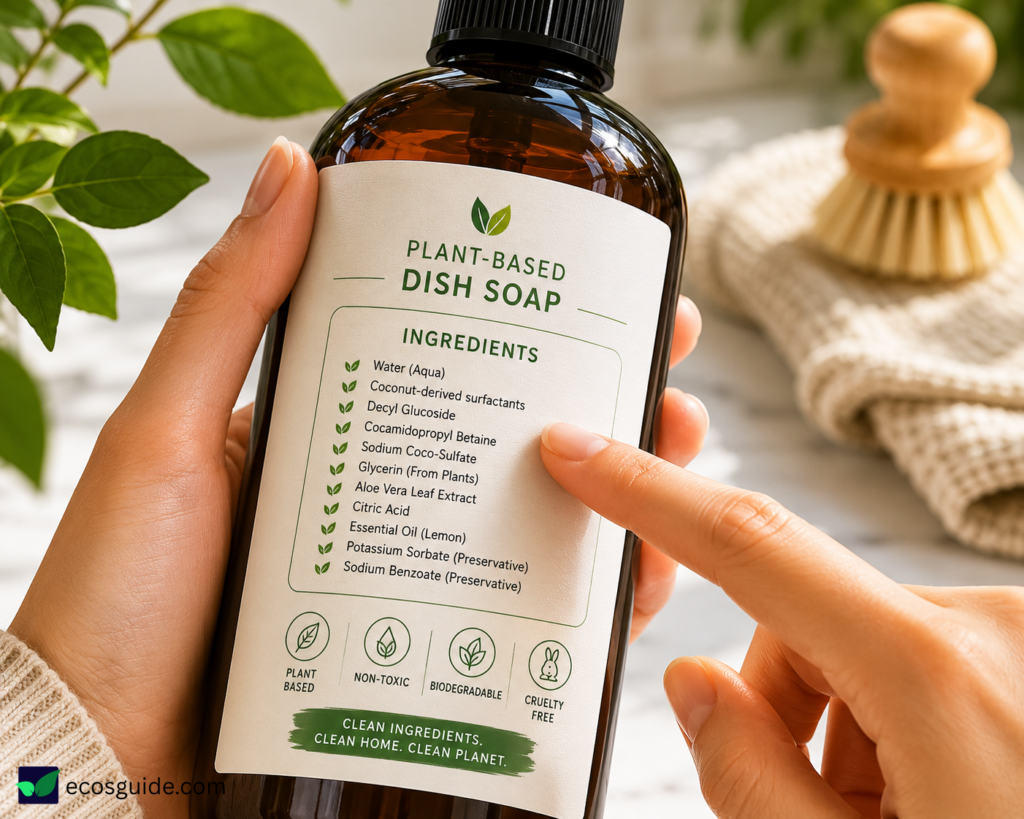
An eco-friendly dish soap is a cleaning product formulated with biodegradable, plant-based surfactants and free from synthetic fragrances, phosphates, parabens, and toxic preservatives.
That definition matters because the word “natural” on a label does not guarantee any of it.
The ingredients that do the actual cleaning in dish soap are surfactants. In genuinely eco-friendly formulas, these come from plants:
- decyl glucoside
- coco-glucoside
- lauryl glucoside
- saponified coconut
- olive oils
These surfactants biodegrade quickly once they enter water systems, which means they break down into harmless compounds instead of persisting in rivers and lakes.
The ingredients to watch out for are the ones conventional dish soaps rely on:
- SLS and SLES (sodium lauryl sulfate and sodium laureth sulfate) are cheap, effective degreasers, but they are toxic to aquatic organisms and can irritate skin with repeated exposure.
- Synthetic fragrance (listed as “fragrance” or “parfum”) is a catch-all term that can hide dozens of undisclosed chemicals, including allergens and hormone disruptors.
- MIT and BIT (methylisothiazolinone and benzisothiazolinone) are preservatives used to prevent bacterial growth. Both are potent skin sensitizers and have been flagged for aquatic toxicity.
- 1,4-dioxane is a likely carcinogen that does not appear on ingredient lists because it is a manufacturing contaminant, not an added ingredient. Look for ingredients ending in “-eth” as a warning sign.
You can check your own dish soap’s safety rating on EWG’s Guide to Healthy Cleaning, which scores products based on ingredient transparency and health impact.
If you also use a dishwasher, I have put together a separate guide to the best eco-friendly dishwasher detergents that follows the same ingredient-first approach.
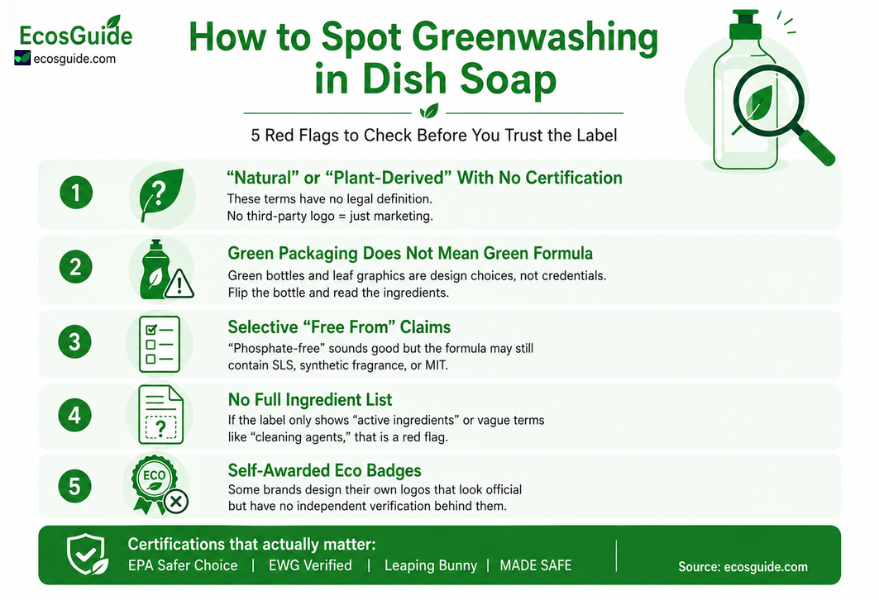
How to Spot Greenwashing in Dish Soap
Greenwashing in cleaning products is the practice of using eco-friendly branding, colors, or claims on products that still contain harmful ingredients.
Dish soap is one of the worst offenders because the category is largely unregulated when it comes to environmental claims.
The FTC’s Green Guides outline rules for environmental marketing, but enforcement is limited and many brands push the boundaries.
Here is what to look for on the label before you trust a product:
1. “Natural” or “plant-derived” with no certification.
These terms have no legal definition in the cleaning industry. A dish soap can print “plant-derived” on the front and still contain SLS, synthetic fragrance, or preservatives on the back.
If there is no third-party certification logo, the claim is just marketing.
2. Green-colored packaging or leaf imagery.
Brands know that green bottles, earthy tones, and leaf graphics make you feel like a product is eco-friendly before you even read the label.
Packaging design is not a credential. Flip the bottle over and read the ingredients instead.
3. “Free from” claims that skip the real problems.
A label might say “phosphate-free” or “paraben-free” while still containing SLS, synthetic fragrance, or MIT.
These selective claims highlight what is missing while distracting you from what is still there.
4. No full ingredient list.
Brands that are genuinely transparent list every ingredient on the label or their website.
If a dish soap only shows “active ingredients” or uses vague terms like “cleaning agents,” that is a red flag. Look for brands that disclose the full formula.
5. Self-awarded eco badges.
Some brands design their own “eco-friendly” or “green certified” logos that look official but are not backed by any independent body.
The certifications that matter are EPA Safer Choice, EWG Verified, Leaping Bunny, and MADE SAFE, because these require independent third-party review.
If a product passes all five checks, it is probably worth your trust. If it fails even one, keep looking.
6 Best Eco-Friendly Dish Soaps for Your Kitchen (2026)
Every product on this list was selected based on ingredient safety, real cleaning performance, trusted eco certifications, sustainable packaging, and availability.
No SLS, no synthetic fragrance, no MIT or BIT made the cut.
I looked at real buyer reviews from eco-minded households and cross-referenced ingredient lists with EWG’s database to make sure each pick earns its place here.
I have not personally tested every product on this list in my own kitchen, but I have spent weeks digging into ingredients, certifications, and reviews from real eco-minded buyers to make sure each recommendation earns its spot.
How the 6 Picks Compare
| Product | Format | Certifications | Best For |
| Blueland Powder | Powder | EPA, C2C, EWG-A | Lowest waste footprint |
| Blueland Tablets | Tablet | EPA, C2C, Leaping Bunny | Dishwashers |
| ECOS Dishmate | Liquid | EPA, Leaping Bunny | Daily use, budget |
| No Tox Life Block | Bar | Vegan, palm-oil free | Zero-plastic kitchens |
| Puracy | Liquid | EWG Verified | Heavy grease |
| Attitude | Liquid | EWG Verified | Families, babies |
1. Blueland Dish Soap Powder
Best for: Households that want the lowest possible waste footprint without sacrificing cleaning power.
Key ingredients: Sodium Bicarbonate, Sodium Lauryl Sulfate (plant-derived), Glycerine, Sodium Citrate, Calcium Silicate.
Certifications: EPA Safer Choice, Cradle to Cradle, EWG-A rated, Leaping Bunny.
Blueland Dish Soap Powder is the top pick on this list for a reason. It ships as a lightweight powder in a refillable silicone shaker, which means no shipping water and no single-use plastic.
That triple certification is rare in this category: EPA Safer Choice confirms every ingredient has been government-reviewed.
Cradle to Cradle evaluates the full lifecycle of the product and packaging, and the EWG-A rating means the formula scored in the top tier of ingredient safety.
The format works by shaking a small amount of powder onto a wet sponge, then squeezing to build a thick foam.
Some users need a few tries to get the technique right, and the lather does look different from what you are used to with liquid.
But the cleaning performance holds up on greasy surfaces, and the shaker format means you use exactly what you need with no over-squirting. One shaker of powder replaces up to 30 single-use plastic bottles over its lifetime.
If you are already comfortable experimenting with natural dish soap formats beyond the traditional bottle, Blueland is the strongest option available right now.
The refill pouches come in compostable packaging, so even the refills generate close to zero waste.
| Bundle Tip |
| If you hand-wash and run a dishwasher, Blueland sells both products together as The Dish Duo. The bundle includes the Dish Soap Powder starter set and the Dishwasher Tablet starter set at a combined discount, which saves you around 12% compared to buying them separately. |
2. Blueland Dishwasher Tablets
Best for: Households that run a dishwasher and want a plastic-free, PVA-free tablet that actually cleans.
Key ingredients:
- Sodium Carbonate
- Sodium Citrate
- Hydrated Silica
- Amylase Enzyme Blend
- Microcrystalline Cellulose
Certifications: EPA Safer Choice, Cradle to Cradle, Leaping Bunny, USDA Certified Biobased.
Blueland Dishwasher Tablets solve a problem most people do not realize they have.
Conventional dishwasher pods are individually wrapped in polyvinyl alcohol (PVA), a plastic film that dissolves in water but does not disappear.
Those dissolved plastic particles persist in our environment as microplastics. Blueland’s tablets are 100% plastic-free: no PVA film, no plastic packaging, just a naked tablet you drop into the detergent compartment.
The tablets come in a refillable steel tin (the starter set includes the tin and 60 tablets). Refills ship in compostable packaging.
The formula is fragrance-free, phosphate-free, and powered by plant- and mineral-based cleaning agents including enzyme blends that cut through grease and baked-on food without pre-rinsing.
Performance-wise, these tablets handle everyday loads well: plates, glasses, silverware, and lightly soiled cookware come out clean and streak-free.
For heavily baked-on food (think a casserole dish you forgot to soak), a quick pre-rinse helps. That is true of most eco-friendly dishwasher detergents, and Blueland is no exception.
Check Latest Price3. ECOS Dishmate (Free & Clear)
Best for: Daily kitchen use, wiping down air fryer baskets, washing blender jars, general dish washing on a budget.
First 5 ingredients:
- Water
- Sodium Coco-Sulfate (plant-derived)
- Cocamidopropyl Betaine
- Decyl Glucoside
- Glycerin
Certifications: EPA Safer Choice, Leaping Bunny.
ECOS Dishmate is a liquid dish soap made with coconut-derived surfactants and no synthetic fragrance, dyes, parabens, or 1,4-dioxane.
It carries both EPA Safer Choice and Leaping Bunny certifications, which means the formula has been government-reviewed for environmental and health safety and is certified cruelty-free.
What stands out here is the combination of credentials and price. At roughly $3 to $6 for a 25-ounce bottle, ECOS Dishmate costs about the same as conventional dish soap while meeting standards most conventional brands do not come close to.
The Free & Clear version has zero fragrance at all, making it a solid option if you are looking for a dish soap hypoallergenic enough for sensitive skin or for washing items that directly contact food.
For daily kitchen use, a small squirt on a sponge handles greasy air fryer baskets without leaving residue or scent on surfaces that heat up and touch food. It works just as well for blender jars, coffee pot carafes, and everyday plates.
This is the one I recommend if you want the most affordable swap from whatever you are using now.
Check Latest Price4. No Tox Life Dish Block
Best for: Readers eliminating plastic from their kitchen, works with a scrub brush on baked-on messes.
First 5 ingredients:
- Sodium Cocoate
- Water
- Decyl Glucoside
- Cocamidopropyl Betaine
- Sodium Chloride
The No Tox Life Dish Block is a solid dish soap bar that comes in a simple cardboard box with zero plastic packaging.
It is palm-oil free, vegan, biodegradable, and free of synthetic fragrance. One bar lasts as long as two to three plastic bottles of liquid soap, which makes it one of the most waste-reducing dish soap alternatives on the market.
The format does take a little getting used to. You wet a brush or sponge, rub it across the bar to load up suds, and scrub.
It feels different from squirting liquid, but once you have the technique down, the cleaning power is comparable.
The bar-plus-brush combo is particularly effective for scrubbing baked-on food from air fryer baskets and removing coffee stains from glass carafes.
Keep the bar on a well-draining dish or soap tray between uses. This prevents it from sitting in water and dissolving prematurely, so you get the full lifespan out of each block.
5. Puracy Dish Soap (Green Tea & Lime)
Best for: Heavy grease-cutting on baked-on food from air fryer baskets, greasy pans, blender residue.
First 5 ingredients:
- Water
- Decyl Glucoside
- Sodium Methyl 2-Sulfolaurate
- Coco-Glucoside
- Glycerin
Certifications: EWG Verified, sulfate-free.
When a regular dish soap cannot handle baked-on oil from an air fryer basket or stubborn smoothie residue in a blender jar, Puracy Dish Soap is the one to reach for.
It is 99.96% plant-based, sulfate-free (no SLS), and EWG Verified. The pleasant green tea and lime scent comes from natural sources, not synthetic fragrance.
Puracy also offers a refill pouch system that reduces plastic use by roughly 90% compared to buying a new bottle each time.
The pouch is one of the simplest ways to cut packaging waste without changing your soap format.
The liquid itself is hypoallergenic and free of common allergens, which makes it a good match for households where skin sensitivity is a concern.
For kitchen appliance cleaning, Puracy handles the tough jobs. Greasy air fryer parts, oily blender blades, and stained coffee maker components all come clean without the need for harsh chemicals.
It is the strongest grease-cutter on this list while still meeting strict non toxic dish soap standards.
Check Latest Price6. Attitude Dishwashing Liquid (Citrus Zest)
Best for: Households with babies, young children, or anyone with sensitive skin.
First 5 ingredients:
- Water
- Coco-Glucoside
- Sodium Coco-Sulfate
- Lauryl Glucoside
- Glycerin
Certifications: EWG Verified, cruelty-free.
Attitude Dishwashing Liquid is an EWG Verified, hypoallergenic, dermatologist-tested dish soap made from plant- and mineral-based ingredients.
It is vegan, cruelty-free, and specifically formulated to be safe for households with babies, young children, or anyone with sensitive skin.
For families, the EWG Verified badge matters. It means every ingredient has been screened against EWG’s database of health hazards and meets their strictest safety standards.
That level of scrutiny is especially reassuring when you are washing baby bottles, sippy cups, and children’s plates, items that go straight from the sink to a child’s mouth.
If you have been searching for a dish soap hypoallergenic enough for your family’s needs, Attitude is built for exactly that.
The Citrus Zest scent comes from natural essential oils, not synthetic fragrance. At roughly $6 to $8 for a 23-ounce bottle, it is good value for a certified, family-safe biodegradable dish soap.
It is also safe for washing blender cups used for smoothies, coffee maker parts, and any food-contact surface where residue is a concern.
Check Latest PriceLiquid vs Bar vs Powder: Which Eco Dish Soap Format Is Right for You?
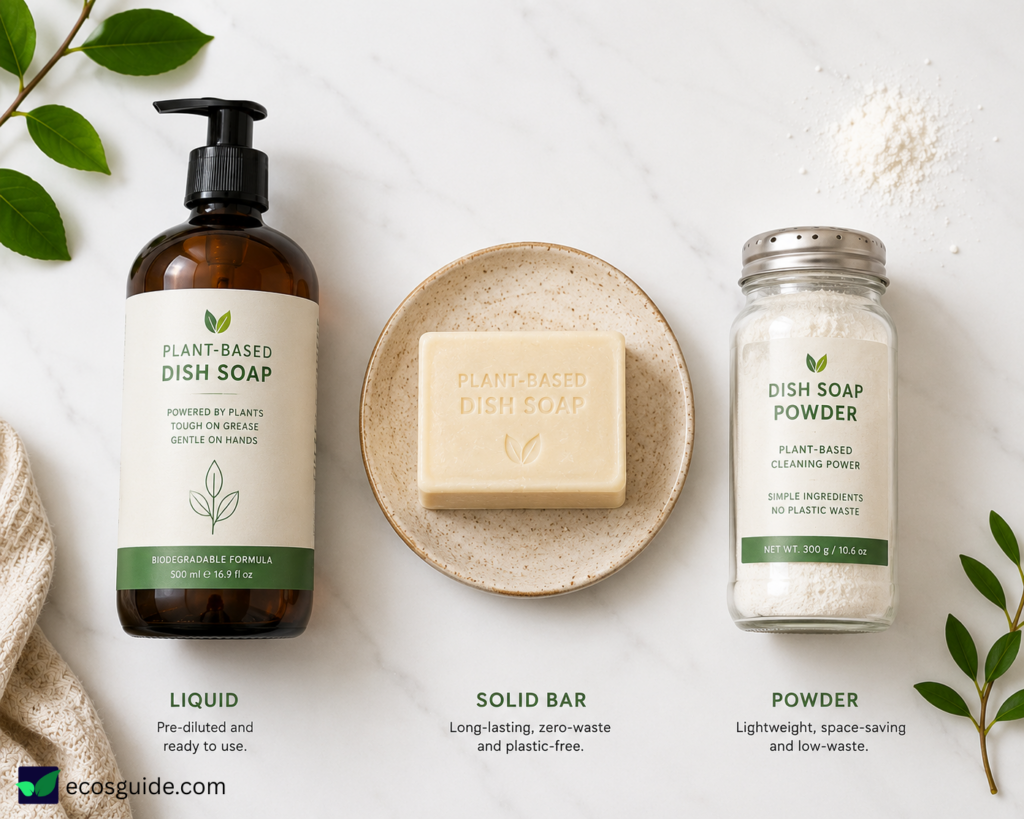
If you have only ever used liquid dish soap, it is worth knowing that today’s best dish soap alternatives also come in bar and powder formats.
Each one has genuine trade-offs in sustainability, convenience, and cleaning performance.
Liquid Dish Soap
Liquid is the most familiar format, and for most people it is the easiest switch from conventional soap.
You can control how much you use, it lathers quickly, and it works well for soaking items like blender jars and coffee maker parts.
The downsides are that liquid ships water (heavier carbon footprint), usually comes in a plastic bottle, and it is easy to over-squeeze.
If you go liquid, look for brands that offer refill pouches to cut down on plastic.
Dish Soap Bars
A dish soap bar is a concentrated block of solid soap, typically made from plant oils and free of plastic packaging entirely.
One bar replaces two to three plastic bottles, making it a strong dish soap alternative for anyone committed to reducing waste.
The trade-off is a short learning curve: you wet a brush or sponge, rub it on the bar, and scrub.
A dish soap bar works especially well with a scrub brush on air fryer baskets, and the bar-plus-brush combo is effective for removing coffee stains from glass carafes. Keep the bar on a draining dish between uses so it stays dry and lasts longer.
Pairing your dish soap with an eco-friendly dish sponge makes the whole routine more sustainable.
Powder Dish Soap
Powder dish soap is the lowest-waste option. It ships without water (lighter, lower carbon footprint), comes in recyclable or compostable packaging, and uses only what you shake out.
The technique takes a few tries: you wet your sponge, shake powder onto it, and squeeze to lather.
Some users find the foaming less dramatic than liquid, but the cleaning power is equivalent once you get the hang of it.
Powder works well on greasy surfaces and is easy to dose precisely, which means less product wasted per wash.
If you are not sure which format suits your kitchen, liquid is the safest starting point. If you are ready to experiment, bars and powders are worth trying for their waste reduction alone.
Eco Certifications That Actually Mean Something
Eco certification logos on cleaning products can feel like noise if you do not know what each one actually guarantees.
Here is a quick breakdown of the four certifications I consider meaningful when evaluating dish soap.
1. EPA Safer Choice
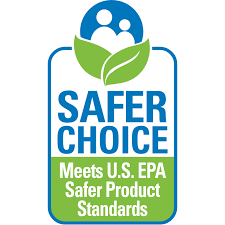
A government-backed certification meaning the EPA has reviewed every ingredient in the product for its impact on human health and environmental safety.
A product carrying the EPA Safer Choice label has passed a rigorous, independent review that goes far beyond what any brand can self-certify.
2. EWG Verified
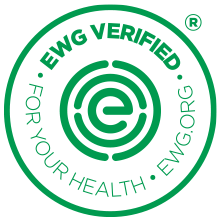
Means the product meets the Environmental Working Group‘s strictest health standards. EWG evaluates each ingredient against its database of known health hazards and requires full transparency.
This is an independent, third-party verification.
3. Leaping Bunny

Certifies that no animal testing was conducted at any stage of production.
It is the gold standard for cruelty-free claims, but it does not assess ingredient safety or environmental impact, so it works best alongside one of the certifications above.
4. MADE SAFE
Screens products for known toxic chemicals including carcinogens, endocrine disruptors, and heavy metals.
MADE SAFE is particularly useful for families who want an extra layer of reassurance that the product has been vetted beyond standard regulations.
If a dish soap carries even one of these certifications, it has been independently verified, not just self-labeled. Two or more is even better.
Small Kitchen Choices, Real Change
Switching your dish soap might feel like a small thing, and honestly, it is. But that is what I like about it.
You do not have to overhaul your entire kitchen overnight or become a different person. You just pick a better soap next time you run out.
What leaves our kitchen sinks ends up in waterways, and choosing a biodegradable dish soap made with plant-based ingredients is one of the simplest, most affordable swaps you can make.
If you are not sure where to start, Blueland Dish Soap Powder is the one I keep coming back to.
The triple certification, zero plastic packaging, and refillable system make it the strongest all-around pick on this list. If you also run a dishwasher, grabbing The Dish Duo covers both bases at a discount.
I believe small choices in the kitchen really do add up.
Every time you wash a plate, a blender jar, or an air fryer basket with something kinder, you are choosing better for your home and for the world outside it. And that matters more than most people think.
- Quick Picks at a Glance
- What Makes a Dish Soap Truly Eco-Friendly?
- How to Spot Greenwashing in Dish Soap
- 6 Best Eco-Friendly Dish Soaps for Your Kitchen (2026)
- How the 6 Picks Compare
- Liquid vs Bar vs Powder: Which Eco Dish Soap Format Is Right for You?
- Eco Certifications That Actually Mean Something
- Small Kitchen Choices, Real Change
- Frequently Asked Questions
Find More Tips At:


Frequently Asked Questions
Is Dawn dish soap eco-friendly?
Dawn is effective at cutting grease, but it contains synthetic fragrances, dyes, and surfactants that are not fully biodegradable. While Dawn is famously used in wildlife oil spill clean-ups, its ingredient list does not meet the standards of eco certifications like EPA Safer Choice or EWG Verified. If you are looking for a genuinely eco-friendly dish soap alternative, choose one made with plant-based surfactants, free of synthetic additives, and backed by an independent certification.
What is the safest dish soap for the environment?
The safest dish soaps for the environment are those certified by EPA Safer Choice, which means every ingredient has been reviewed for its impact on human health and aquatic ecosystems. Blueland Dish Soap Powder and ECOS Dishmate both carry this certification. Look for soaps that are fully biodegradable, free from phosphates and synthetic surfactants, and packaged in recyclable or refillable containers.
Do eco-friendly dish soaps actually kill bacteria?
Most dish soaps, including eco-friendly ones, work by lifting grease, food particles, and bacteria off surfaces so they can be rinsed away. They do not need to “kill” bacteria to be effective. Hot water combined with the mechanical action of scrubbing does the heavy lifting. If you need a sanitizing step for baby bottles or cutting boards used with raw meat, a brief soak in a diluted vinegar solution or a hot rinse is more effective than relying on any dish soap alone.
Are dish soap bars sanitary?
Yes. Dish soap bars are sanitary for the same reason hand soap bars are safe: bacteria do not survive well on the surface of soap. The key is keeping the bar dry between uses by placing it on a draining dish or soap tray. A well-drained dish soap bar will last longer and stay clean throughout its lifespan.
What eco certifications should I look for on dish soap?
The most meaningful certifications for dish soap are EPA Safer Choice (government-backed ingredient safety review), EWG Verified (independent third-party health screening), Leaping Bunny (no animal testing), and MADE SAFE (screens for toxic chemicals including carcinogens and endocrine disruptors). A product with even one of these certifications has been independently verified beyond what the brand claims on its own label.
Can I use eco-friendly dish soap to clean my air fryer?
Yes, and it is one of the safest ways to do it. A small amount of plant-based dish soap on a non-abrasive sponge or brush cleans an air fryer basket effectively without leaving chemical residue on surfaces that heat up and contact food. Avoid soaking any electrical components, and focus on the removable basket and tray. Eco-friendly dish soaps with no synthetic fragrance are especially good here because they will not leave scent residue behind.
What is PVA in dishwasher pods and why does it matter?
PVA (polyvinyl alcohol) is the plastic film that wraps conventional dishwasher pods. It dissolves in water but does not fully biodegrade. Studies have found that a significant portion of dissolved PVA passes through water treatment and enters rivers, lakes, and oceans as microplastic. Plastic-free dishwasher tablets like Blueland’s skip PVA entirely, so no microplastic enters the water supply from your dishwasher cycle.
