
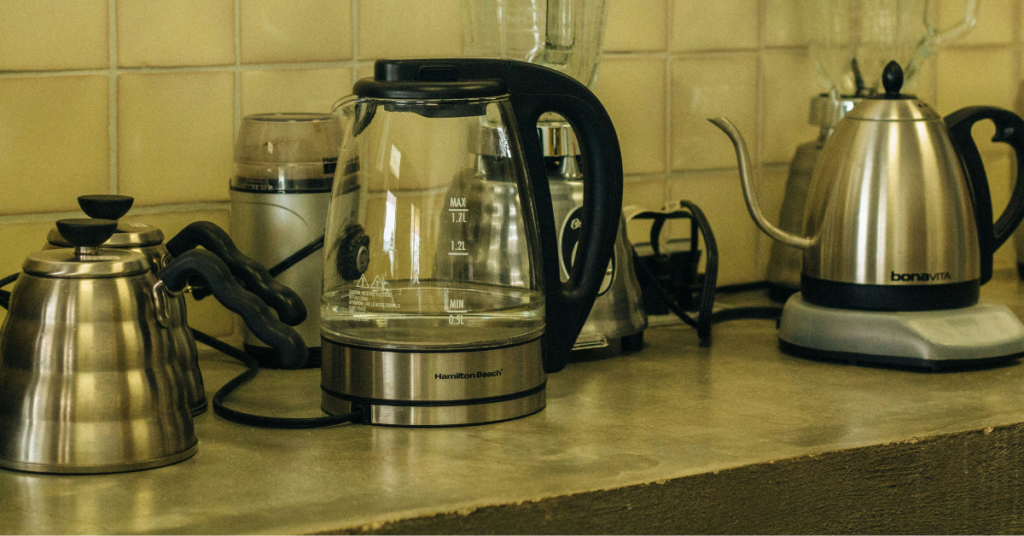
After digging through specs, reviews, and way too many product photos of kettle lids, here are the best plastic free electric kettles I would actually put in my own kitchen:
Key Takeaways
- Best overall: ASCOT Stainless Steel Kettle, full 304 stainless steel interior including the lid, spout, and filter
- Best budget: Cosori Glass GK172-CO, borosilicate glass body with stainless steel inner lid and filter, around $25 to $30
- Most “stainless steel” and “glass” kettles still have hidden plastic in the lid, spout filter, or water level window that contacts boiling water or steam.
- A two-minute inspection of your current kettle (lid underside, spout filter, water level window) can tell you if plastic is hiding in the water path.
- Plastic kettles can release millions of microplastic particles per liter at boiling temperature. “BPA-free” does not solve this because the issue is the material itself breaking down under heat.
Both keep plastic completely away from the water and steam path, the only standard that counts for a truly non-toxic electric kettle.
I still remember the first time I read that boiling water in a plastic kettle can release millions of tiny plastic particles into every single cup. My stomach dropped.
It was the same uneasy feeling I get watching plastic collect in waterways back home, slowly becoming part of the water itself.
What goes into our water matters, whether it is a river or a kettle sitting on our kitchen counter. So I set out to find kettles where no plastic touches the water at all. Here is what I found.
5 Verified Picks, Side by Side
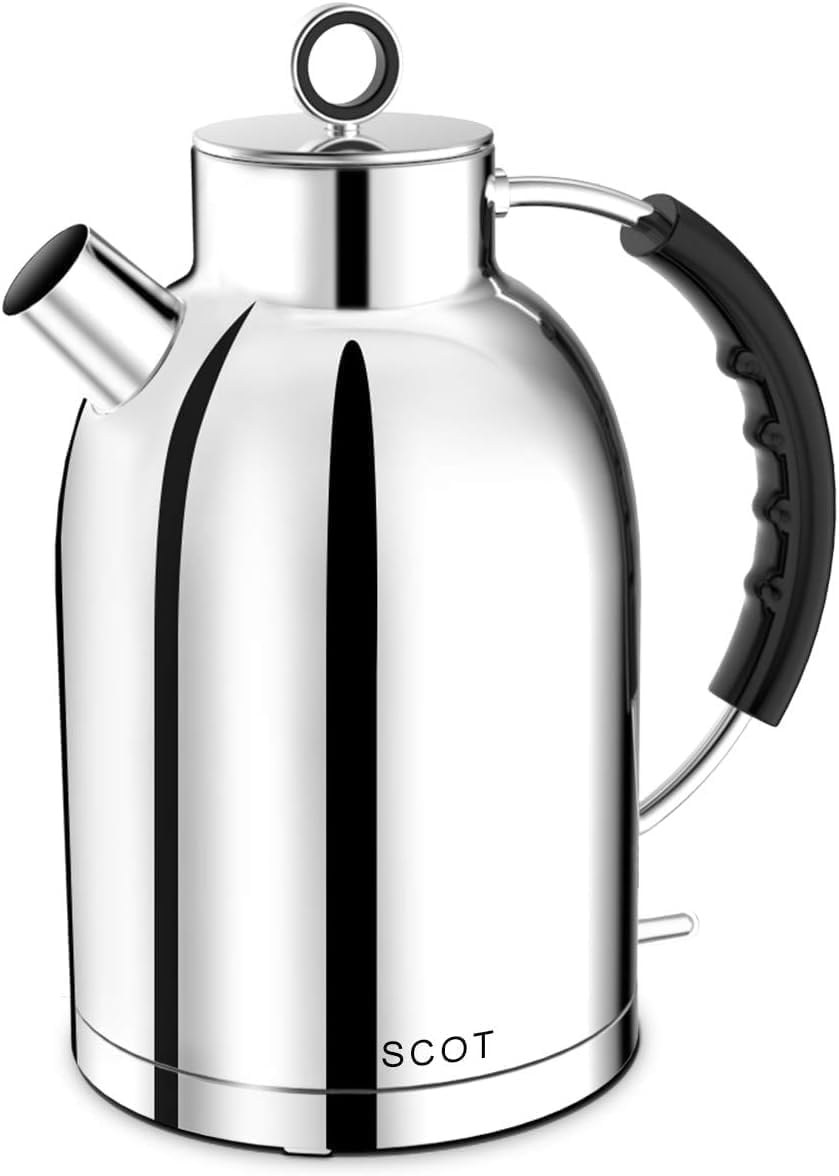
ASCOT Stainless Steel
Full SS interior including lid, spout, and filter. Retro design, 2-year warranty.
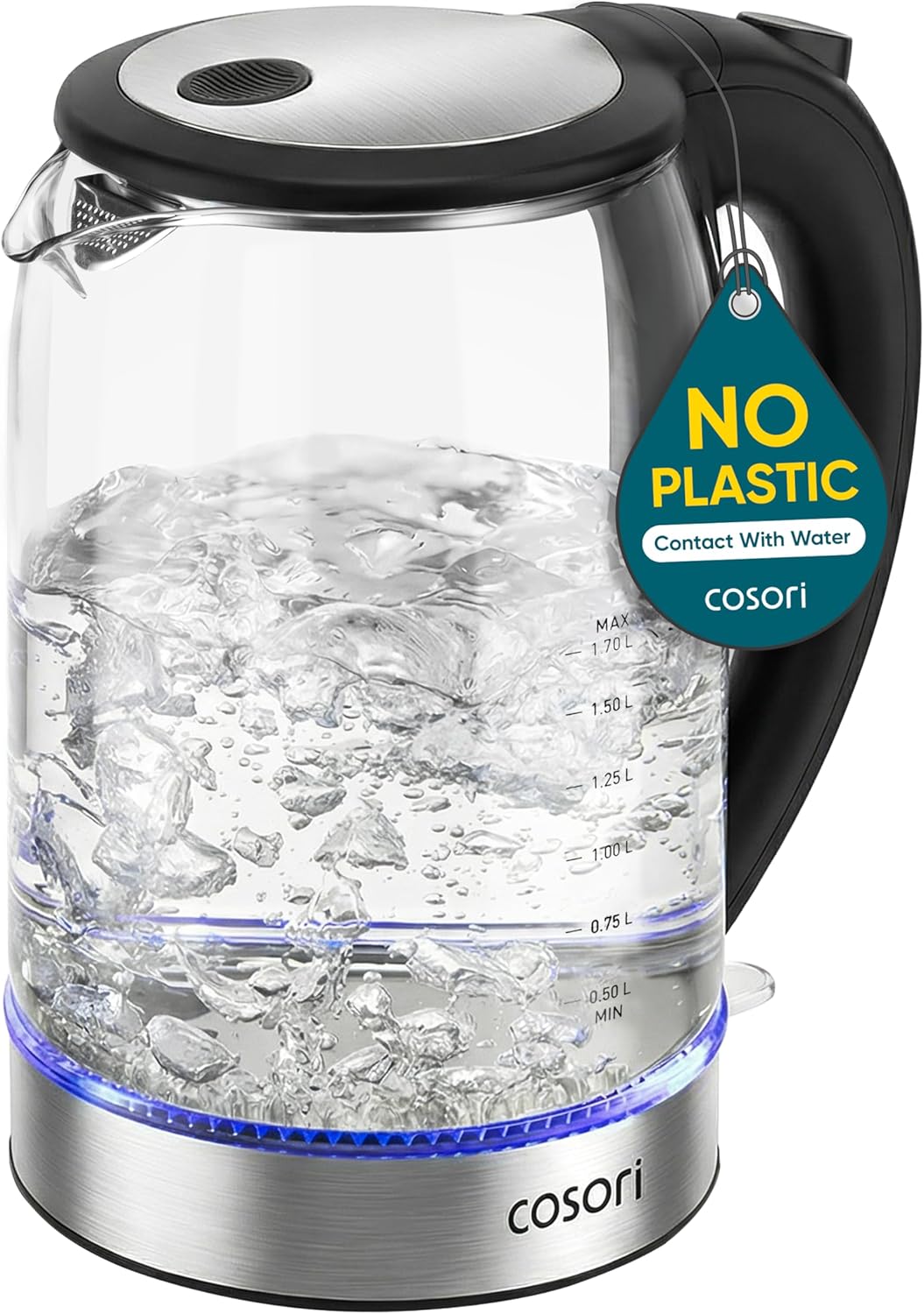
Cosori Glass GK172-CO
Most affordable truly plastic-free option. 1500W fast boil.
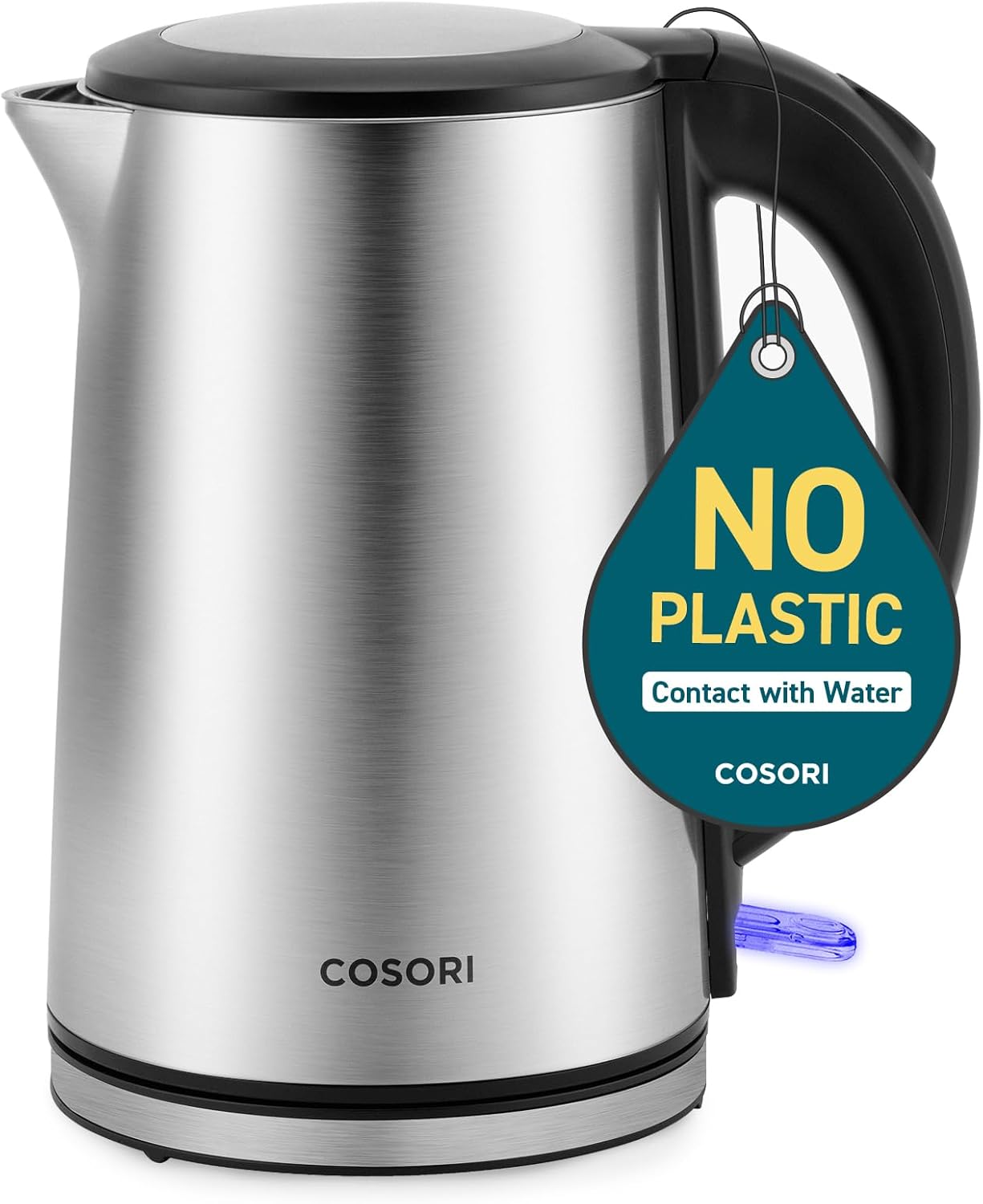
Cosori Double-Wall SS
Double-wall cool-touch. Seamless inner shell, no crevices.
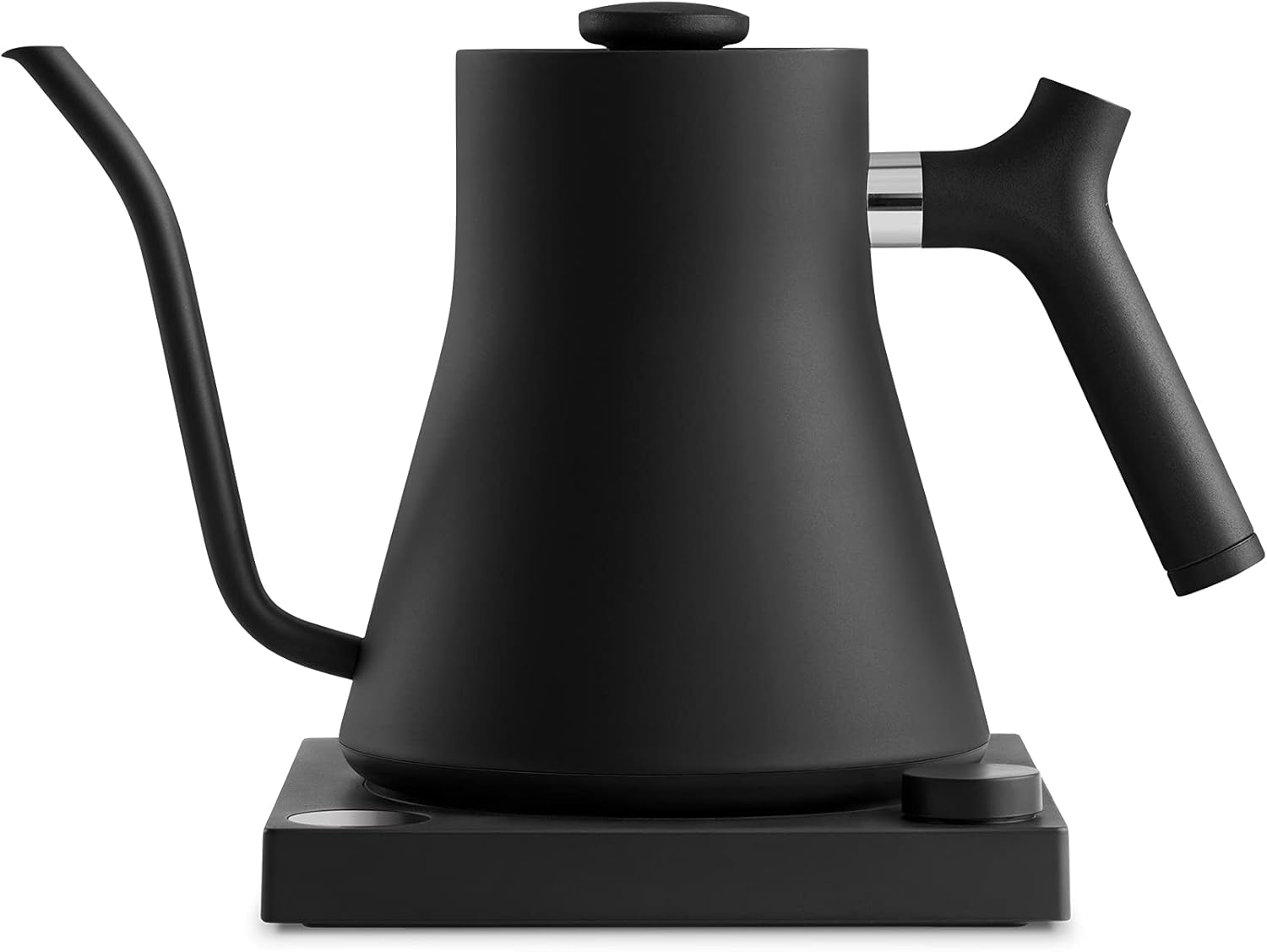
Fellow Stagg EKG
Precision gooseneck. Variable temp with hold. Built to last.
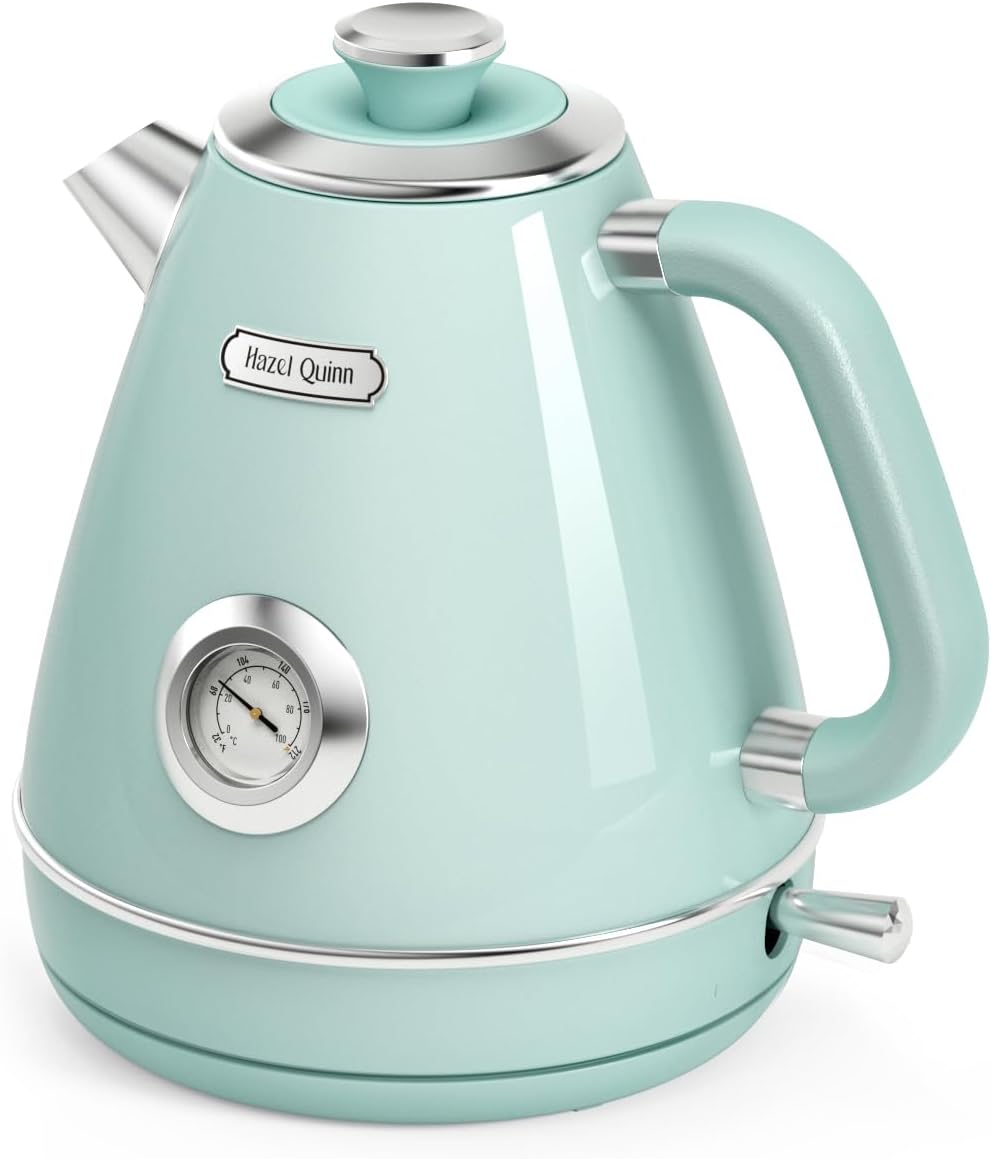
Hazel Quinn Retro
Built-in thermometer dial. Strix thermostat. 1.7L capacity.
Where Does Plastic Hide in “Stainless Steel” and “Glass” Kettles?
This is the part most people do not realize until they look closely. A kettle marketed as “stainless steel” or “glass” can still have plastic hiding in several internal components that touch your water or steam every time you boil.
Hidden plastic in electric kettles is commonly found in five places:
- Spout filter
- Water level window
- Lid mechanism or underside
- Lid seal or gasket
- Base seal
That is the definition worth remembering, because most manufacturers are not going to spell it out for you.
The 5 Places Plastic Hides in Electric Kettles
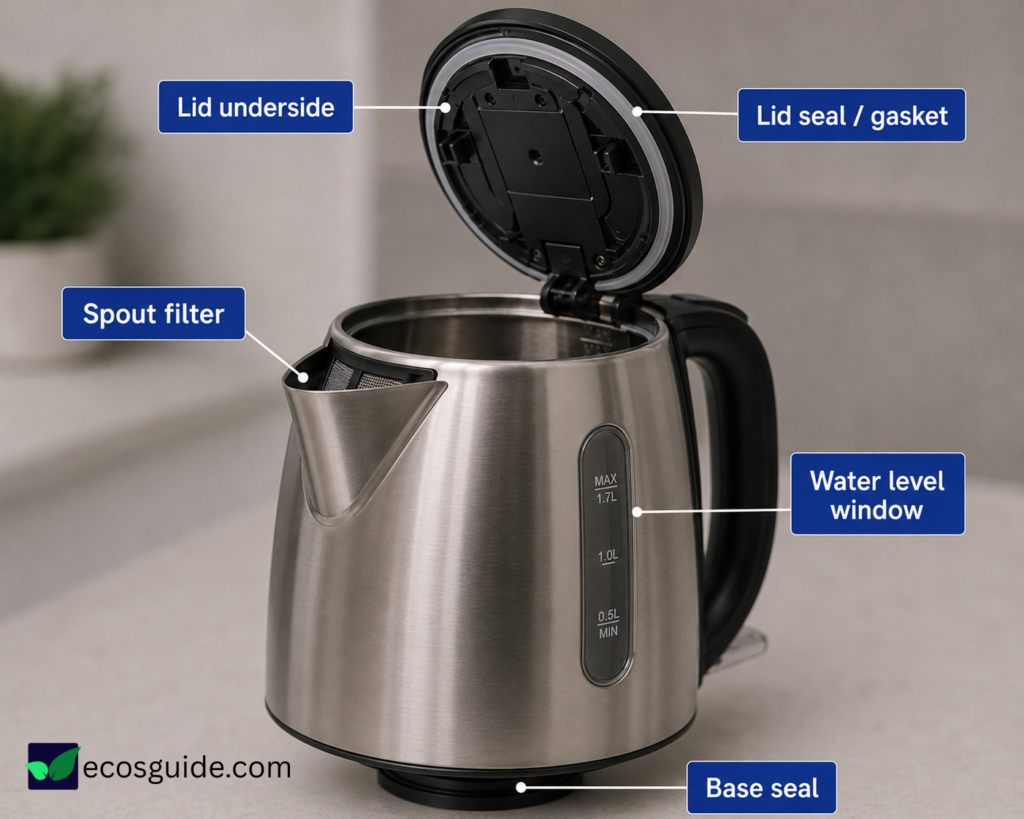
| Component | Where to Look | Why It Matters |
| Spout filter | Inside the spout, where water flows out | Often a plastic mesh, submerged during boiling |
| Water level window | Clear strip running down the side | Almost always plastic, in constant contact with boiling water |
| Lid underside | Open the lid and look underneath | Steam (hotter than boiling water) contacts this surface every boil |
| Lid seal / gasket | Ring around the lid edge | Sits in the steam zone during the entire heating cycle |
| Base seal | Bottom where the heating element connects | Usually silicone (not plastic), minimal risk |
Mixed materials also make a kettle harder to recycle at end of life, because plastic bonded to metal cannot be separated easily at most recycling facilities.
If you are cleaning and maintaining a stainless steel kettle already, regular descaling also gives you a chance to inspect your kettle for wear on seals or coatings.
What Makes an Electric Kettle Truly Plastic-Free?
A plastic-free electric kettle is one where no plastic comes into contact with water or steam at any point during boiling or pouring.
That includes the interior body, lid underside, spout, filter, and water level window. It is a higher bar than most brands advertise, but it is the only one that actually matters for your health.
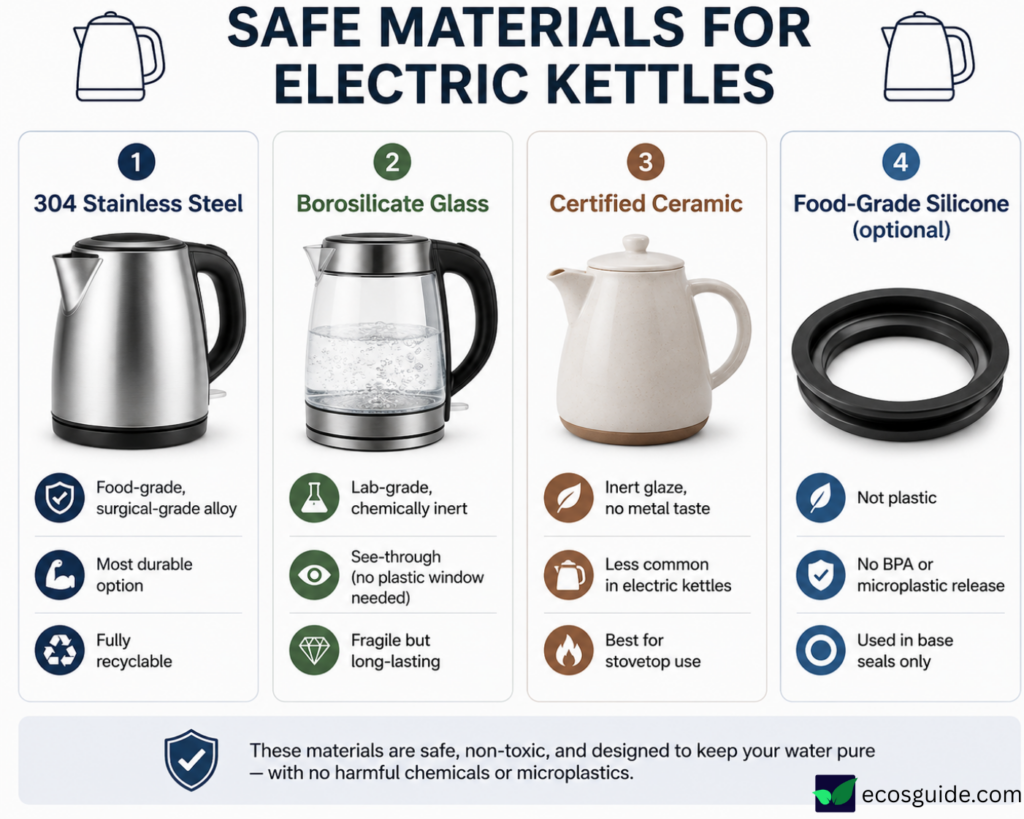
Safe Materials for Boiling Water
| Material | Properties | Best For |
| 304 (18/8) stainless steel | Food-grade, used in surgical instruments and professional cookware. Chemically stable at boiling temps. | Durability, families, everyday use |
| Borosilicate glass | Lab-grade glass. Chemically inert, does not degrade over time. Transparent. | Seeing water level without a plastic window |
| Certified ceramic | Inert glaze over the clay body. No metal taste. | Specialty / stovetop kettles (less common in electric) |
| Food-grade silicone | Chemically distinct from plastic. No BPA, phthalates, or microplastic release at boiling temps. | Base seals (an engineering reality in all electric kettles) |
304 stainless steel is the same food-grade alloy used in surgical instruments and professional cookware worldwide.
It is chemically stable at boiling temperatures and does not leach metals or compounds into water under normal kitchen use.
Borosilicate glass is equally inert and has the added benefit of being transparent, so you can see the water level without needing a plastic window.
Now, the honest part. Virtually every electric kettle on the market has a silicone or rubber seal at the base where the heating element connects.
This is currently an engineering reality, not a design shortcut. Food-grade silicone is chemically distinct from plastic. It does not contain BPA, phthalates, or the polymers that break into microplastics at high temperatures.
The base seal also sits at the very bottom of the kettle and has minimal contact with water compared to the lid, spout, and filter.
For most people, this is a practical compromise that does not undermine the purpose of choosing a plastic-free kettle.
If you want to verify a product’s safety claims yourself, the EPA’s Safer Choice program is a useful starting point for understanding material safety standards.
Do Electric Kettles Release Microplastics?
Yes. Kettles with plastic components release measurable amounts of microplastics and nanoparticles when the water is heated.
According to a 2020 study published in Nature Food, polypropylene products (including electric kettles) can release millions of microplastic particles per liter, with release rates climbing sharply as water temperature approaches boiling.
A 2025 study from the University of Queensland went further, detecting approximately 12 million nanoparticles per milliliter on the first boil of a new plastic kettle.
Nanoparticles are small enough to cross cell membranes, which is a separate concern from the larger microplastic fragments.
These numbers are why “BPA-free” labels on plastic kettles miss the point. The issue is not one chemical. It is the material itself breaking down under heat. A kettle with a full stainless steel or glass water path eliminates the source entirely.
This is exactly why I looked for kettles where no plastic touches the water or steam path. The five picks below all meet that standard.
The 5 Best Plastic-Free Electric Kettles for 2026
I picked these five kettles based on a specific set of criteria.
Every kettle on this list has a full stainless steel or borosilicate glass water and steam path, with no plastic contacting water at any point during boiling or pouring.
The list spans roughly $25 to $195, so there is an option for every budget.
A quick note on honesty: I have not personally tested every kettle on this list in my own kitchen. What I have done is verify each one through manufacturer materials, independent tester cross-references, and careful review analysis.
Where a kettle has been tested by a rigorous third-party source, I mention it.
1. ASCOT Stainless Steel Kettle
Best for: Everyday use with zero plastic worry
Key features:
- Full 304 stainless steel interior, lid, spout, and filter
- 1.5L / 1500W fast boil
- Retro handmade design, multiple colors
- Auto shut-off and boil-dry protection
- 2-year replacement warranty
The ASCOT Stainless Steel Kettle is a full 304 stainless steel kettle where the interior, lid, spout, and filter are all metal.
No plastic touches the water at any point.
The handmade retro design gives it a vintage look that most plastic-heavy kettles cannot match, and it comes in several color options including cream, white, and polished silver.
At 1500W, it boils 1.5 liters of water in about 5 minutes. It includes auto shut-off and boil-dry protection, and the power cord wraps into the base for a tidy countertop.
ASCOT offers a 2-year replacement warranty, which is longer than most brands in this price range. At around $40 to $55, this kettle hits the best balance of verified plastic-free construction, price, and reliability.
From an eco perspective, a full stainless steel body means this kettle is recyclable at end of life, unlike mixed-material plastic kettles that end up in landfill because recycling facilities cannot separate the bonded materials.
Check Latest Price2. Cosori Glass GK172-CO
Best for: Budget buyers who want to see their water boil
Key features:
- Borosilicate glass body
- SS inner lid and filter
- 1.7L / 1500W
- Blue LED ring
- Glass-shaped spout (no separate plastic piece)
If you want a plastic-free kettle without spending more than $30, the Cosori Glass GK172-CO is the pick.
It uses a borosilicate glass body with a stainless steel inner lid and filter.
No plastic contacts the water at any point. The spout is shaped directly out of the glass carafe, which means there is no separate plastic spout piece to worry about.
Borosilicate glass is the same material used in lab equipment.
It is chemically inert, meaning it does not react with water at any temperature and does not degrade over time the way plastic does.
That also means fewer replacements over the years and less waste.
The GK172-CO has a 1500W heating element for a fast boil, and a blue LED ring lights up during heating so you can see at a glance when it is running.
For a one or two person household, the 1.7L capacity is usually plenty.
Check Latest Price3. Cosori Double-Wall Stainless Steel
Best for: Families who want a cool-touch kettle without plastic
Key features:
- Seamless 304 SS inner shell
- Double-wall cool-touch exterior
- 2-level lid (45° and 80°)
- 1.5L / 1500W
The Cosori Double-Wall Stainless Steel Kettle takes the no-plastic promise a step further with a seamless inner shell.
There are no crevices where limescale or residue can get trapped, making it easier to clean and more hygienic over time.
The inner lid, filter, and spout are all stainless steel, and the double-wall design means the outside stays cool to the touch even when the water inside is boiling.
One thoughtful detail is the 2-level lid, which opens to 45 degrees using the button (to prevent splashing) or lifts to 80 degrees for easy filling and cleaning.
At 1.5L and 1500W, it boils a full kettle in 3 to 6 minutes. If you already trust the Cosori brand from the glass version, this is the stainless steel step up from the same company.
Check Latest Price4. Fellow Stagg EKG
Best for: Pour-over coffee lovers who care about materials
Key features:
- 304 SS body and lid
- Precision gooseneck spout
- Variable temp control with 60-min hold
- 0.9L / 1200W
- LCD display
The kettle body and lid are 304 stainless steel.
A precision gooseneck spout gives you full control over pour speed, while variable temperature control with a 60-minute hold function makes this kettle a favorite among pour-over coffee enthusiasts.
The power base is plastic, which is standard for cordless electric kettles, but the kettle itself where water and steam make contact is fully stainless steel.
Fellow has a reputation for building products that last.
Their focus on durability and repairability means fewer kettles ending up in landfill over a lifetime, which matters when you are thinking about the full environmental footprint of what you buy.
The Stagg EKG has a 0.9 liter capacity (designed for pour-over, not for filling a family’s worth of mugs) and sits in the $150 to $170 range.
It is the most expensive kettle on this list, but for the coffee-focused reader who also wants a completely plastic-free water path, it is hard to beat.
Check Latest Price5. Hazel Quinn Retro Electric Kettle
Best for: Style-conscious buyers who want a large-capacity plastic-free kettle
Key features:
- Full 304 SS interior, lid, and filter
- Built-in analog thermometer
- British Strix thermostat
- 1.7L / 1200W
- Multiple color options
The Hazel Quinn Retro Electric Kettle is crafted with food-grade 304 stainless steel in the interior, lid, and filter, with no plastic touching the water.
What sets it apart is the built-in analog thermometer dial on the front, which lets you monitor the water temperature without lifting the lid or relying on digital controls.
It uses a British Strix thermostat (the industry standard for reliability in electric kettles) and holds 1.7 liters, enough for a full household.
At 1200W, it boils a bit slower than the 1500W options on this list, but 4 to 5 minutes for a full kettle is still faster than any stovetop method.
It comes in colors like Mint Green, Pearl White and Ruby Red, making it one of the more visually distinctive plastic-free kettles available.
This model also has a floral painted version designed with artist Eduardo Recife makes this kettle feel more like a kitchen centerpiece than an appliance.
At around $35 to $45, the Hazel Quinn offers solid plastic-free construction with more personality than most stainless steel kettles in its price range.
Check Latest PriceI want to be straightforward about something. No electric kettle on the market today is 100% plastic-free in every single component.
The base seal is a reality of how electric kettles are engineered, and most cordless kettles have a plastic power base. But the five kettles above keep plastic away from the parts that matter most: the water, the steam, and every surface those touch on the way to your cup.
That is the standard I looked for, and these are the best options I found.
How to Check If Your Current Kettle Has Hidden Plastic
Before buying a new kettle, it is worth spending two minutes checking what you already have. You might be surprised by what you find.
Start by opening the lid and looking at the underside. Is it metal or plastic?
If plastic, that surface contacts steam every time you boil.
Next, check the spout filter. If you can remove it, pull it out and look at the material. Many filters are plastic mesh even in otherwise metal kettles.
Then look at the side of the kettle for a water level window. If it is a clear strip, it is almost certainly plastic, and it is submerged in water during every boil.
Finally, check the lid seal and the base area. A silicone gasket at the base is normal and not a concern (food-grade silicone is not plastic). But a plastic lid seal or plastic hinge mechanism is in the steam zone, which is hotter than the water itself.
If you find plastic in any water-contact area, it may be time to consider a switch.
And if your stainless steel kettle just needs a good clean, our guide to cleaning and descaling stainless steel kettles walks through every step without harsh chemicals.
One Small Swap, One Less Plastic Problem
Switching to a plastic-free kettle is one of the simplest changes you can make in your kitchen, and it is one that matters twice.
It keeps microplastics out of your water, and it means one less plastic-heavy appliance that ends up impossible to recycle when it wears out.
I care about this because I have seen what plastic does when it gets into water. Once it is there, it does not leave.
Choosing a kettle where no plastic touches your water is a small, quiet decision, but it is a real one.
If I had to pick just one kettle from this list, I would start with the ASCOT Stainless Steel Kettle for its fully verified stainless steel water path, solid retro design, and the peace of mind that comes with it.
Small choices in the kitchen add up. This is one of the good ones.
- 5 Verified Picks, Side by Side
- Where Does Plastic Hide in “Stainless Steel” and “Glass” Kettles?
- What Makes an Electric Kettle Truly Plastic-Free?
- Do Electric Kettles Release Microplastics?
- The 5 Best Plastic-Free Electric Kettles for 2026
- How to Check If Your Current Kettle Has Hidden Plastic
- One Small Swap, One Less Plastic Problem
- Frequently Asked Questions
Find More Tips At:


Frequently Asked Questions
Are glass electric kettles plastic free?
Not always. Many glass kettles still have plastic lids, plastic spout filters, or plastic components around the heating element base. The lid underside and spout area are the most common places where plastic hides in glass kettles. The Cosori Glass GK172-CO is one of the few glass kettles that keeps plastic completely away from the water and steam path.
Is stainless steel or glass better for an electric kettle?
Both are safe options if the interior is fully free of plastic. 304 (18/8) stainless steel is more durable and a better fit for households with children or anyone who tends to knock things around in the kitchen. Borosilicate glass is chemically inert and lets you see the water level without a plastic window, but it is more fragile. Choose based on your kitchen habits and lifestyle.
Do electric kettles release microplastics?
Kettles with plastic components can release millions of microplastic particles per liter at boiling temperature, according to research published in Nature Food. Switching to a kettle with a full stainless steel or glass water path eliminates this source of exposure entirely.
Is silicone in kettles the same as plastic?
No. Food-grade silicone is chemically distinct from plastic and does not leach BPA, phthalates, or microplastics at boiling temperatures. Silicone base seals in electric kettles are a practical engineering reality and represent minimal risk. A silicone seal at the base of your kettle is not a reason to worry.
How can I tell if my kettle has hidden plastic?
Open the lid and look at the underside. Check the spout filter material by removing it if possible. Look for a plastic water level window strip on the side of the kettle. If any of these parts are plastic, they are in direct contact with water or steam during every boil. A two-minute inspection is all it takes.
Is BPA-free plastic in kettles actually safe?
“BPA-free” does not mean plastic-free. Many BPA-free plastics use replacement chemicals such as BPS and BPF, and early research suggests these alternatives may carry similar health concerns. A truly plastic-free kettle avoids the question entirely by removing plastic from the water and steam path altogether.
What is the safest material for boiling water?
The safest materials for boiling water are 304 (18/8) stainless steel, borosilicate glass, and certified ceramic. All three are chemically inert at boiling temperatures and do not leach harmful compounds into water. For electric kettles specifically, stainless steel and borosilicate glass are the most widely available and practical options.
