
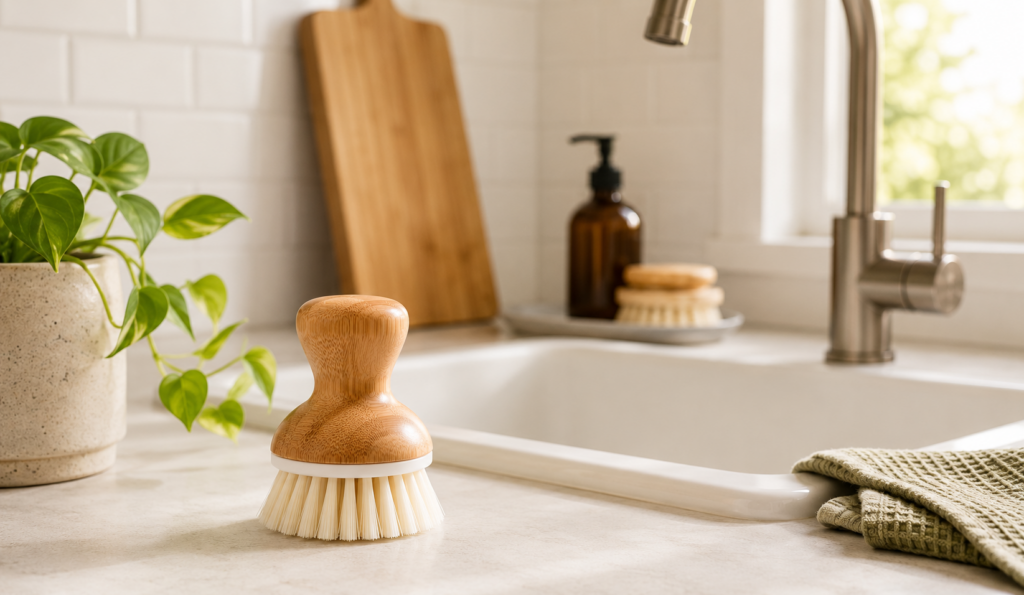
The best bamboo dish brushes for 2026, based on my research and eco criteria, are summarized in the key takeaways table below.
Key Takeaways
- eplanita Natural Dish Brush is the best overall: tampico bristles, plastic-free, 3 replacement heads included
- Vove Bamboo Dish Brush is the strongest eco-credential pick: FSC-certified bamboo, sisal bristles
- SUBEKYU 3-Pack is best for everyday use: comes with a ceramic holder that prevents mold
- Choose bristle type by task: sisal for cast iron, tampico for everyday dishes, coconut for heavy scrubbing
- Plastic sponges and brushes shed microplastics into waterways every wash. Bamboo brushes with plant-based bristles shed zero.• Store upright, rinse after each use, and do a weekly white vinegar soak to prevent mold
Quick Picks at a Glance
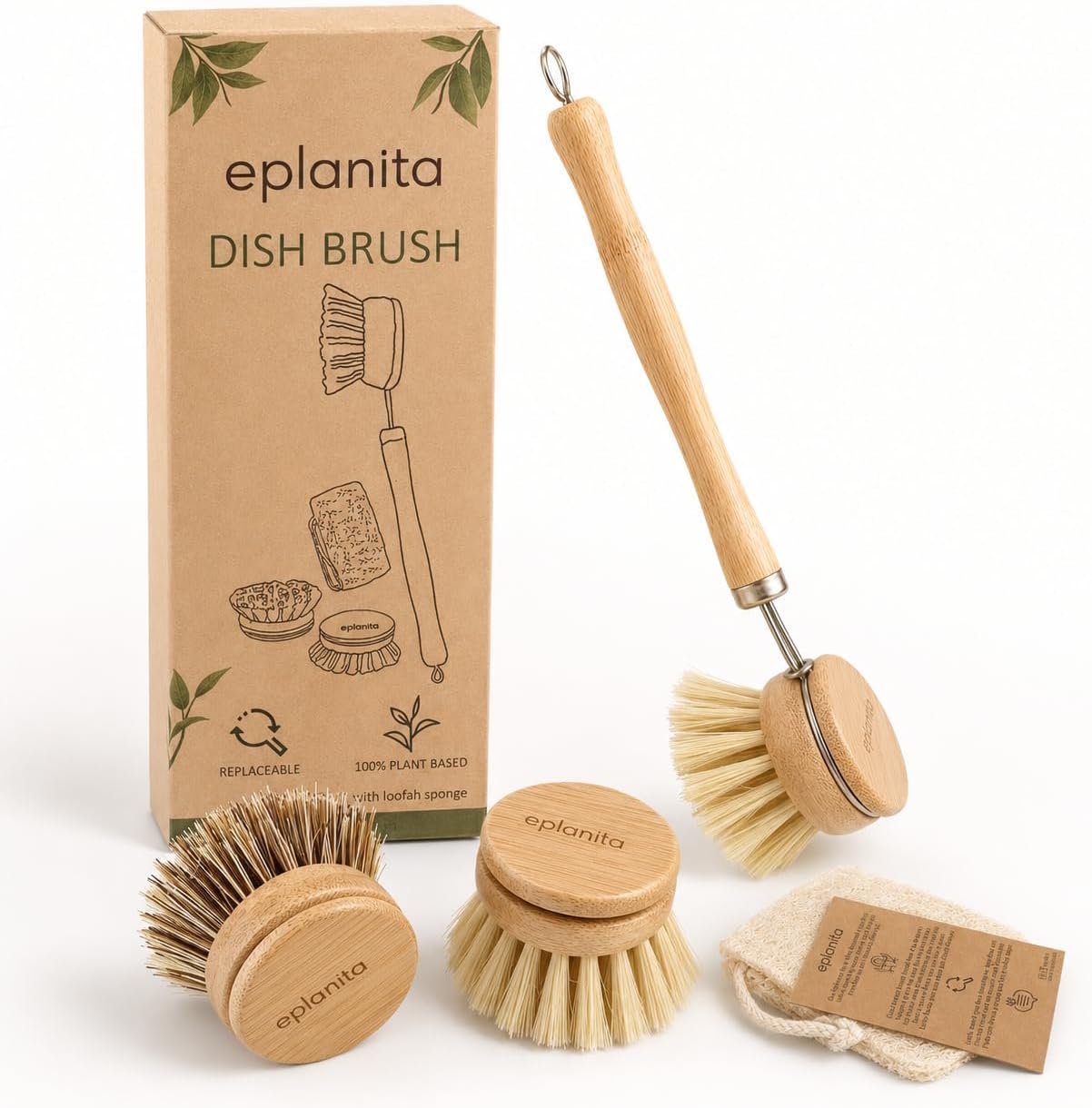
eplanita Natural Dish Brush
Tampico bristles, plastic-free, 3 replacement heads.
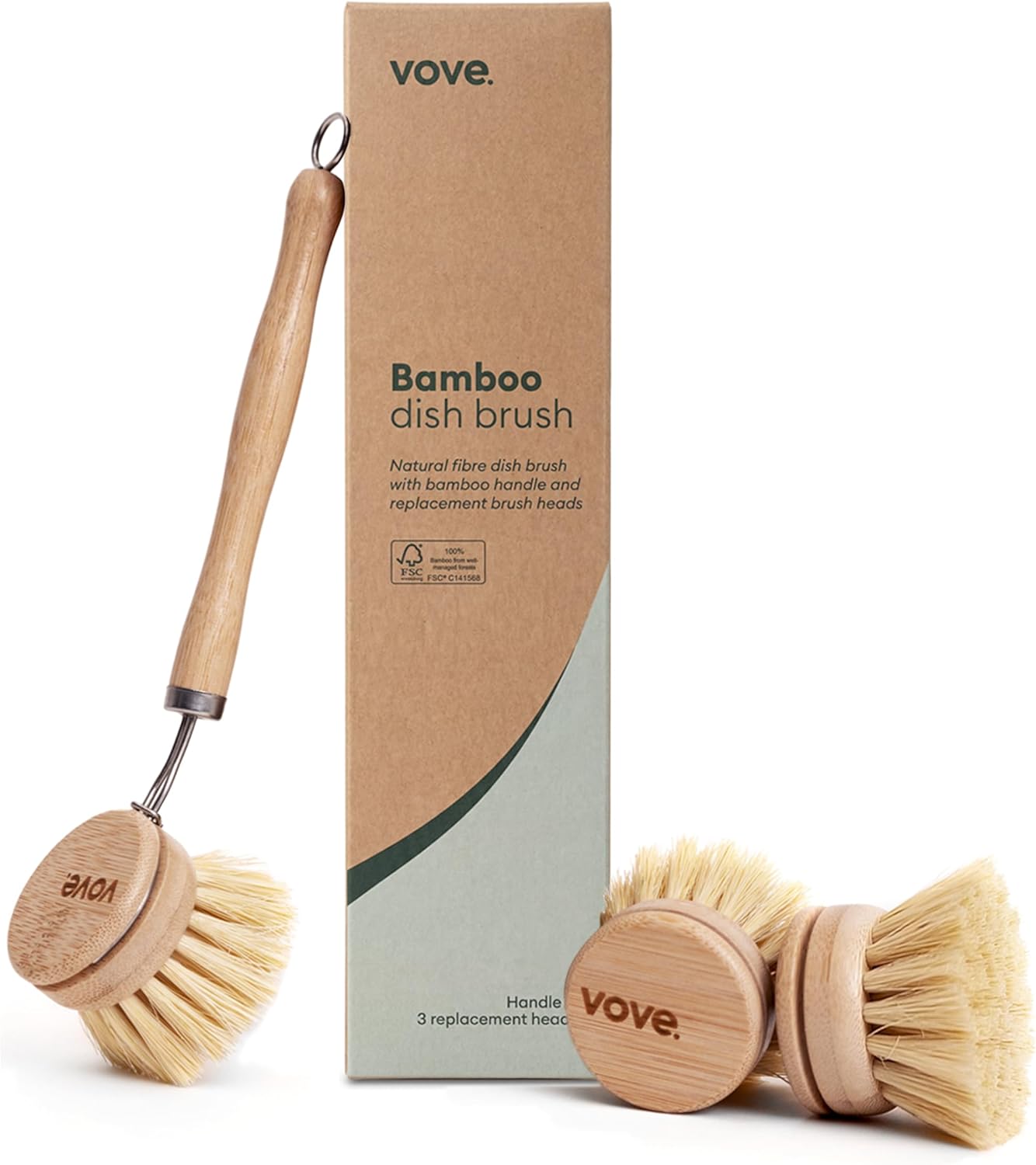
Vove Bamboo Dish Brush
FSC-certified bamboo, sisal bristles, 3 replacement heads.
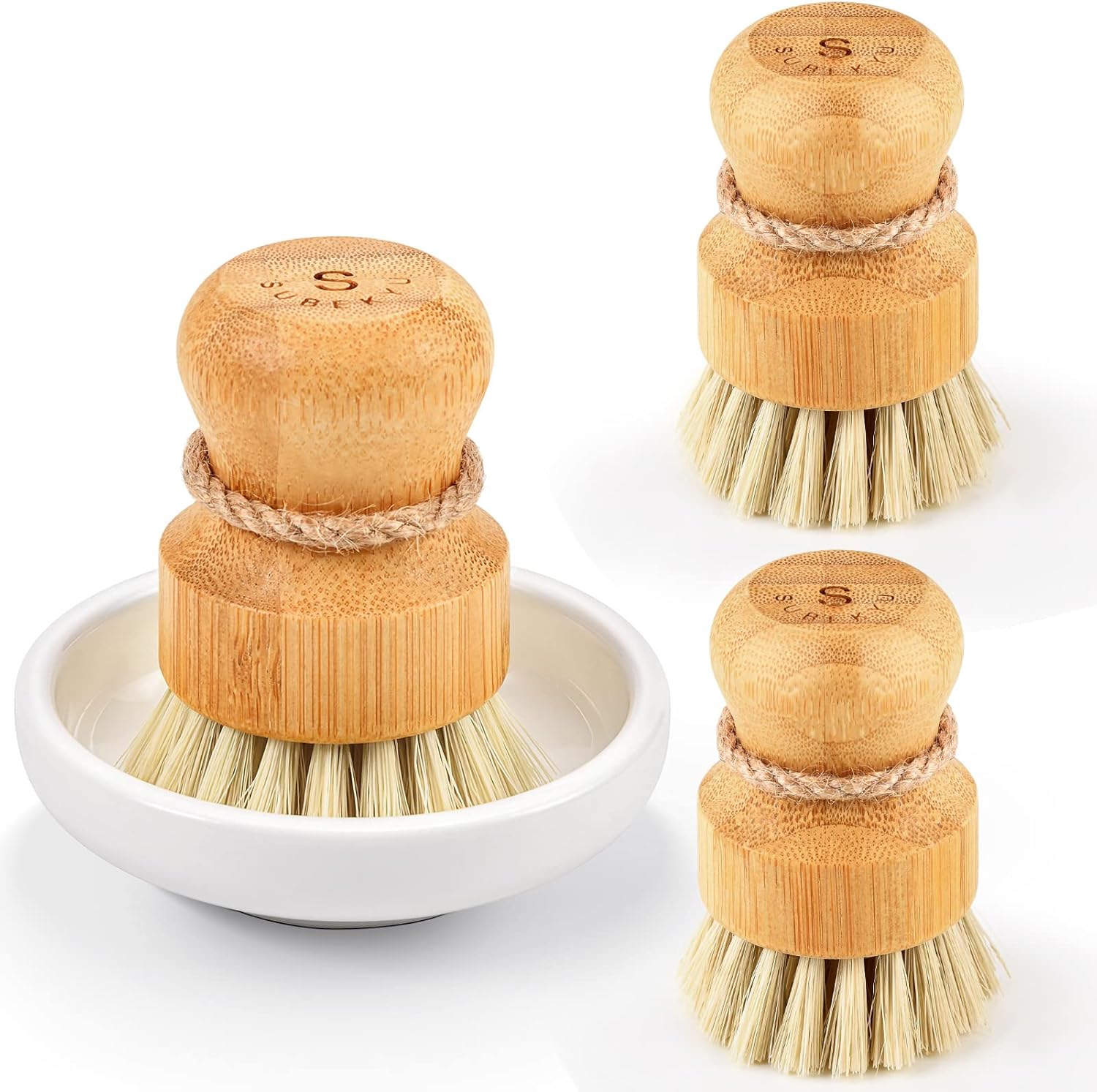
SUBEKYU 3-Pack Brush Set
Ceramic holder prevents mold, sisal bristles, 3-pack.
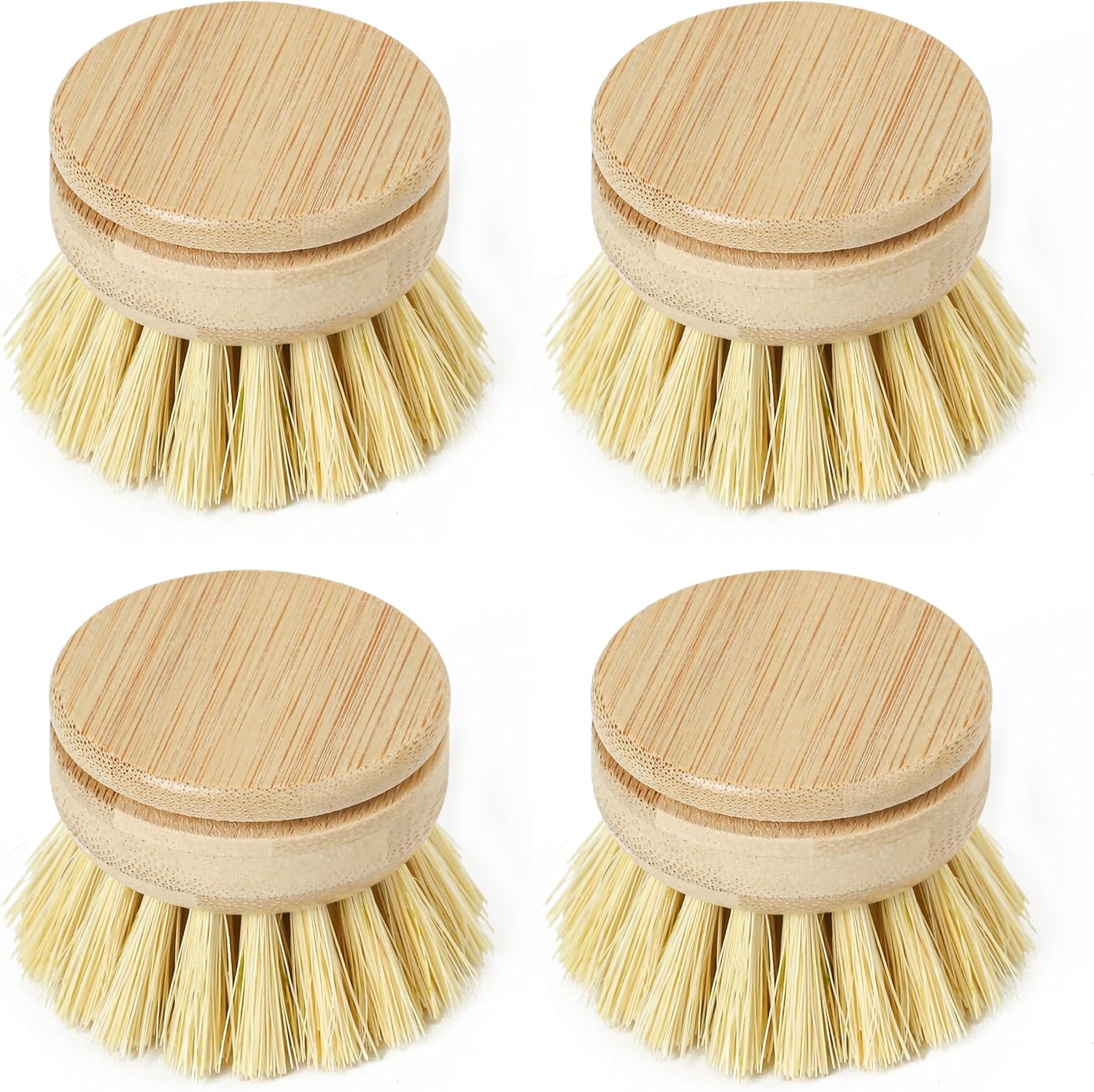
Jungle Culture 6-Pack
Complete kitchen set, sisal + coconut bristles, hemp cloth.
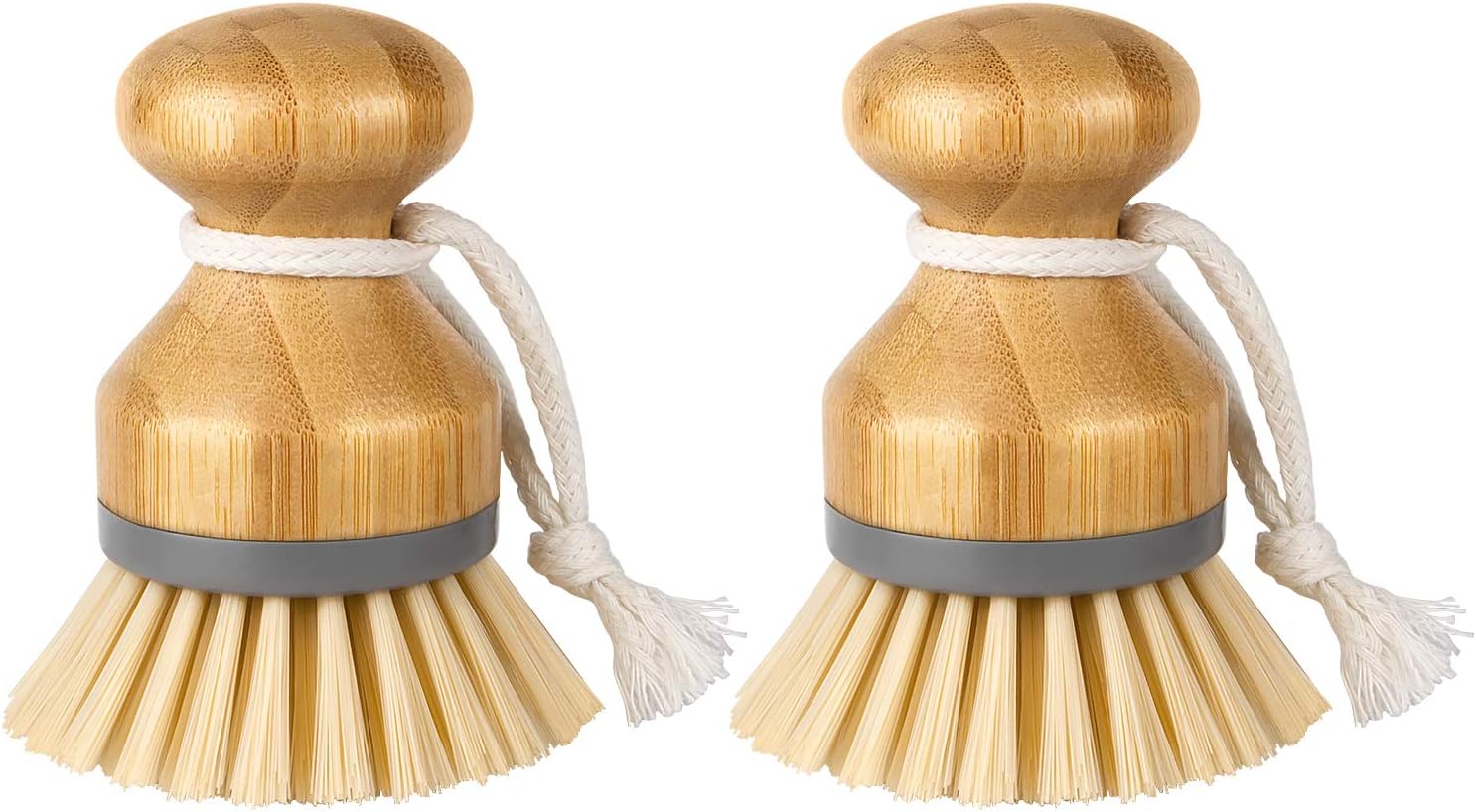
MR.SIGA Bamboo Palm Brush
Palm-grip design, low price entry point, pack of 2.
I, Hajar Roslen, never used to think about what a dish brush leaves behind. Not the food it scrubs off, but the tiny particles it sheds into the water.
Once I learned that plastic sponges and brushes release microplastics with every single wash, and those particles flow straight from our kitchen sinks into rivers and oceans, I could not unknow it.
And it is not like you can recycle your way out of the problem.
Most plastic brushes are made from a mix of materials (plastic handle, nylon bristles, metal staples) that cannot be separated for recycling, so they end up in landfill no matter what bin you put them in.
That is why I spent weeks researching which bamboo dish brushes are genuinely worth buying, and which ones are just greenwashing in a bamboo handle.
What Makes a Good Bamboo Dish Brush?
A bamboo dish brush is a cleaning tool with a handle made from bamboo (a fast-growing, naturally antimicrobial grass) and bristles made from plant-based fibres such as sisal, tampico, coconut, or palm.
That definition sounds simple, but the category is full of products that bend the rules.
A brush can call itself “bamboo” while hiding nylon bristles in the head or coating the handle in synthetic varnish that makes it non-compostable.
When I evaluate a bamboo dish brush, I look at three things.
First, the bristle material: are the bristles genuinely plant-based, or are they recycled plastic or nylon marketed with green language?
Second, the handle: is the bamboo sustainably sourced, ideally with FSC certification confirming it was harvested responsibly and not from cleared forest?
Third, replaceable heads: a brush with a swap-out head means the bamboo handle stays in use for months while only the bristle assembly gets composted, which cuts waste significantly.
Watch for greenwashing red flags. A “natural” label means very little in this space. If the packaging does not specify the bristle material by name (sisal, tampico, coconut, palm, horsehair), treat the claim with skepticism.
Varnished handles, metal staples that cannot be separated for composting, and plastic shrink-wrap packaging are all signs a product is trading on the bamboo trend without committing to genuinely plastic-free design.
Bristle Types Explained: Sisal vs Tampico vs Coconut
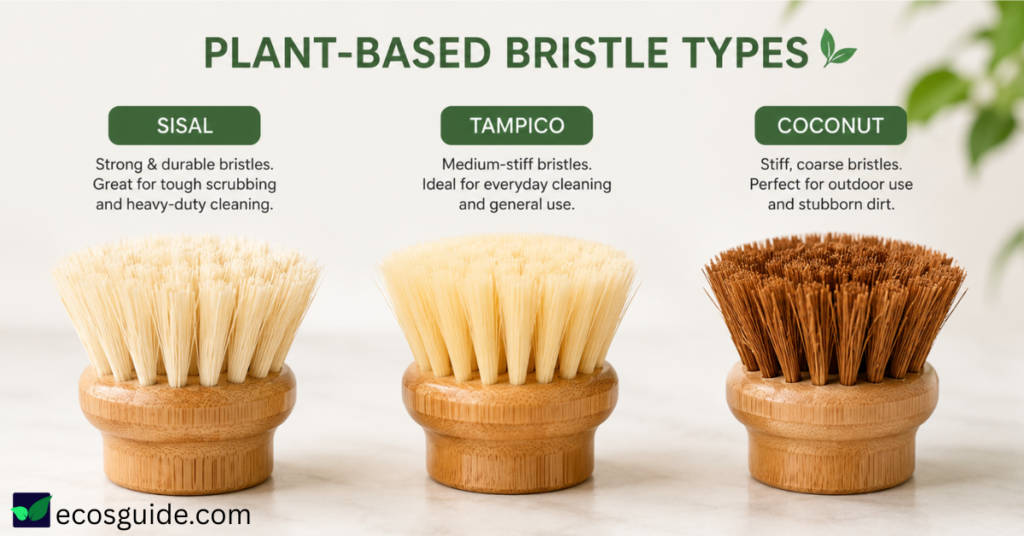
Sisal bristles come from the agave sisalana plant, a species native to southern Mexico now cultivated across East Africa and Brazil.
They are the firmest common plant-based option, stiff enough for cast iron and baked-on food, and fully compostable at end of life.
They land in the medium-firm range and handle everyday dishes, glass coffee pots, and blender jar interiors without scratching.
Coconut (coir) bristles are made from coconut husk fibre, a byproduct of the coconut processing industry known for its high durability and resistance to moisture.
Coir is very stiff, best suited for heavy-duty scrubbing like cast iron skillets or outdoor pots.
Horsehair is the softest option, gentle enough for non-stick cookware and delicate glassware. Palm (palmyra) bristles sit in the middle and work well for general kitchen use, including reaching inside kettle openings.
| Bristle Type | Source | Stiffness | Best For | Compostable? |
| Sisal | Agave plant (Africa, Brazil) | Firm | Cast iron, baked-on food, pots | Yes |
| Tampico | Agave lechuguilla (Mexico) | Medium-firm | Everyday dishes, general kitchen | Yes |
| Coconut (coir) | Coconut husk | Very stiff | Heavy scrubbing, outdoor use | Yes |
| Horsehair | Horse mane/tail | Soft | Delicate dishes, glassware, non-stick | Yes |
| Palm (palmyra) | Palmyra palm | Medium | General purpose, vegetables | Yes |
Matching the right bristle type to your kitchen task is the difference between a brush that feels useless and one that becomes your go-to.
A sisal brush can handle the greasy mesh of an air fryer basket. A tampico brush is gentle enough for the inside of a blender jar. Knowing which is which puts you in control of the purchase, not the marketing.
My Real Experience
I use a bamboo dish brush in my own kitchen for everything from scrubbing baking trays to cleaning wooden utensils.
So these recommendations come from real experience alongside hours of research into materials, sourcing, and eco-minded buyer reviews.

The photo above is from my own kitchen. I was scrubbing down my wooden spoons and measuring spoons on a baking tray using a bamboo palm brush, and honestly, it handled baked-on residue better than I expected.
I filmed the full process in my video on how to clean wooden kitchen utensils if you want to see it in action.
Best Bamboo Dish Brushes for Your Kitchen in 2026
Every brush on this list meets the same eco criteria:
- Compostable at end of life
- Plant-based bristles (no nylon or recycled plastic)
- Bamboo handle (FSC-certified where possible)
- Replaceable heads where the design allows
- Plastic-free or minimal packaging
1. eplanita Natural Dish Brush
Best for: All-round kitchen use, from everyday dishes to air fryer baskets
Key features:
- Bamboo handle with agave cactus (tampico) fibre bristles
- 100% plastic-free construction and packaging
- 3 replacement heads included (softer and harder options)
- Fully compostable at end of life
The eplanita Natural Dish Brush is the pick I keep coming back to for overall value.
The handle is bamboo, the bristles are agave cactus (tampico) fibre, and there is zero plastic anywhere in the construction or packaging.
It ships with three replacement heads, including softer and harder bristle options, so you can match the stiffness to the task.
The handle stays in use while only the bristle head gets swapped and composted when it wears out.
Tampico bristles are firm enough for everyday dishes and pots, but they will feel softer than a standard plastic brush.
For heavy-duty jobs like scrubbing an air fryer basket with baked-on grease, you will want the stiffer replacement head.
The replacement head system means you are producing less waste over time compared to disposable brushes.
Check Latest Price2. Vove Bamboo Dish Brush
Best for: Buyers who prioritize verified sustainable sourcing
Key features:
- FSC-certified bamboo handle
- Sisal bristles sourced from Mexican agave plants
- 3 replacement heads included
- Non-toxic, plastic-free, recycled kraft packaging
If verified sourcing is your priority, the Vove Bamboo Dish Brush stands out. The bamboo is FSC-certified, which means it was harvested from sustainably managed forests, not cleared land.
Many brushes in this category skip that certification. The bristles are sisal, sourced from Mexican agave plants, and the brush comes with three replacement heads.
Sisal is stiffer than tampico, which gives this brush more scrubbing power on pots, pans, and baked-on food.
The trade-off is that some users find sisal bristles feel rougher on the hands during extended scrubbing.
For daily dishwashing and tougher kitchen jobs alike, the Vove is the strongest eco-credential pick in this roundup.
Check Latest Price3. SUBEKYU Bamboo Dish Scrub Brush Set
Best for: Daily dishwashing with minimal maintenance effort
Key features:
- 3-pack with bamboo handles and sisal bristles
- Ceramic holder base for upright drying (prevents mold)
- Compostable when bristles wear out
The SUBEKYU Bamboo Dish Scrub Brush Set solves the number one complaint people have about bamboo brushes: mold. The set comes as a three-pack with a ceramic holder base, so each brush stands upright on the counter with full airflow around the bristles.
No more laying a wet brush flat in a dish rack and hoping for the best.
The bristles are sisal, the handles are bamboo, and the practical ceramic base makes daily use genuinely easy.
The downside is that there are no replaceable heads. When the bristles wear out, you compost the whole brush and move to the next one from the pack.
For someone who wants a simple, no-fuss bamboo brush that stays clean without extra maintenance effort, this set is the most practical choice.
4. Jungle Culture 6-Pack Bamboo Dish Brush Set
Best for: Switching your entire dishwashing setup to plastic-free at once
Key features:
- Sisal kitchen brush with replaceable head + extra head
- Coconut fibre pan brush for heavy-duty scrubbing
- Bottle cleaner, scrubber brush, and hemp cleaning cloth
- 100% plant-based, plastic-free
The Jungle Culture 6-Pack is for someone ready to switch their entire dishwashing setup at once.
It includes a sisal kitchen brush with a replaceable head, a coconut pan brush, a bottle cleaner, a scrubber brush, and a hemp cleaning cloth.
Every piece is 100% plant-based, and the variety covers the full range of kitchen cleaning tasks.
The coconut pan brush is stiff enough for cast iron and heavy pots. The bottle cleaner is shaped to reach inside blender jars and water bottles, which ties directly into the kind of kitchen appliance cleaning EcosGuide focuses on.
The honest caveat: the variety means not every brush will suit every user. The coconut bristle brush, for example, is very stiff and not a good fit for non-stick cookware or glass.
Check Latest Price5. MR.SIGA Bamboo Palm Brush
Best for: First-time buyers who want an affordable entry into bamboo brushes
Key features:
- Compact palm-style grip (no handle)
- Bamboo body, pack of 2
- Budget-friendly price point
The MR.SIGA Bamboo Palm Brush is a different style entirely. Instead of a long handle, it is a compact palm-style brush that you grip directly while scrubbing.
Some people find this grip more natural for scrubbing pots and large surfaces. The price point is low enough to make it an easy first purchase if you are still on the fence about switching from plastic.
There is no replaceable head, and the palm grip will not suit everyone.
Before purchasing, confirm that the bristle material is plant-based, because some versions of this brush use nylon instead.
When the bristles are genuine plant fibre, the MR.SIGA is a budget-friendly entry point into bamboo brushes that keeps plastic out of your dishwashing routine.
Check Latest PriceAre Bamboo Dish Brushes Better Than Plastic Sponges?
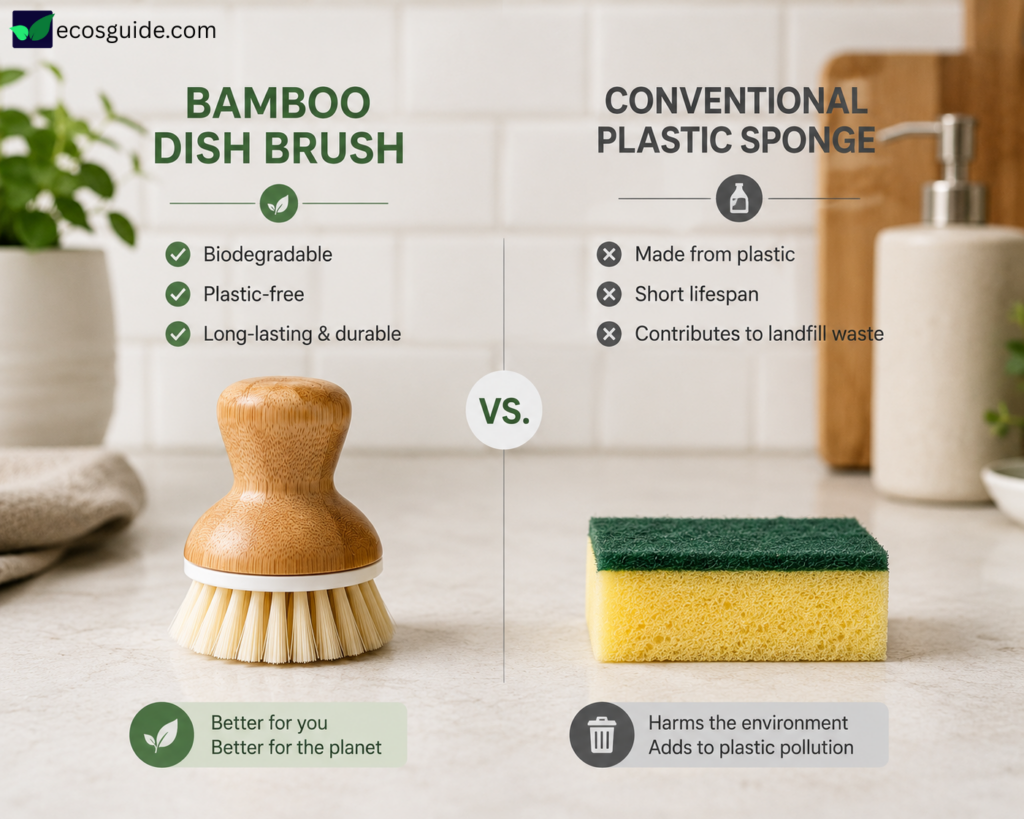
A kitchen sponge can harbour up to 362 different species of bacteria, according to research published in Scientific Reports, and USDA research confirms that even sanitized sponges retain enough bacteria to cause illness, making frequent replacement essential.
A bamboo dish brush, by contrast, dries faster between uses because bristles do not trap moisture the way a sponge’s porous structure does.
You can disinfect a bamboo brush with a quick weekly vinegar soak, something that does not meaningfully extend a sponge’s safe lifespan.
Then there is the microplastics problem. Every time you scrub a plate with a plastic sponge or a brush with synthetic bristles, tiny plastic particles break off and wash down the drain.
Those microplastics travel through water treatment systems, enter rivers and oceans, and accumulate in the food chain.
A bamboo brush with plant-based bristles sheds zero microplastics. When the bristles eventually wear out, they go to compost, not to a landfill where they will sit for centuries.
The cost argument favors bamboo too. A brush with replaceable heads lasts three to six months. A sponge needs replacing every one to two weeks.
Over a year, that is roughly two to three replacement brush heads (around $8 to $12 total) versus 26 or more sponges ($15 to $25 or higher).
If you still prefer sponges for certain tasks, there are eco-friendly sponge alternatives worth considering, but for most daily dishwashing, a bamboo brush is the better long-term choice on hygiene, environmental impact, and cost.
Pros and Cons of Bamboo Dish Brushes
A fair summary, because switching from plastic involves trade-offs, and I would rather you know them before you buy.
How to Care for Your Bamboo Dish Brush (So It Doesn’t Get Moldy)
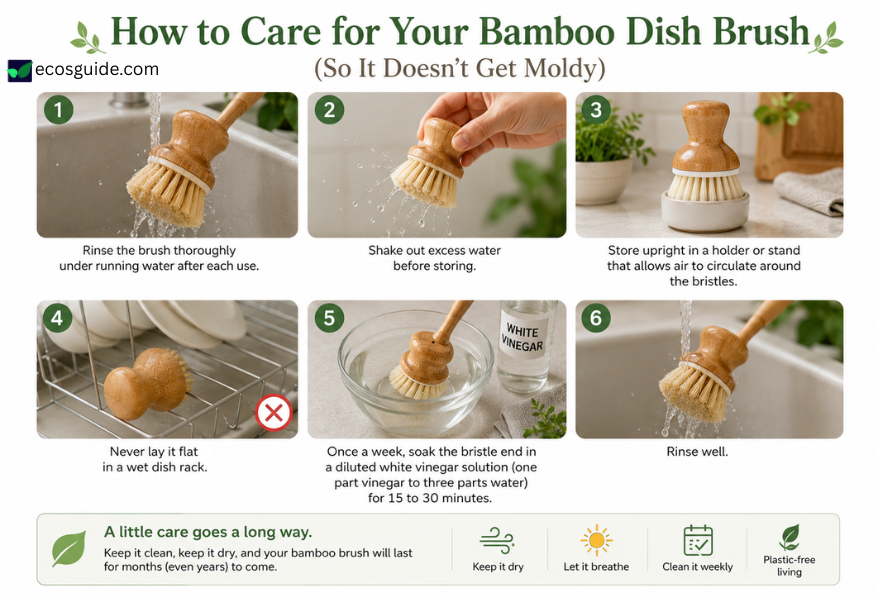
Bamboo is naturally antimicrobial due to a bio-agent called bamboo kun, but it still needs proper airflow to dry between uses to prevent mold growth at the bristle junction.
The good news is that caring for a bamboo brush takes almost no effort once you build the right habit.
- Rinse the brush thoroughly under running water after each use
- Shake out excess water before storing
- Store upright in a holder or stand that allows air to circulate around the bristles
- Never lay it flat in a wet dish rack
- Once a week, soak the bristle end in a diluted white vinegar solution (one part vinegar to three parts water) for 15 to 30 minutes
- Rinse well
That trapped moisture is what causes mold, not a flaw in the bamboo itself.
This prevents bacteria and mold buildup without harsh chemicals. For best results, pair it with a plant-based dish soap that will not leave synthetic residue on the bristles.
You will know it is time to replace the bristles when they start to splay, shed, or lose their firmness.
That typically happens around two to four months with regular kitchen use. If your brush has replaceable heads, the bamboo handle can last six months or longer.
When a brush reaches end of life, remove any metal components (staples or wire), recycle those separately, and compost the bamboo handle and plant-based bristles.
The bamboo will break down in soil. Some people repurpose worn handles as garden markers or kindling.
Small Kitchen Choices, Real Change
Switching one item under your kitchen sink is not going to fix everything. I know that.
But every bamboo brush that goes to compost instead of a landfill is a small, tangible step.
Every wash that sends plant fibres down the drain instead of microplastics is one less thing entering the waterways I keep thinking about.
If you are reading this and feeling like one brush cannot possibly matter, I hear you. But I have learned that change in the kitchen is cumulative. It starts with one swap, then another.
A bamboo brush today, a greener detergent for your dishwasher next month. Before you know it, the space under your sink looks different, and so does what leaves it.
If you are ready to start, the eplanita Natural Dish Brush is where I would begin.
It covers the widest range of kitchen tasks, the replacement heads reduce waste, and it is a genuinely plastic free dish brush from packaging to compost. That feels like a good place to start.
- Quick Picks at a Glance
- What Makes a Good Bamboo Dish Brush?
- My Real Experience
- Best Bamboo Dish Brushes for Your Kitchen in 2026
- Are Bamboo Dish Brushes Better Than Plastic Sponges?
- Pros and Cons of Bamboo Dish Brushes
- How to Care for Your Bamboo Dish Brush (So It Doesn’t Get Moldy)
- Small Kitchen Choices, Real Change
- Frequently Asked Questions
Find More Tips At:


Frequently Asked Questions
Do bamboo dish brushes scratch non-stick pans?
Plant-based bristles like sisal, tampico, coconut, and horsehair are firm enough to clean effectively but softer than metal scrapers or rigid synthetic scrub pads. For non-stick cookware, choose a brush with tampico or horsehair bristles, which are the gentlest plant-based options. Bamboo brushes are actually safer for non-stick surfaces than many conventional plastic scrub brushes with stiff synthetic bristles.
How long does a bamboo dish brush last?
With regular kitchen use, expect the bristles to last two to four months before they need replacing. If the brush has replaceable heads, the bamboo handle can last six to twelve months or longer. This makes bamboo brushes more cost-effective over time than kitchen sponges, which need replacing every one to two weeks.
Can you put a bamboo dish brush in the dishwasher?
It is not recommended. The heat and prolonged moisture inside a dishwasher can warp the bamboo handle and loosen the bristle attachment. Instead, hand-rinse your brush after each use and disinfect it weekly with a white vinegar soak. This takes less than a minute and keeps the brush hygienic without damaging it.
How do you stop a bamboo dish brush from getting moldy?
Store it upright or in a holder with airflow, never lying flat in a wet dish rack. Rinse thoroughly after each use and shake out excess water. A weekly 15-minute soak in diluted white vinegar (one part vinegar, three parts water) prevents mold and bacteria growth. Ceramic holders, like the one included with the SUBEKYU brush set, are designed specifically for proper airflow drying.
Are bamboo dish brushes really compostable?
A bamboo dish brush is compostable when its bristles are made from plant-based fibres (sisal, tampico, coconut, palm, or horsehair) and the handle is untreated bamboo. Remove any metal wire or staples holding the bristles and recycle those separately. The bristles and handle will break down in a home compost pile or green waste bin. This is one of the biggest advantages over plastic brushes, which can sit in landfill for hundreds of years.
What is the best bamboo dish brush for cast iron?
Look for sisal or coconut bristles, which are the stiffest plant-based options available. They are firm enough to remove baked-on food and seasoning buildup without damaging the cast iron surface. Avoid horsehair or very soft tampico for cast iron, as they will not have enough scrubbing power for heavy residue.
