
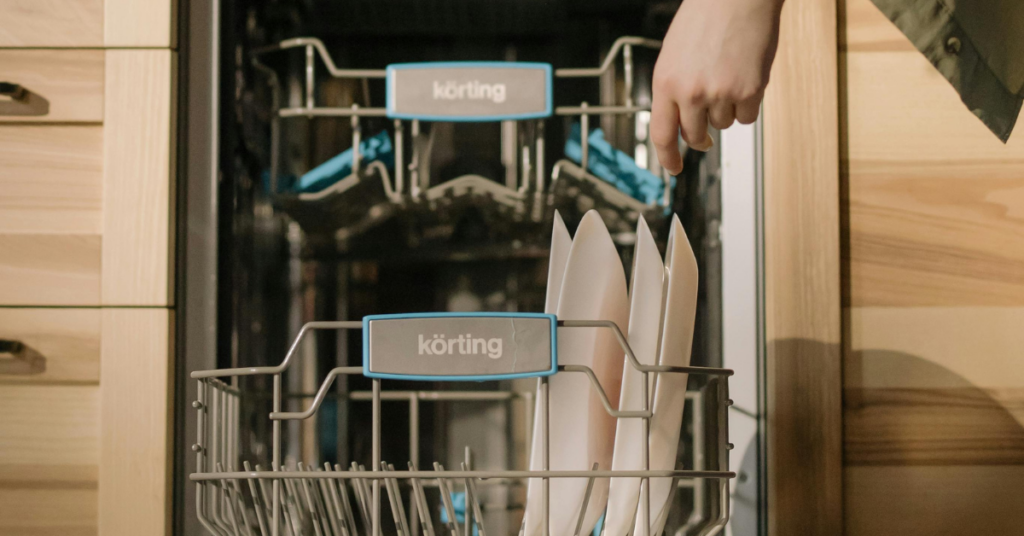
The top eco-friendly dishwasher detergents for 2026, based on my picks, are summarised in the key takeaways table below.
Key Takeaways
- Blueland Tablets are the best overall — plastic free, EPA Safer Choice certified, no PVA film
- Puracy Packs are the top pick for hard water households
- Nellie’s Powder is the most budget friendly at just $0.23 per load
- Avoid detergents with phosphates, chlorine bleach, and synthetic fragrance
- Add white vinegar to your rinse aid compartment to fix hard water streaking
All three options avoid phosphates, chlorine bleach, and synthetic fragrances that many conventional supermarket detergents still rely on.
It’s easy to forget that what leaves our kitchen sink has to go somewhere. When I started looking into what’s actually inside conventional dishwasher detergents, and where those ingredients end up after the rinse cycle, I couldn’t look away.
The water we wash down the drain doesn’t disappear. It flows into rivers, ecosystems, and eventually the food chain we rely on. Treatment plants help, but they weren’t built for modern detergent chemistry, so some ingredients can pass through untreated and end up in waterways.
That’s why the detergent I choose matters to me.
Below, I’ve compared 7 eco friendly dishwasher detergents across tablets, pods, and powder, with honest notes on what I’d choose for different households
The hard water issue no one talks about, and a real cost per load breakdown so you can see how eco options stack up on price.
Quick Picks at a Glance
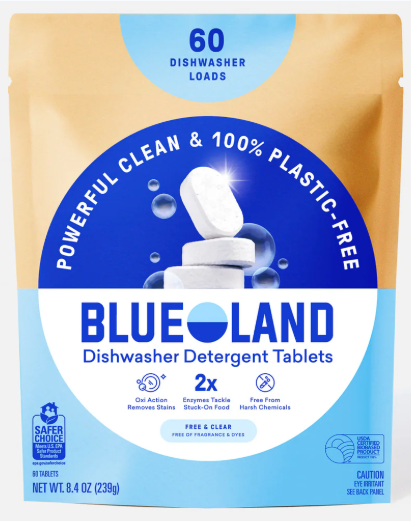
Blueland Dishwasher Tablets
100% plastic-free, safe ingredients, powerful clean for everyday dishes
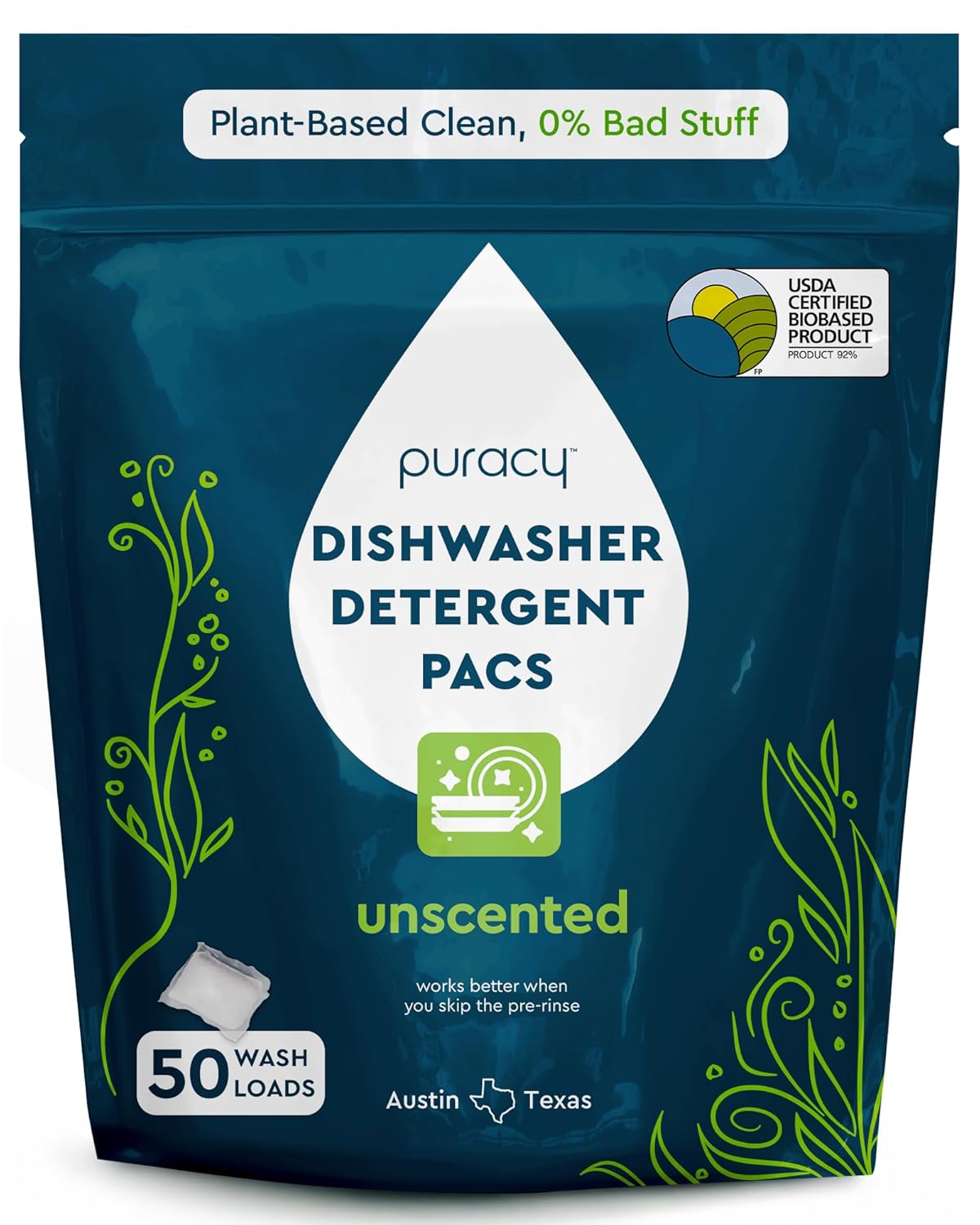
Puracy Dishwasher Packs
Streak-free glasses even in hard water
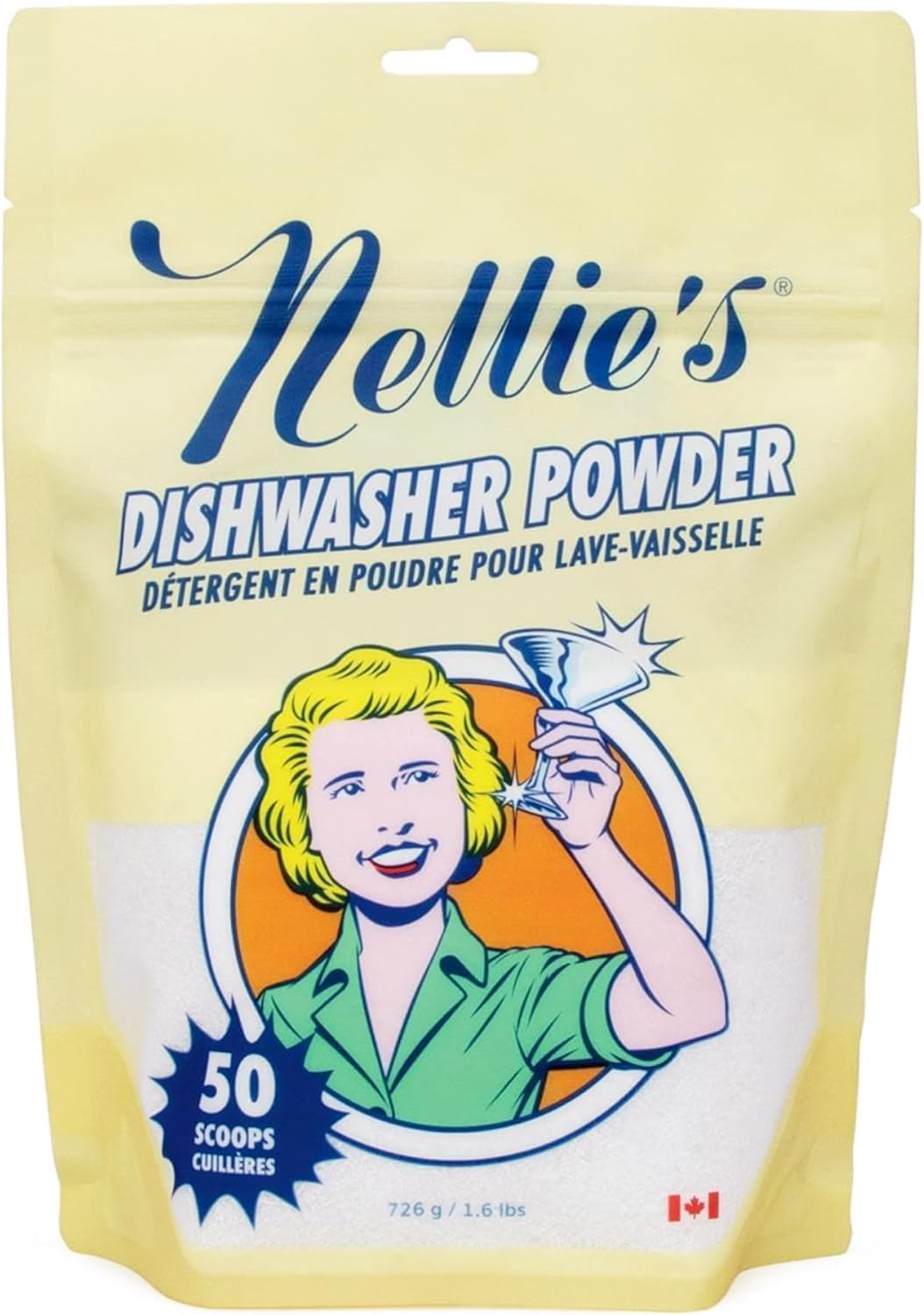
Nellie’s Dishwasher Powder
Eco cleaning that won’t stretch your budget. Just $0.23 a load
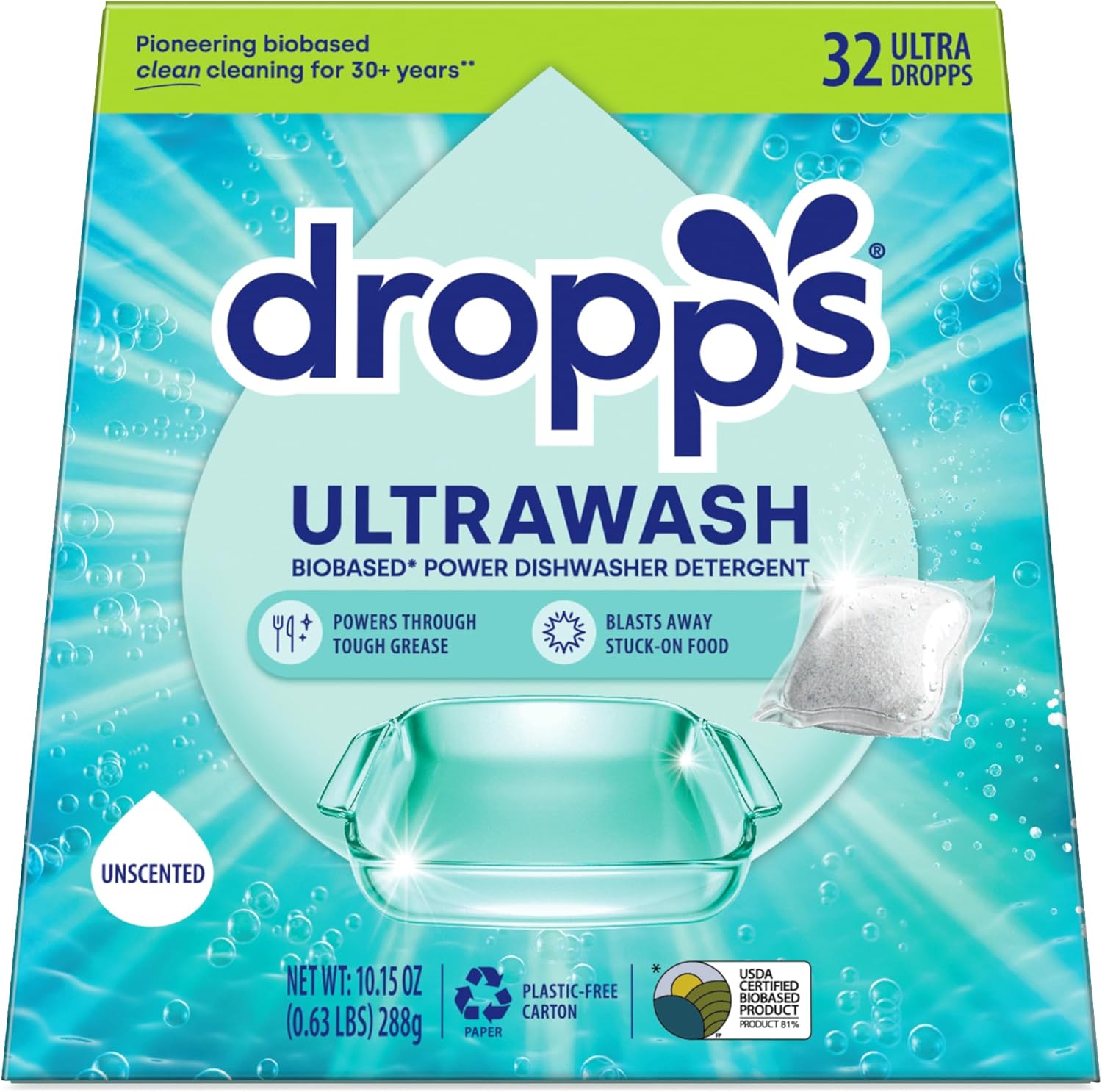
Dropps UltraWash Pods
Zero plastic packaging. Ships in plain cardboard, nothing to landfill
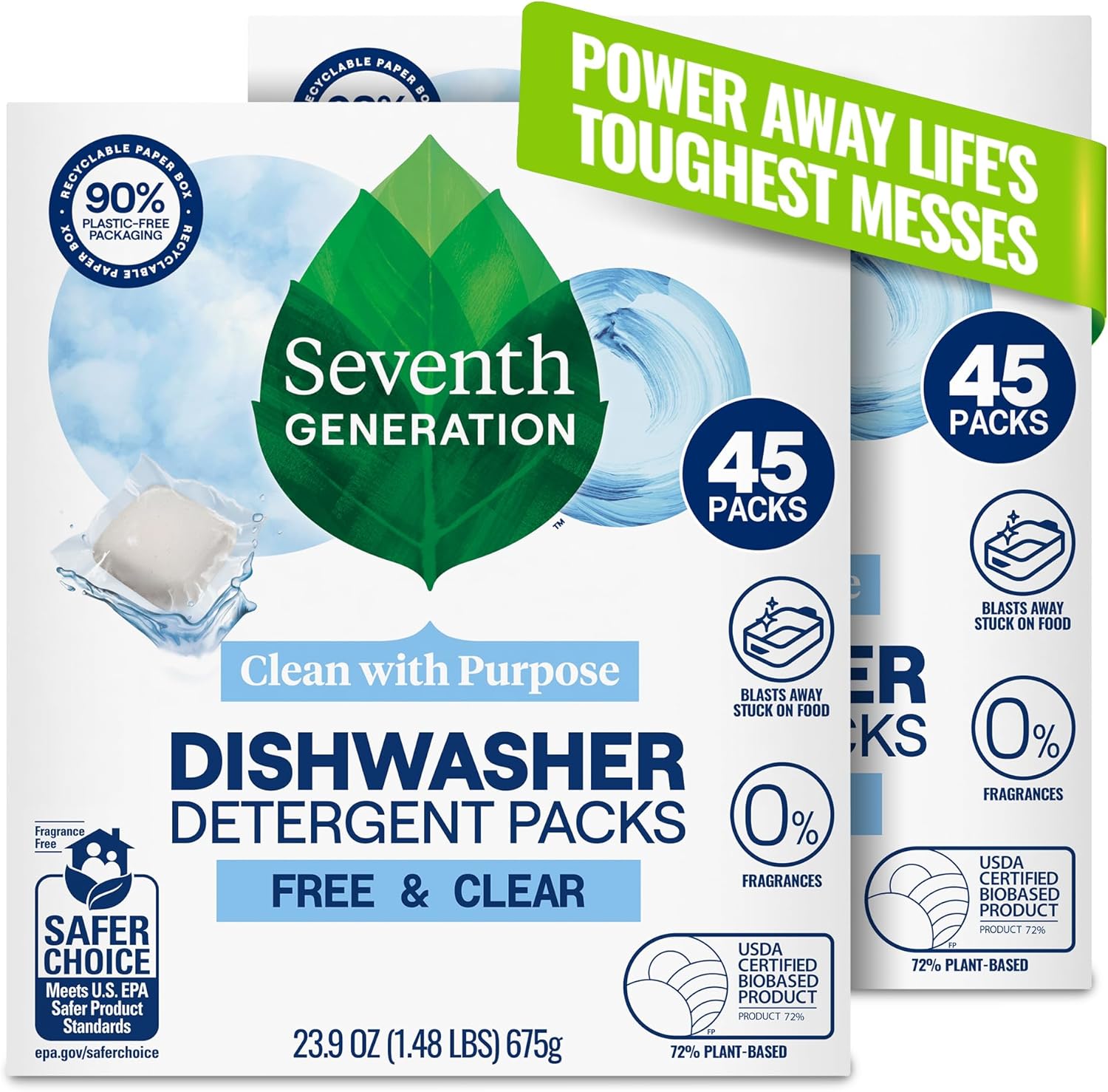
Seventh Generation Free & Clear
Grab it during your regular shop. No specialist store needed
What Makes a Dishwasher Detergent Eco Friendly?
An eco friendly dishwasher detergent is one formulated without phosphates, chlorine bleach, synthetic fragrances, or petroleum based surfactants, using plant based or mineral based ingredients that biodegrade safely in water systems.
It’s also packaged to minimize plastic waste, often in cardboard, refillable tins, or concentrated tablet form rather than heavy plastic jugs.
That’s the full picture. A label that says “natural” or “plant powered” doesn’t meet that bar on its own. The ingredient list and certifications do.
Toxic Ingredients to Avoid
These are the five ingredients I look for on labels and try to skip. If any of them show up in the first ten ingredients, I put the bottle back:
- Phosphates, which trigger algal blooms in lakes and rivers and starve aquatic life of oxygen
- Chlorine bleach, which irritates skin and lungs and harms aquatic ecosystems
- Synthetic fragrance, often a cover term that can include phthalates and other undisclosed chemicals
- Petroleum based surfactants, slow to biodegrade and often derived from non renewable sources
- Optical brighteners, which don’t actually clean your dishes. They just make them look brighter and can accumulate in waterways
Certifications That Actually Mean Something
There are a lot of green leaves and earthy looking labels on cleaning products. Most of them mean nothing. Here are the certifications I take seriously:
- EWG Verified. The EWG Cleaners Database is the first place I check any detergent I’m considering. Their A to F scale is based on ingredient toxicity and environmental impact.
- EPA Safer Choice. A certification from the US EPA Safer Choice program that confirms every ingredient has been reviewed for safety. Strict and reliable.
- Leaping Bunny. The Leaping Bunny program is the strictest cruelty free certification out there, covering the full supply chain rather than just the final product.
- USDA Certified Biobased. Shows the specific percentage of plant derived content in the formula.
When I can’t pronounce half the ingredients on a detergent bottle, I take that seriously, because whatever’s in there is going somewhere after the rinse.
Certifications from bodies like the EWG and EPA are the quickest way to tell if a brand has done the work or is just marketing the idea of it.
The PVA Pod Debate: What You Should Know
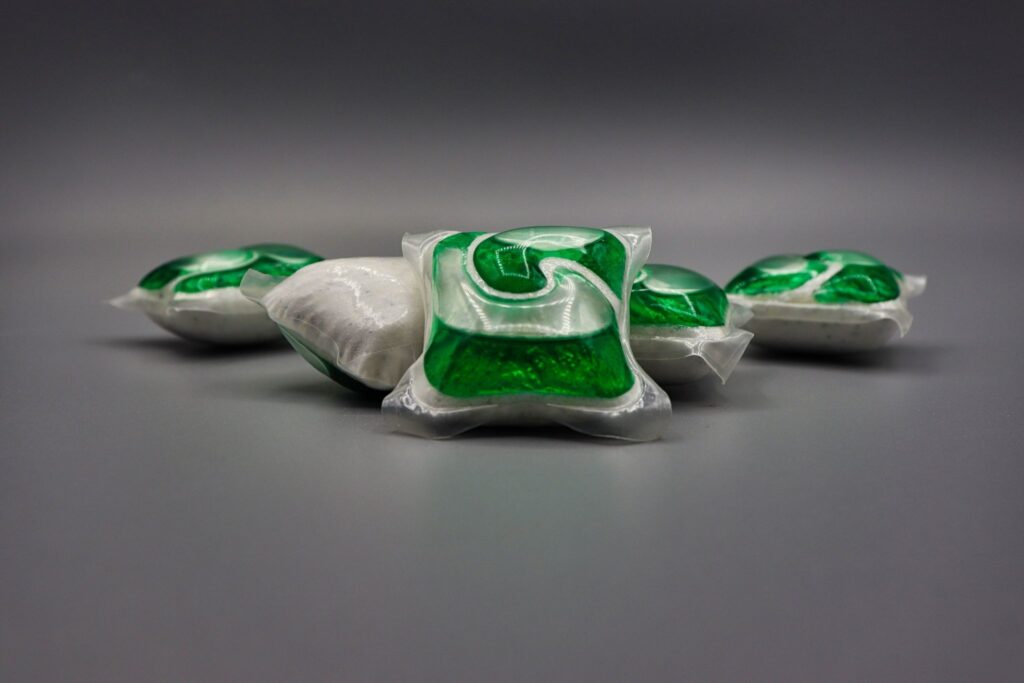
Image by Jake Parkinson from Pixabay
PVA (polyvinyl alcohol) is the clear film that surrounds most dishwasher and laundry pods. It’s designed to dissolve in water — but whether it fully biodegrades or breaks into microplastic sized particles is still an open question.
A 2021 study from Arizona State University researchers estimated that as much as 75% of PVA from US household pods passes through wastewater treatment plants untreated, reaching rivers, soil, and oceans.
That’s roughly 8,000 tons per year in the US alone. It’s worth noting the study was partly funded by Blueland (which sells PVA-free tablets), and industry scientists have pushed back on the findings. But even conservative readings suggest PVA isn’t the clean break from plastic that pod packaging implies.
My honest take: If the PVA question bothers you, tablets or loose powder are safer choices. Some newer pods are PVA free, but they’re still the exception.
Tablets vs Pods vs Powder: Which Format Is Best?
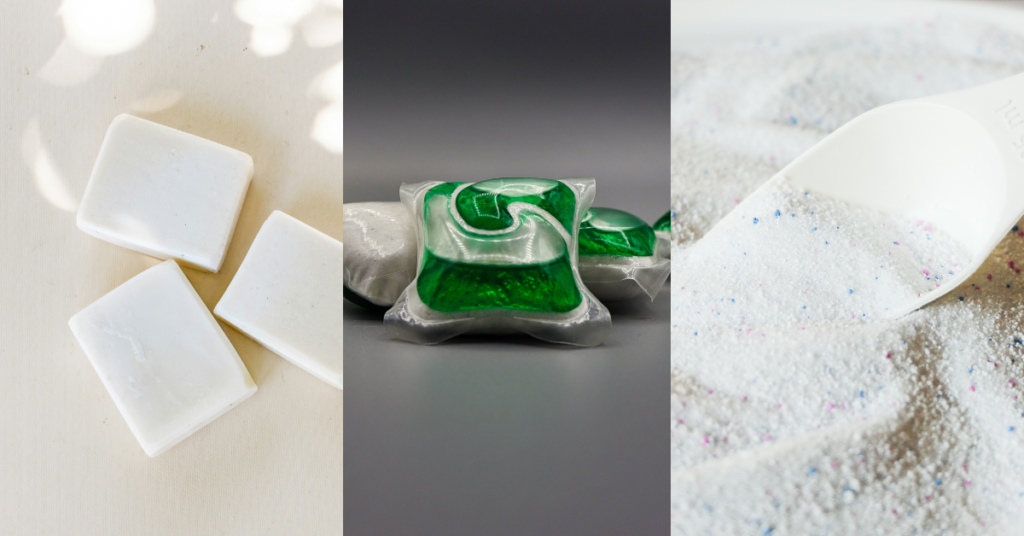
Dishwasher detergent comes in three main formats: tablets (pressed solids, often completely film free), pods (liquid or gel sealed inside a dissolvable PVA film), and powder (loose granular detergent measured per load).
Each has trade offs depending on what matters most to you.
| Format | Environmental Impact | Convenience | Effectiveness | Best For |
| Tablets | Low, often plastic free packaging, no film | High, pre measured | Strong across water types | Most households |
| Pods | Moderate, PVA film concerns | Highest, drop and go | Strong | Convenience seekers |
| Powder | Lowest, reusable tin or cardboard | Requires measuring | Good, pair with a rinse aid | Zero waste households, hard water |
For most households, tablets are the sweet spot. Cleaner packaging than pods, less fuss than powder.
But if you’re already careful about every bit of plastic that enters your kitchen, loose powder in a refillable tin is the greenest choice you can make.
The 7 Best Eco Friendly Dishwasher Detergents in 2026
Before I get into the reviews: I looked for brands that hit at least three of my personal criteria.
No phosphates, no chlorine bleach, no synthetic fragrance, plastic free or minimal plastic packaging, and a credible certification like EWG or EPA Safer Choice.
The seven below all qualify. None are paid placements.
1. Blueland Dishwasher Tablets
Best for: Households that want a strong all rounder with the smallest possible packaging footprint.
First 5 ingredients: Sodium Carbonate, Sodium Citrate, Hydrated Silica, Amylase Enzyme Blend, Microcrystalline Cellulose
Drop one tablet in, run the cycle, done. No plastic wrapping to peel, no measuring, no residue left on your glasses.
Blueland was one of the first brands I noticed for completely rethinking what detergent packaging could look like.
The tablets arrive in a compostable box, or in a reusable metal tin if you buy the Blueland Dishwasher Starter Kit. No plastic jug, no PVA film, nothing heading for landfill after the last load.
The formula leans on sodium based cleaning agents and plant derived enzymes instead of chlorine bleach or phosphates, and it holds both EPA Safer Choice and Cradle to Cradle certifications to back that up.
Dishes come out genuinely clean, not just “eco clean.” The performance gap that used to exist between green brands and conventional ones has mostly closed in the last few years, and Blueland is a good example of that.
Honest caveat: In very hard water areas, Blueland works best paired with a rinse aid (plain white vinegar works well). On its own, some readers report slightly cloudy glassware.
Full disclosure — I haven’t used this one personally, but with EPA Safer Choice and Cradle-to-Cradle certification, it’s one of the most independently verified eco detergents on this list.
Check Latest Price2. Puracy Dishwasher Packs
Best for: Households with hard water who’ve been let down by other eco detergents.
First 5 ingredients: Sodium Citrate, Sodium Carbonate, Sodium Percarbonate, Sodium Metasilicate Pentahydrate, Alpha-amylase
Finally, sparkling glasses in hard water: without streaks, without cloudy film, without rewashing the same load twice.
Hard water is the quiet saboteur of eco detergents.
Most plant based formulas are gentler on the planet and gentler on the cleaning job, which is great for normal water and frustrating if your kitchen tap leaves a crust on everything.
Puracy’s packs are formulated specifically to address that. They include sodium citrate and sodium metasilicate, two natural water softening agents that help enzymes do their work even when calcium and magnesium levels are high.
The formula still skips phosphates and chlorine bleach, so you’re not trading environmental cost for performance.
The trade off: these are still pods, which means PVA film. If the PVA question is a deal breaker for you, look at Blueland or Nellie’s instead.
If clean dishes in hard water matter more, Puracy is the strongest eco option I’ve come across.
I haven’t tested this one myself, but based on the ingredients and reviews from readers in hard water regions, it earns its spot.
Check Latest Price3. Seventh Generation Free & Clear Pods
First 5 ingredients: Sodium Carbonate, Sodium Silicate, Sodium Sulfate, Sodium Percarbonate, Citric acid
Toss it in during your weekly shop, toss it in the dishwasher. No planning ahead, no subscription emails, just clean dishes.
Seventh Generation has been around long enough that the brand has earned both its fans and its critics. On balance, I think it still deserves a spot on this list, especially for the Free & Clear pods, which are the cleanest formula in their range.
What I like: USDA Certified Biobased, no added fragrance, EPA Safer Choice certification, and you can actually find them on the shelf at most major supermarkets.
For readers just starting to shift away from conventional detergents, being able to swap during a regular grocery run makes the change feel doable instead of daunting.
Trade offs: These are still PVA pods, and the outer packaging has moved to 90% plastic free but still contains a thin plastic inner liner. Not perfect, but a real step up from mainstream detergents.
Not one I’ve used at home, but with EPA Safer Choice and USDA Biobased certification, the formula has been verified more thoroughly than most.
Check Latest Price4. Dropps UltraWash Pods
Best for: Households focused on eliminating plastic packaging from the kitchen.
First 5 ingredients: Sodium Carbonate, Sodium Percarbonate, Poly(itaconic acid co AMPS) Sodium Salt, Sodium Citrate, C10-16 Alcohols Ethoxylated Propoxylated.
One pod handles baked-on food without pre-rinsing, so the dishwasher does the work you used to do at the sink.
Dropps has built its reputation on packaging. The pods ship in a plain cardboard box that can go straight in the recycling or compost.
No plastic jug, no plastic liner, no shrink wrap. If you care about cutting plastic out of your delivery footprint, this is the format to consider.
The formula itself is a capable plant based enzyme blend, and the brand has been in the biobased cleaning space for over 30 years. Reviews from readers with standard water are consistently strong.
Like all pods, though, there’s still a PVA film, so if you’ve been paying attention to that debate, know that Dropps falls on the “pod” side of the line.
I’d reach for Dropps specifically if zero plastic delivery is your top priority. If you’re equally worried about PVA, a tablet like Blueland is a better match.
I haven’t personally tested Dropps, but the cardboard-only packaging and EWG Verified formula make it one of the most consistent recommendations in zero-waste communities.
Check Latest Price5. Nellie’s Dishwasher Powder
Best for: Zero waste households, hard water, and anyone watching the weekly shop.
First 5 ingredients: Sodium Chloride, Sodium Carbonate, Citric Acid, Sodium Sulfate, Sodium Percarbonate.
One scoop, clean plates, money saved. The simplest routine on this list, and the cheapest per load.
Nellie’s is the one I keep recommending to readers who tell me they want to make the switch but feel like every eco product comes with an “eco tax.”
At roughly $0.23 per load, it’s one of the cheapest options on this list, eco or otherwise.
The formula is plant and mineral based, relying on sodium carbonate and citric acid as natural water softeners rather than chlorine bleach or phosphates.
And because it’s a powder instead of a pod, you’re not sending any PVA film down the drain with every wash. One less thing to worry about.
Honest caveat: Loose powder takes more effort than a drop in pod or tablet. You need a little scoop and you need to pay attention. For people who already enjoy the small rituals of a zero waste kitchen, that’s a feature. For busy households, it might feel like friction.
Haven’t tried this one yet — it’s next on my list. At $0.23 per load and a reusable tin, the value and packaging story is genuinely hard to beat.
Check Latest Price6. Dirty Labs Bio Enzyme Powder
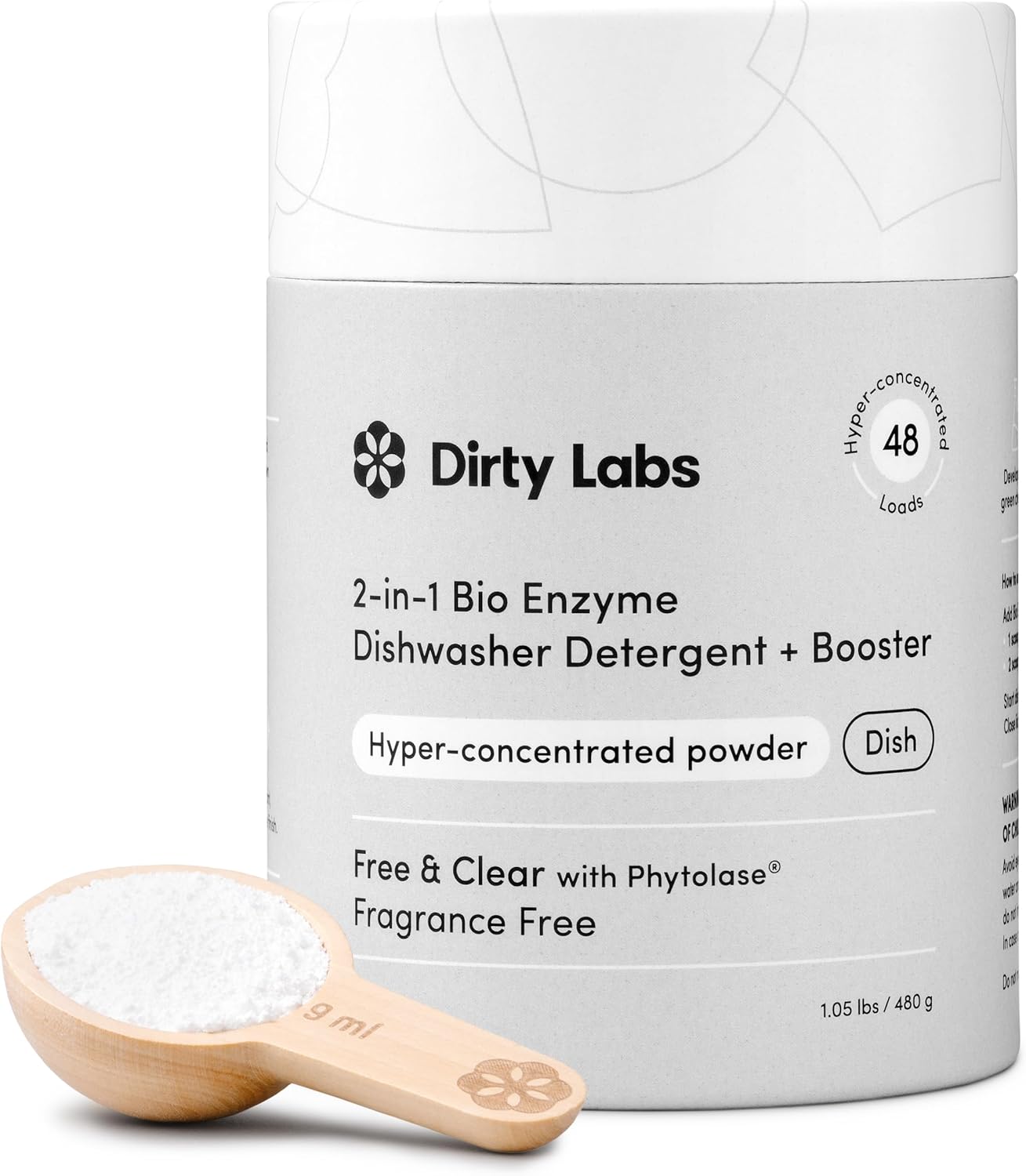
Best for: Tough food residue, greasy dishes, and readers who want a seriously engineered formula.
First 5 ingredients: Sodium Citrate, Sodium Carbonate, Sodium Percarbonate, Sodium Gluconate, Protease.
Stuck-on egg yolk, dried pasta sauce, yesterday’s oatmeal? This formula breaks them all down while you sleep. No scrubbing required.
Dirty Labs feels like what you’d get if a biochemist decided to start an eco cleaning brand, which, as far as I can tell from the company background, is roughly what happened.
Their bio enzyme powder uses a concentrated blend of plant derived protease and amylase enzymes to break down protein and starch residue that weaker eco formulas often leave behind.
If your dishes tend to come out of other eco detergents with a thin film or stuck on egg yolk, Dirty Labs is worth trying. At around $0.42 per load, it’s a more expensive option than Nellie’s, but the formula does more work.
The packaging is cleaner than most pod brands and the company publishes full ingredient disclosure including CAS numbers, which I always appreciate.
I haven’t used this one myself, but full CAS number disclosure and enthusiastic reviews from people with stubborn grease problems put it firmly on my radar.
Check Latest Price7. Branch Basics Dishwasher Tablets
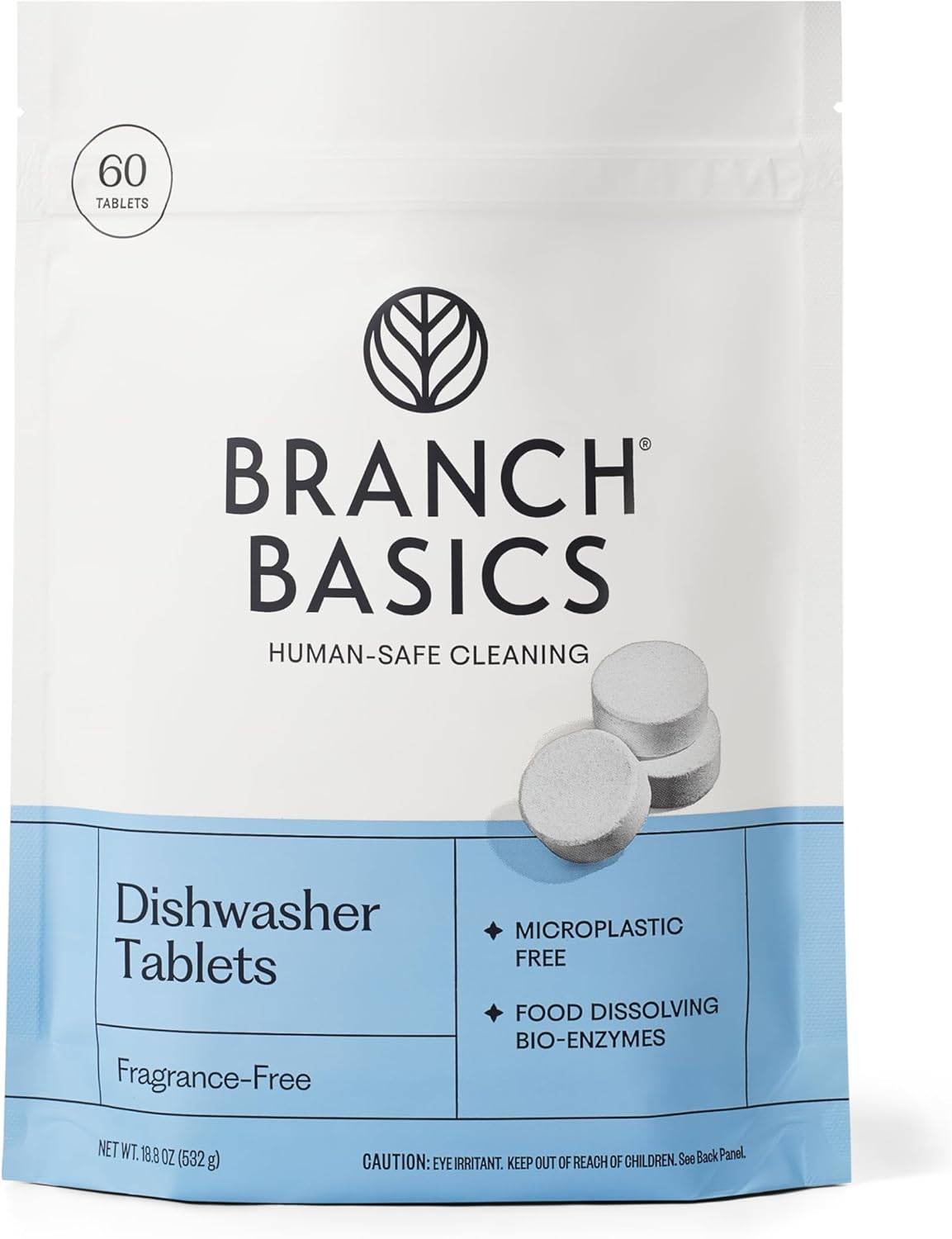
Best for: Readers with sensitivities, young children in the household, or those willing to pay more for the strictest ingredient standards.
First 5 ingredients: Sodium Carbonate, Sodium Percarbonate, Citric Acid, Sodium Citrate, Poly(itaconic acid co AMPS) Sodium Salt.
Gentle enough for a baby bottle, strong enough for last night’s casserole dish. All without fragrances that linger on your dishware.
The tablets are EWG Verified (one of the stricter third party certifications available) and are held together by a plant based binder rather than PVA film, which puts them in the same plastic free camp as Blueland.
If someone in your home has fragrance sensitivities, skin reactions, or asthma, Branch Basics is often the one that works when other “gentle” detergents still trigger problems.
For households without those concerns, it’s probably more than you strictly need. Blueland offers most of the same benefits for less.
Not personally tested, but EWG Verified is the strictest bar on this list and fragrance-sensitive reviewers consistently say this is the first eco detergent that didn’t trigger a reaction.
Check Latest PriceHard Water Troubleshooting: Why Your Dishes Still Streak
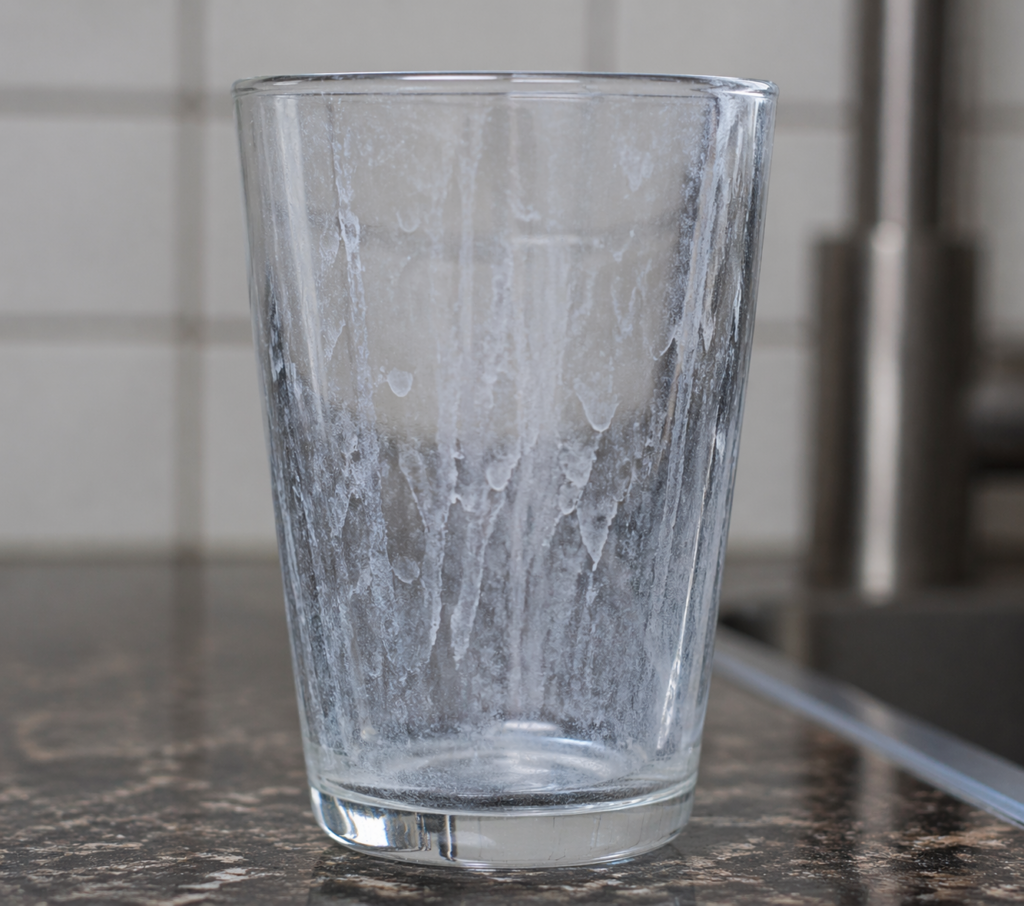
Hard water contains high levels of calcium and magnesium minerals, which react with detergent and leave white film, streaks, or cloudy residue on dishes after the wash cycle.
It’s the single biggest reason readers tell me they gave up on eco detergents and went back to chemical heavy brands, which is a shame, because the problem is usually solvable.
How to Tell If You Have Hard Water
- White, chalky spots on glasses and cutlery after drying
- Cloudy film inside a clear glass held up to the light
- Mineral buildup around your kitchen tap or inside the kettle
- Soap that doesn’t lather well in the shower
If two or more of those sound familiar, you probably have moderately hard water. Your local water utility usually publishes hardness levels on their website if you want a precise number.
Best Products for Hard Water Households
Out of the list above, Puracy Dishwasher Packs and Branch Basics Tablets perform best in hard water.
Puracy includes sodium citrate and sodium metasilicate as natural water softeners, and Branch Basics runs a concentrated formula that stands up better to mineral interference.
Nellie’s Powder also works well in hard water if you pair it with a rinse aid (white vinegar is my first choice).
DIY Boosters That Actually Work
Two cheap additions can transform any eco detergent’s performance in hard water:
• White vinegar as a rinse aid. Pour it into the rinse aid compartment of your dishwasher. The acetic acid dissolves mineral deposits before they dry onto your glasses.
• Citric acid as a booster. Add a teaspoon to the detergent compartment along with your usual detergent. It softens hard water and brightens glassware.
Between these two tweaks, most hard water problems disappear without you needing to reach for a chlorine based detergent.
Cost Per Load Comparison: What You Actually Pay
One of the most common reasons readers tell me they haven’t switched is that they assume eco detergents are expensive.
They can be, but not always, and not by as much as the reputation suggests. Here’s a rough cost breakdown at current Amazon pricing:
| Product | Format | Pack Size | Price (USD) | Cost per Load |
| Nellie’s Powder | Powder | 100 loads tin | ~$23 | $0.23 |
| Seventh Generation | Pod | 72 ct | ~$18 | $0.25 |
| Puracy Packs | Pod | 50 ct | ~$15 | $0.30 |
| Dropps UltraWash Pods | Pod | 120 ct | ~$40 | $0.33 |
| Blueland Tablets | Tablet | 60 ct refill | ~$20 | $0.33 |
| Branch Basics Tablets | Tablet | 40 ct | ~$15 | $0.38 |
| Dirty Labs Powder | Powder | 48 loads | ~$20 | $0.42 |
Prices are approximate and fluctuate on Amazon. Check current listings before ordering.
Eco options cost a little more than the cheapest supermarket detergents, but they’re not as far off as people assume.
And when I think about what’s not going down the drain with every load, the small extra cost feels fair to me.
Pros and Cons of Eco Friendly Dishwasher Detergents
A fair summary, because every swap involves trade offs, and I’d rather you know them upfront.
Small Kitchen Choices, Real Change
Choosing a different dishwasher detergent feels like such a small thing.
One product. One aisle. One decision that takes thirty seconds at the checkout.
But multiplied across a household, three or four loads a week, every week, for years, it starts to add up. The phosphates and bleach and synthetic surfactants that don’t go down your drain don’t have to be pulled back out of a river somewhere else.
That’s why I keep coming back to this: the kitchen is where real change actually starts, because it’s where the choices are frequent, cheap, and quietly powerful.
You don’t need to overhaul your whole life. You just need to swap one bottle.
And if you’d rather mix your own, have a look at my guide to natural cleaning ingredients that belong in every eco conscious kitchen.
If you’re not sure where to start, Blueland Tablets are the one I’d reach for first. Strong performance, smallest packaging footprint, and a formula that earns its eco label honestly.
- Quick Picks at a Glance
- What Makes a Dishwasher Detergent Eco Friendly?
- The PVA Pod Debate: What You Should Know
- Tablets vs Pods vs Powder: Which Format Is Best?
- The 7 Best Eco Friendly Dishwasher Detergents in 2026
- Hard Water Troubleshooting: Why Your Dishes Still Streak
- Cost Per Load Comparison: What You Actually Pay
- Pros and Cons of Eco Friendly Dishwasher Detergents
- Small Kitchen Choices, Real Change
- Frequently Asked Questions
Find More Tips At:


Frequently Asked Questions
Do eco friendly dishwasher detergents clean as well as conventional ones?
Yes. Modern eco detergents clean just as effectively thanks to plant derived enzymes that break down food residue without chlorine bleach. The one exception is very hard water, where eco formulas sometimes need a rinse aid booster to prevent streaking.
Are dishwasher pods bad for the environment?
Most dishwasher pods are wrapped in PVA (polyvinyl alcohol) film, and recent research suggests a meaningful share may not fully biodegrade in wastewater treatment. If this concerns you, tablets or loose powder are the safer environmental choices.
What’s the best eco dishwasher detergent for hard water?
Puracy Dishwasher Packs are the best choice because the formula includes sodium citrate and sodium metasilicate as natural water softeners. Branch Basics Tablets are a strong runner up.
Is white vinegar safe to use as a rinse aid?
Yes. White vinegar is safe in most modern dishwashers, and its acetic acid dissolves mineral buildup that causes streaks. Pour it into the rinse aid compartment and top up when needed. For older machines, check the manual first.
Where can I buy eco friendly dishwasher detergent?
Most brands in this guide are available on Amazon in the US and UK. Seventh Generation is also widely stocked in supermarkets and health food stores.
How often should I clean my dishwasher itself?
Once a month. Even with eco detergents, food residue and mineral buildup accumulate in the filter, spray arms, and door seals. A simple clean with white vinegar and baking soda handles most of it.
