
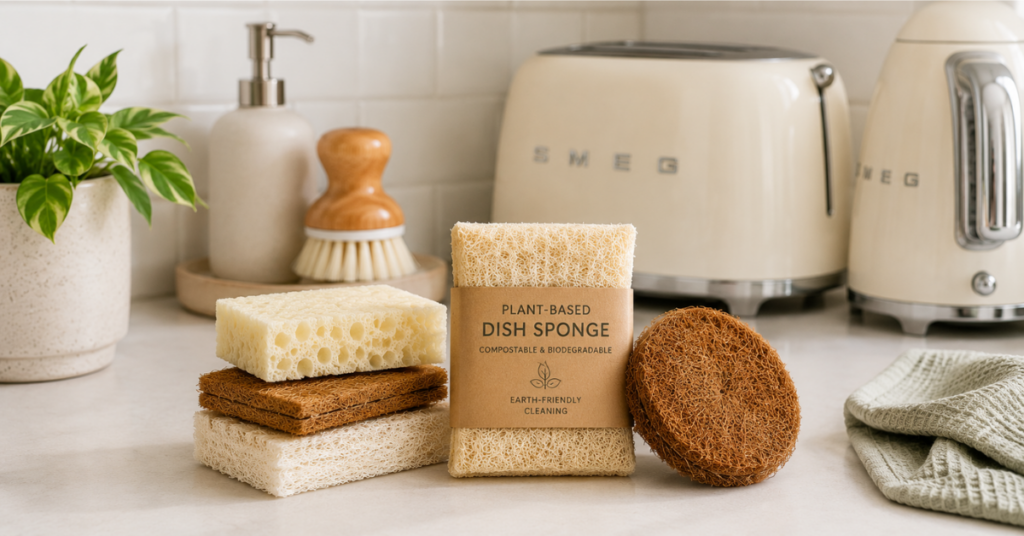
The best eco friendly dish scrubber and sponges for 2026, based on my picks, are summarized in the key takeaways table below.
Key Takeaways
- Blueland Scrub Sponge is the best overall: loofah and cellulose dual-action, hand-sewn with cotton thread, B Corp and Cradle to Cradle certified
- AIRNEX Natural Kitchen Sponge is the best Amazon pick: 100% plant-based cellulose and coconut coir, fully compostable, 12-pack
- Skoy Scrub is the most reusable: machine washable remnant cotton, lasts months on a single scrub
- Avoid sponges with polyurethane foam, melamine, or hidden synthetic fibers in the scouring layer
- Use cellulose or loofah for non-stick appliance parts (air fryer baskets, blender jars) and coconut coir or walnut shell for stainless steel exteriors
An eco-friendly dish sponge is made from biodegradable, plant-based materials like cellulose, coconut coir, or loofah, and breaks down naturally without shedding microplastics.
Whether you are washing plates after dinner or wiping down an air fryer basket, the best pick depends on what you are scrubbing, so below I compare five top options across different materials to help you choose.
I, Hajar, started EcosGuide because I could not stop thinking about what we wash down our drains every day.
I clean my air fryer, blender, and coffee maker regularly, and when I learned that conventional sponges shed microscopic plastic fragments with every scrub, something shifted for me.
Those tiny particles end up in rivers and oceans, and they do not break down.
That is why I started looking into what our kitchen sponges are actually made of, and whether there are better options for both everyday dishes and the small appliances we clean just as often.
8 Verified Picks, Side by Side
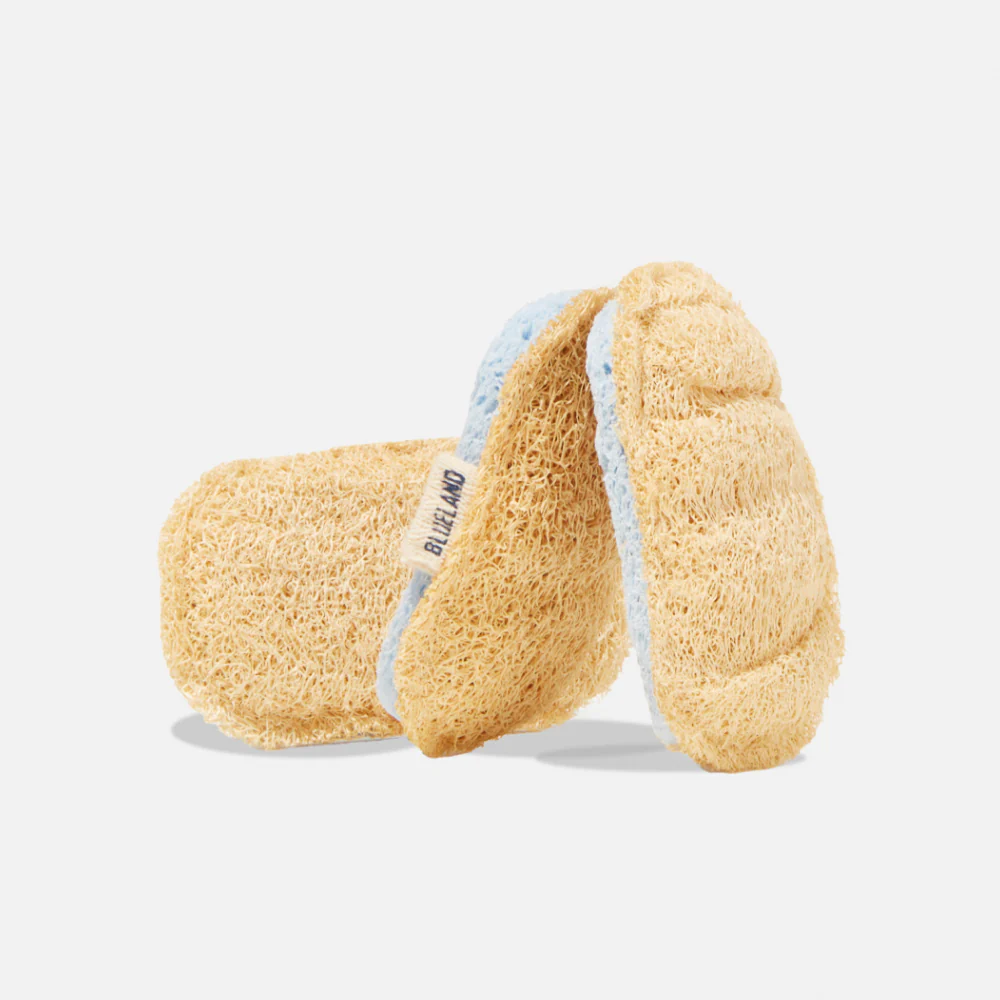
Blueland Scrub Sponge
Loofah and cellulose dual-action, hand-sewn with cotton thread. Most certified sponge in the roundup.
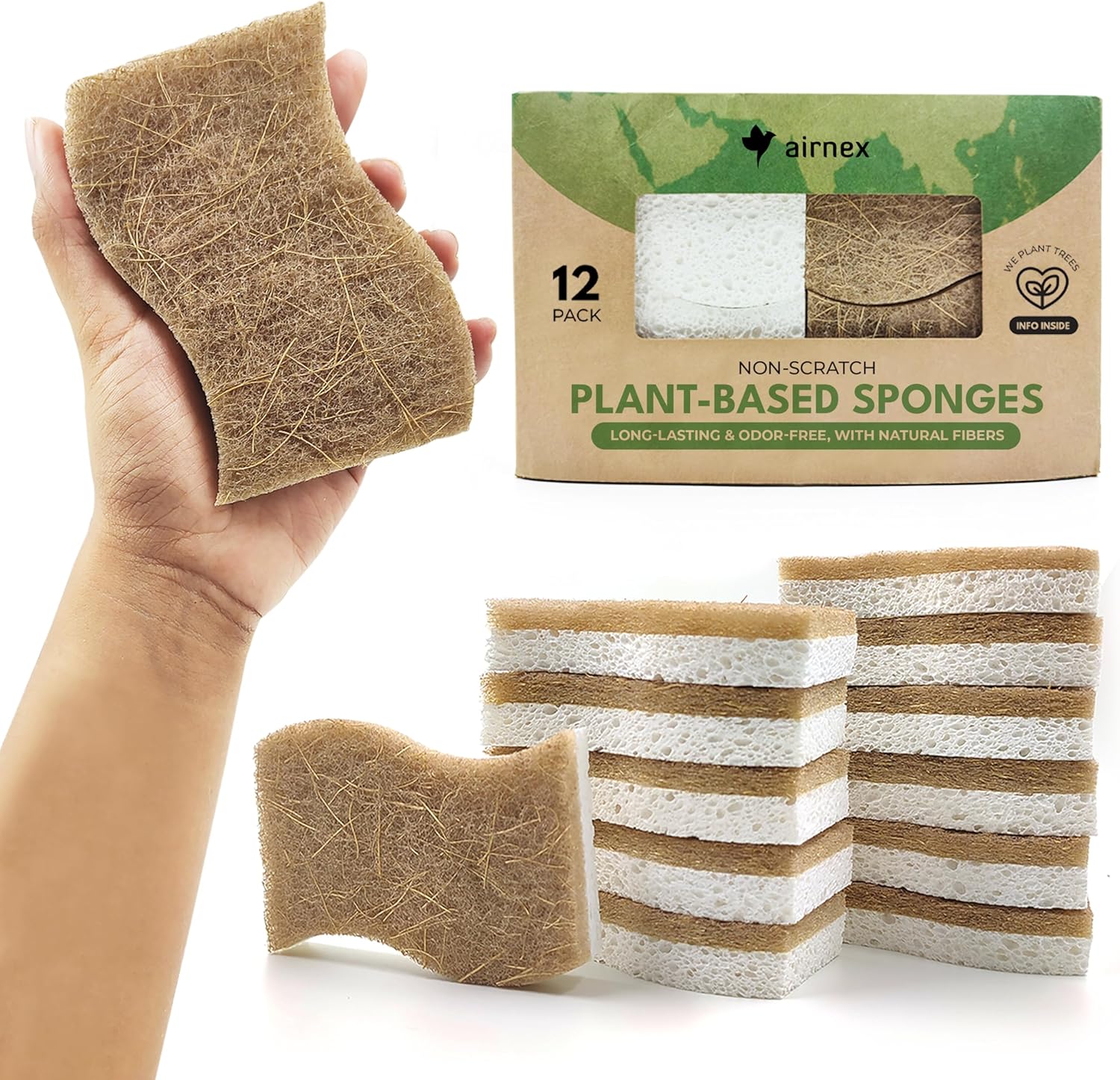
AIRNEX Natural Kitchen Sponge
100% plant-based cellulose and coconut coir. S-shaped ergonomic grip.
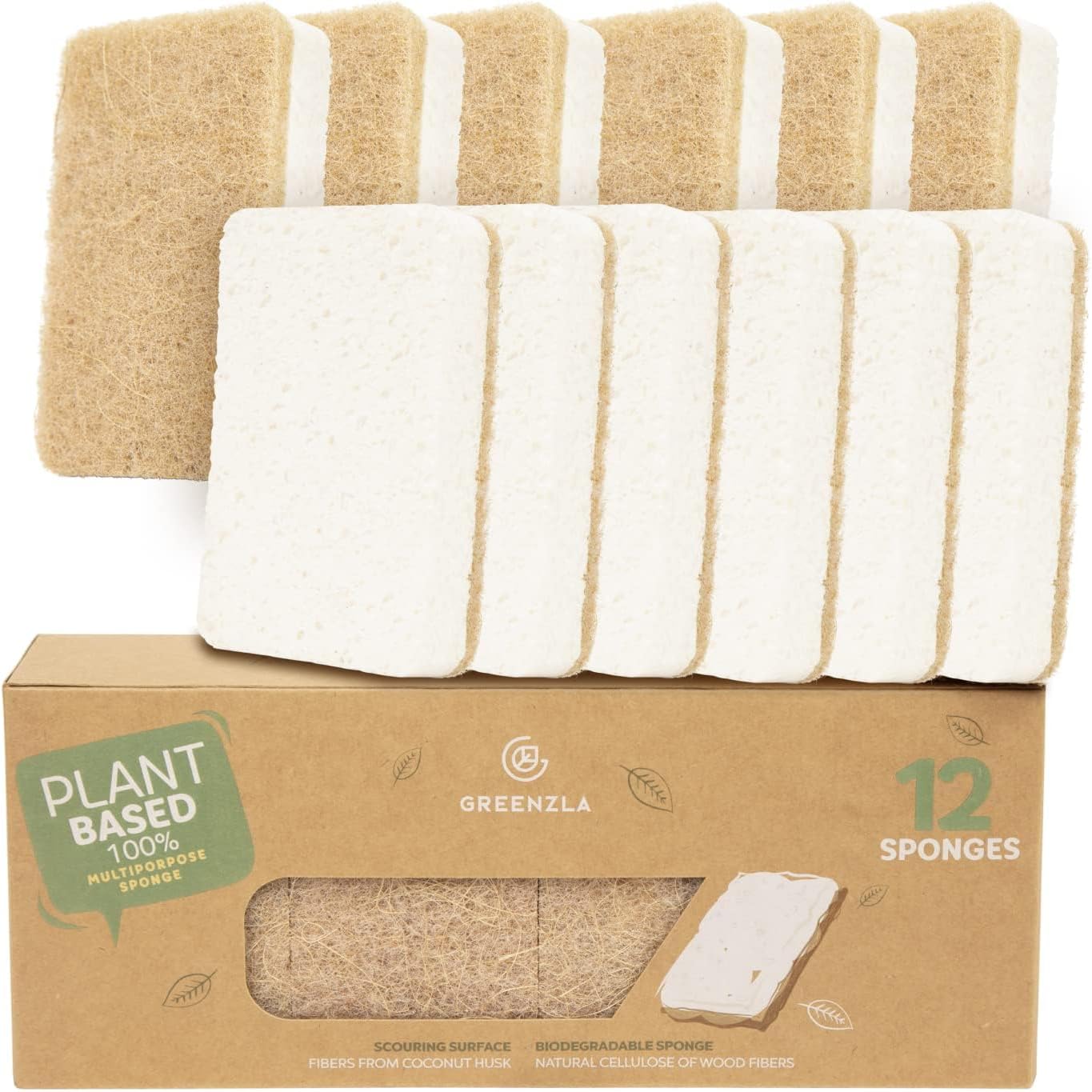
Greenzla Natural Kitchen Sponges
PETA Approved. Firm scrub for dishes, countertops, and tiles.
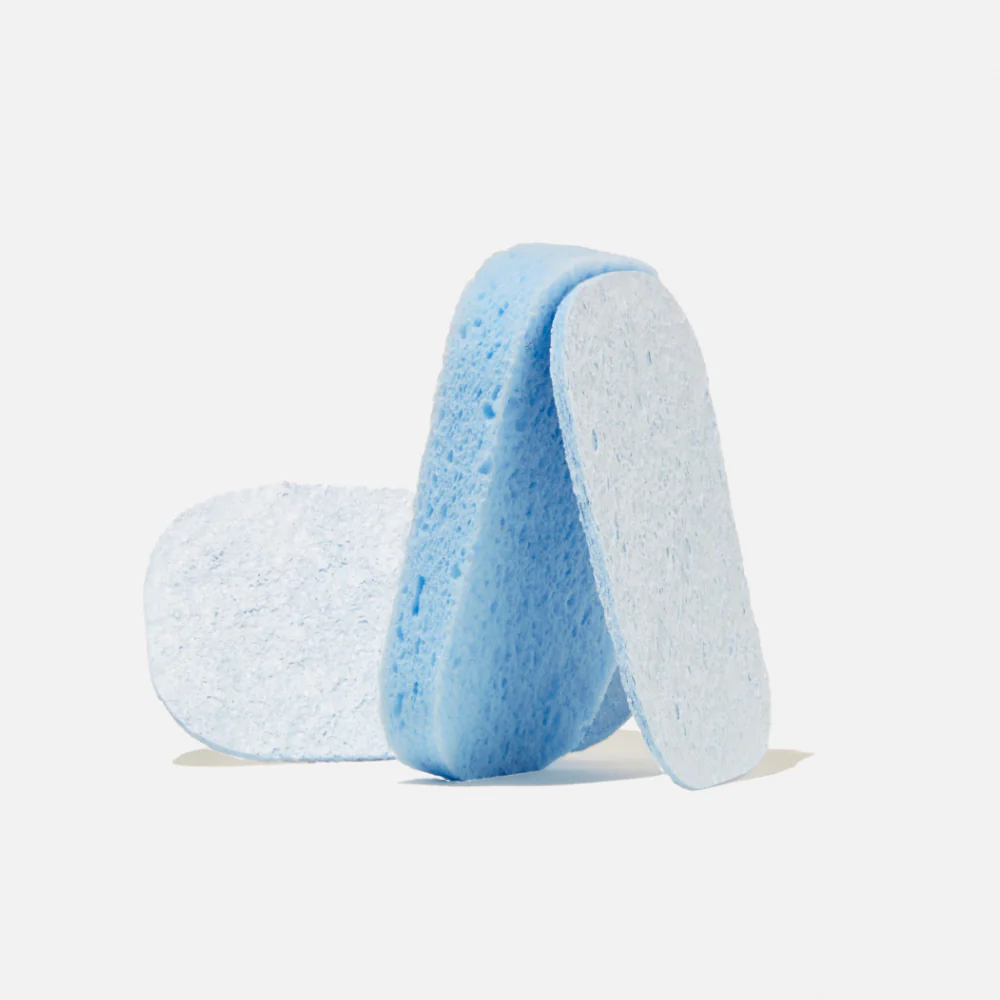
Blueland Pop-Up Sponge
Pure cellulose, arrives flat, pops up with water. Ultra-absorbent, fully compostable.
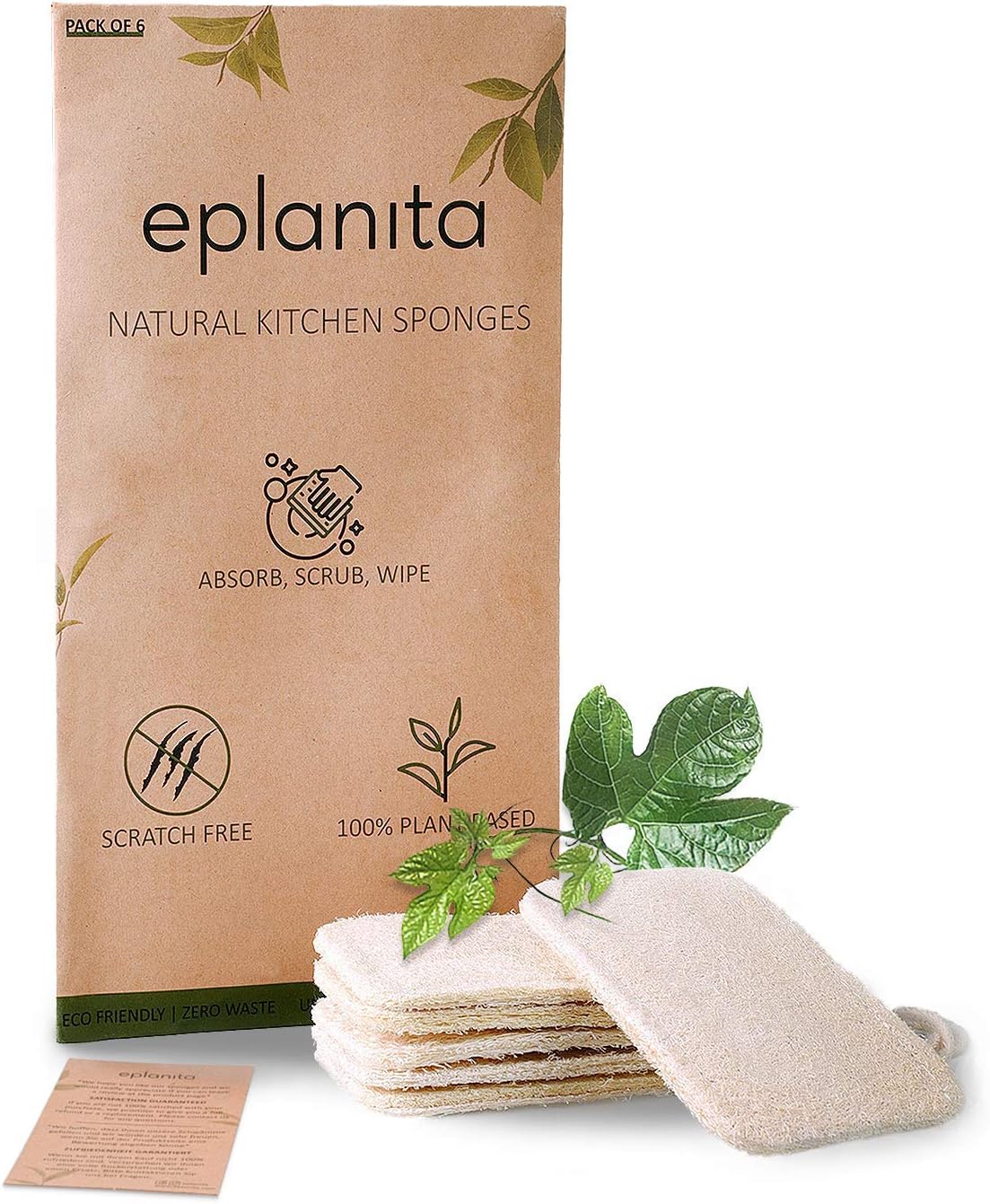
Eplanita Natural Dishwashing Sponges
100% loofah plant fiber, zero synthetic materials. Compresses flat, expands when soaked.
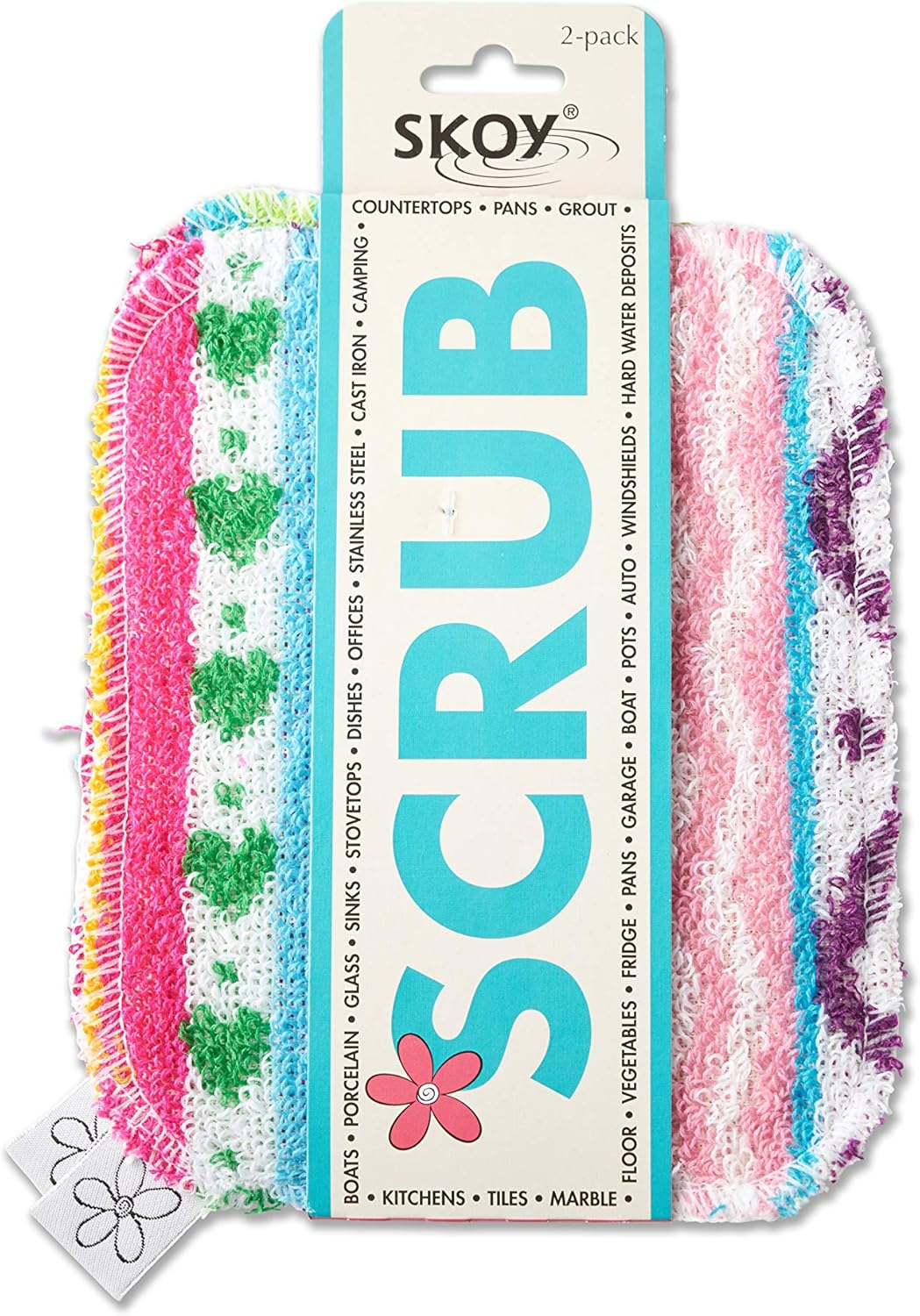
Skoy Scrub
Remnant cotton fibers, machine washable. Non-scratch on all surfaces including non-stick.
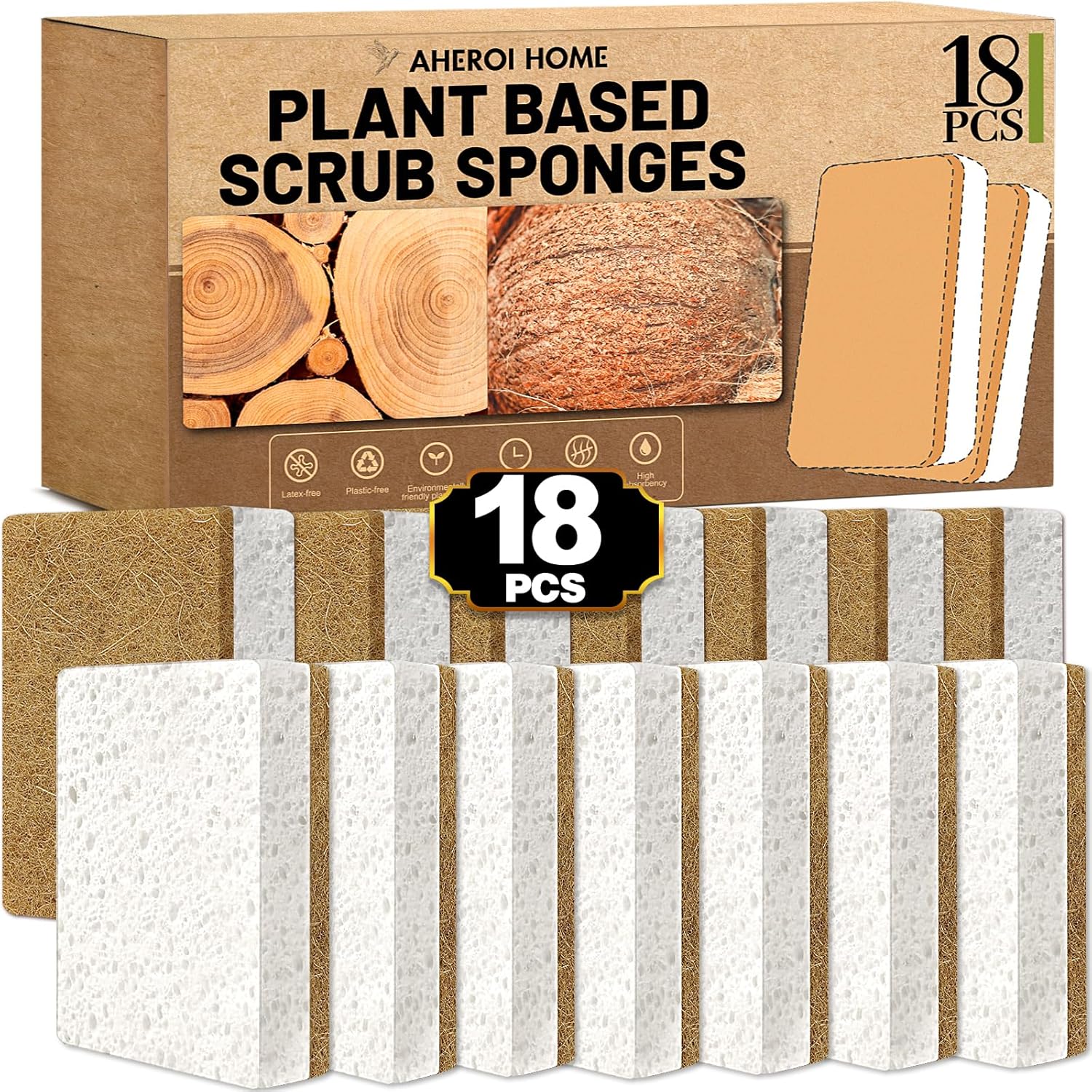
Aheroi Natural Dish Sponge
FSC-certified cellulose and coconut fiber. Best value per sponge in the roundup.
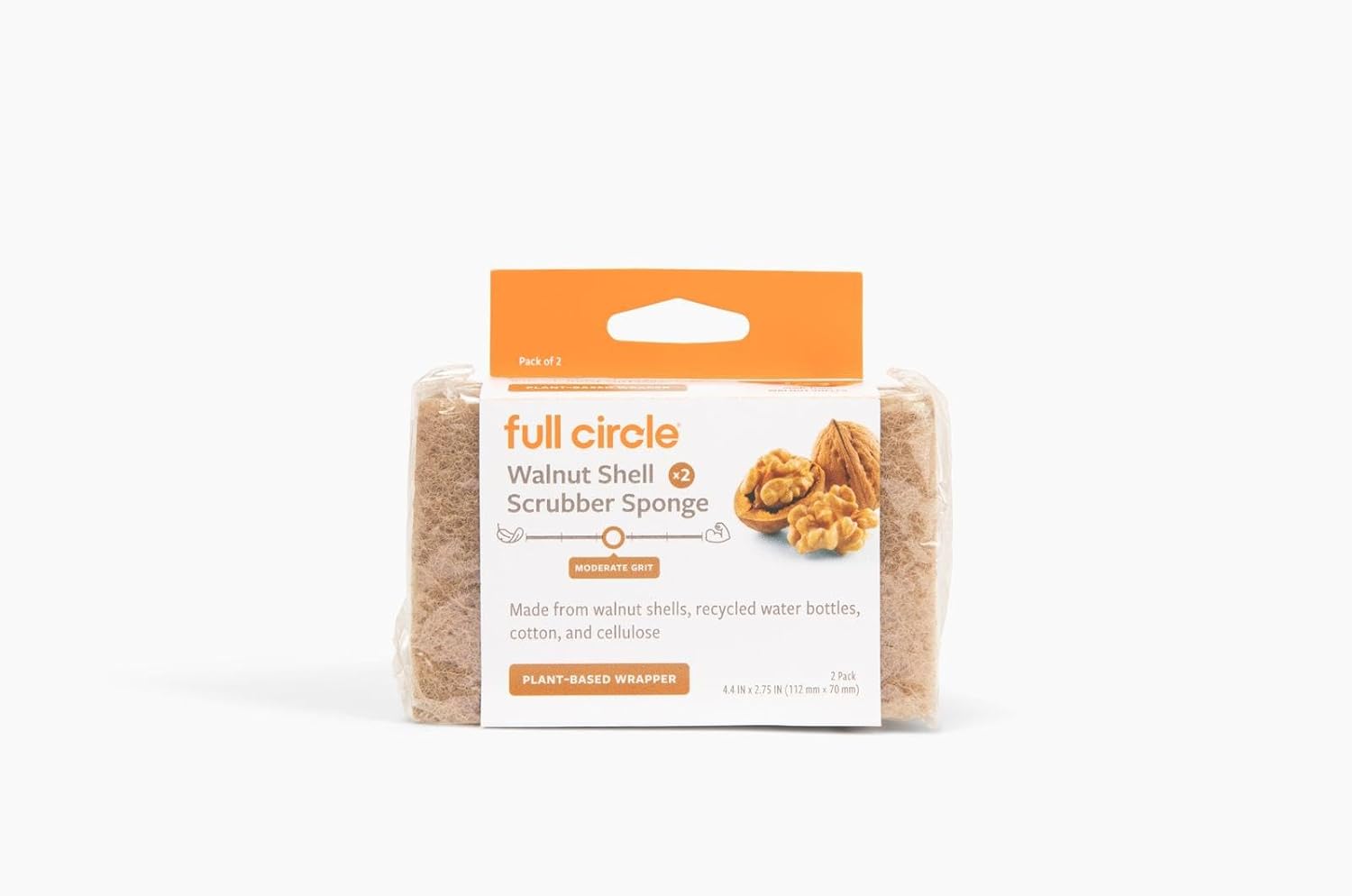
Full Circle Walnut Scrubber Sponge
B Corp certified, upcycled walnut shell scrubber.
What Makes a Dish Sponge or Scrubber Eco-Friendly?
An eco-friendly dish sponge is one made entirely from plant-based, biodegradable materials, free from synthetic fibers, and designed to compost at end of life without releasing microplastics.
Five criteria separate a genuinely plastic free sponge from a conventional one:
- Biodegradable materials throughout (including the scouring side)
- No synthetic fibers in any layer,
- Full compostability,
- No microplastic shedding during use,
- Minimal or recyclable packaging.
Conventional sponges are usually made from polyurethane foam, a petroleum-derived plastic that can persist in landfills for decades.
Melamine foam sponges (the “magic eraser” type) are even worse: a 2024 study published in Environmental Science and Technology found that melamine foam can shed up to 6.5 million microplastic fibers per gram of material.
When you use one of these sponges to clean an air fryer basket or wipe down a blender jar, those microplastics end up on surfaces that touch your food. An eco-friendly alternative removes that entire cycle from your kitchen.
Types of Eco-Friendly Dish Sponges and Scrubbers
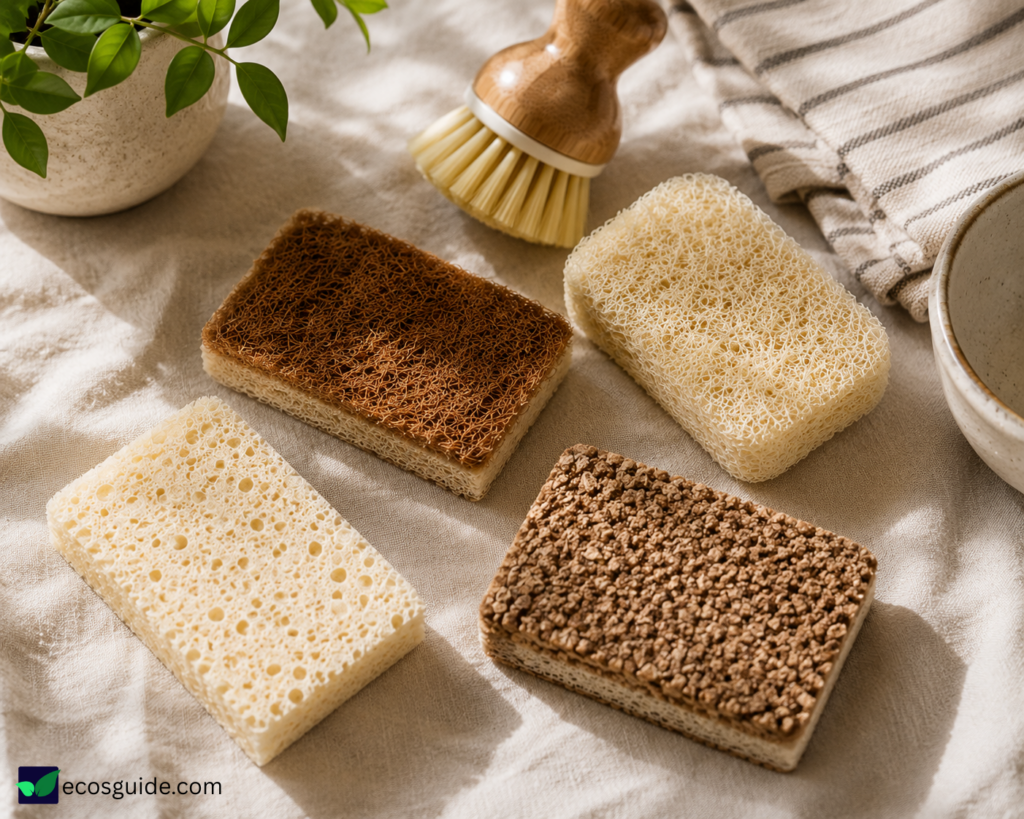
Not all eco friendly dish scrubbers are the same. The material determines scrubbing power, durability, and what surfaces it is safe to use on.
Here are the six main types, with notes on how each performs on both everyday dishes and small kitchen appliances.
1. Cellulose Sponges (Wood Pulp)
Cellulose sponges are made from wood pulp and are the most common base material in biodegradable dish sponge options.
They are soft, highly absorbent, and quick-drying, which helps prevent odor buildup. Scrubbing power is gentle, making them ideal for everyday plates, mugs, glasses, and counter wipe-downs.
They are also a safe choice for wiping down non-stick air fryer baskets, blender lids, and coffee maker exteriors without risking scratches. With daily use, a cellulose sponge lasts about 2 to 4 weeks. It is fully compostable.
2. Coconut Coir Scrubbers
Coconut coir scrubbers are made from the fibrous husk of coconuts, a natural byproduct of coconut production.
The scrubbing power is high: coconut coir handles stuck-on food, heavy grease, and stainless steel pots without the need for anything synthetic.
They also work well on stainless steel kettle exteriors and toaster crumb trays where buildup tends to bake on over time. Each scrubber lasts 2 to 3 months with daily use and is fully compostable.
3. Loofah Scrubbers
It provides moderate scrubbing power: gentle enough for non-stick surfaces but effective on everyday grime.
The flexible shape makes loofah a good option for cleaning inside blender jars and around the grooved edges of air fryer baskets. Each loofah sponge lasts 4 to 6 weeks and composts completely.
4. Walnut Shell Scrub Pads
Walnut shell scrub pads use ground walnut shells embedded into a cellulose sponge base.
The scrubbing power is high but non-scratch, making them safe for non-stick pans, ceramic, and enameled cast iron.
Walnut shell sits at about 3 on the Mohs hardness scale, well below the threshold that damages coatings, and is effective for removing baked-on grease from stainless steel appliance surfaces. Each pad lasts 3 to 4 weeks.
5. Sisal and Hemp Scrubs
Sisal and hemp scrubs are made from natural plant fibers: sisal comes from the agave plant, while hemp comes from cannabis sativa.
Both are moderate to high in scrubbing power and work well on dishes, countertops, and tiles. They last 2 to 3 months and are fully compostable.
The texture is slightly rougher than cellulose, so softening them in water before first use helps.
6. Cotton and Fabric Scrubs
Cotton and fabric scrubs are made from cotton fibers treated with a food-grade, non-toxic hardener.
They offer moderate, non-scratch cleaning safe for all surfaces including non-stick coatings on air fryer baskets and waffle makers.
The standout feature is longevity: they are machine washable and reusable for months, making them the longest-lasting option in this list.
8 Best Eco-Friendly Dish Sponges and Scrubbers
When I research sponges for EcosGuide, I look at five things:
- Material
- Scrubbing power versus surface safety,
- Durability and value
- Compostability at end of life
- Packaging
I also consider how well each sponge handles cleaning small kitchen appliances, since that is what most of my readers use them for alongside regular dishes.
Here are five that stood out, plus one bonus pick.
1. Blueland Scrub Sponge
Best for: Everyday dishwashing, stuck-on food, and wiping down air fryer baskets and blender jars. Households that want the strongest eco certifications on the market.
Key eco credentials:
- Certified B Corp. Cradle to Cradle certified
- EPA Safer Choice Partner
- Climate Neutral certified
- 100% plastic-free
- Hand-sewn with cotton thread, no plastic glues or adhesives
The Blueland Scrub Sponge is a dual-action sponge with a loofah side for scrubbing stuck-on food and a natural cellulose side for washing away everyday grime.
What sets it apart from other loofah-cellulose sponges is the construction: each sponge is hand-sewn with cotton thread instead of being held together by plastic glues or adhesives.
That means every part of this sponge is compostable at end of life, with nothing synthetic left behind.
The certification stack here is unmatched by any other sponge in this roundup: B Corp, Cradle to Cradle, EPA Safer Choice Partner, Leaping Bunny, and Climate Neutral.
The cellulose side is gentle enough for non-stick air fryer baskets and blender lids, while the loofah side handles grease on plates, pots, and stainless steel appliance exteriors.
The 3-pack runs $14. It is pricier per sponge than bulk cellulose-coconut options, but you are paying for the certifications, the plastic-free construction, and the peace of mind that comes with both.
Check Latest Price2. AIRNEX Natural Kitchen Sponge
Best for: Everyday dishwashing, glasses, plates, light pot scrubbing, and wiping down air fryer baskets and blender jars.
Key eco credentials:
- 100% plant-based (cellulose + coconut coir)
- Fully compostable
- 100% recyclable packaging
- Partners with Trees For The Future
The AIRNEX Natural Kitchen Sponge is a dual-layer sponge combining cellulose (wood pulp) on the soft side with coconut coir fibers on the scouring side.
Both layers are 100% plant-based and fully compostable.
The packaging is 100% recyclable, and AIRNEX partners with Trees For The Future for reforestation with every purchase.
In everyday use, the S-shaped ergonomic design makes it comfortable to grip. The porous cellulose structure dries quickly, reducing odor buildup between uses.
The coconut coir side handles grease and grime on plates, mugs, and light pot scrubbing without scratching, while the cellulose side is gentle enough for non-stick air fryer parts and blender lids.
This 12-pack offers strong value. Some reviewers note it takes more effort on heavily baked-on food.
Check Latest Price3. Greenzla Natural Kitchen Sponges
Best for: Readers who want a firmer scrub. Good all-rounder for dishes, countertops, bathtubs, tiles, and stainless steel appliance exteriors.
Key eco credentials:
- 100% plant-based sisal and hemp fibers
- Biodegradable and compostable
- No plastic content
- PETA Approved
- Recyclable packaging
If you prefer a firmer scrubbing texture, the Greenzla Natural Kitchen Sponges offer something different from the cellulose-coconut majority.
Made from 100% sisal and hemp fibers, they are biodegradable, compostable, and entirely plastic free.
Greenzla carries a PETA Approved certification, and the packaging is fully recyclable.
The texture is noticeably rougher than cellulose sponges, which some people love and others need a few uses to get used to.
Softening them in water before first use helps mellow the initial firmness. They are particularly effective on stainless steel kettle and toaster exteriors where grease and fingerprints build up.
The 12-pack provides good long-term value.
Check Latest Price4. Blueland Pop-Up Sponge
Best for: Everyday dishes, countertop wipe-downs, and cleaning coffee maker exteriors, blender lids, and kettle surfaces. Readers who want a compact, space-saving sponge.
Key eco credentials:
- Certified B Corp. Cradle to Cradle certified
- EPA Safer Choice Partner. Leaping Bunny cruelty-free
- 100% plant-based cellulose
- Fully compostable
The Blueland Pop-Up Sponge is a pure cellulose sponge that arrives flat and compact at one-fifth the size of a regular sponge.
Add water and it pops up to full scrubbing size. It is ultra-absorbent and fully compostable.
It carries the same full certification stack as the Blueland Scrub Sponge: B Corp, Cradle to Cradle, EPA Safer Choice Partner, Leaping Bunny, and Climate Neutral.
This is not a heavy-duty scrubber. It is designed for everyday dishwashing, wiping down counters, and cleaning appliance surfaces like coffee maker carafes and blender lids.
The compact flat storage is a genuine advantage if you buy in bulk or have limited space under your sink. The 3-pack runs $12.
For readers who already have a separate scrubber for tough jobs (like the Greenzla or Full Circle) and want a reliable everyday sponge with top-tier certifications, this fills that role well.
Check Latest Price5. Eplanita Natural Dishwashing Sponges
Best for: Readers who want the most natural option possible. Great for cleaning inside blender jars and around air fryer basket grooves.
Key eco credentials:
- 100% loofah plant fiber
- Zero synthetic materials
- Zero microplastic residue
- Fully compostable
- Zero waste design
For the most natural option in this roundup, the Eplanita Natural Dishwashing Sponges are made from 100% loofah plant fiber with a simple cotton rope binding.
There are zero synthetic materials, zero microplastic residue, and the entire sponge composts at end of life. This is as close to zero waste as a dish sponge gets.
Each sponge arrives compressed and thin, then expands to full scrubbing size once soaked in water.
The loofah fiber scrubs effectively without scratching dishes or countertops, and the flexible shape conforms well to curved surfaces like blender jars and air fryer basket edges.
A single sponge lasts about 4 to 6 weeks with daily use, and the 6-pack can stretch up to 9 months.
They can develop odor over time, which you can resolve by pouring boiling water over them periodically.
6. Skoy Scrub
Best for: Readers who want maximum reusability. Safe for non-stick coatings on air fryer baskets, waffle makers, and ceramic cooktops.
Key eco credentials:
- Made from remnant cotton fibers (diverted from landfill)
- Reusable hundreds of times
- Machine washable and dishwasher safe
- Non-scratch on all surfaces
The Skoy Scrub takes a completely different approach.
Instead of a disposable sponge, this is a reusable cotton scrub made from remnant cotton fibers (the kind that would otherwise end up in landfills) treated with a food-grade, non-toxic hardener for structure.
It is machine washable and dishwasher safe, so a single scrub lasts for months.
The scrubbing texture is firm but non-scratch, making it safe for non-stick pans, ceramic, glass, cooktops, and the coated surfaces of air fryer baskets and waffle makers.
When food particles build up, running it through the dishwasher cleans it right up. The 2-pack is a smaller quantity, but given the longevity, the cost per use is among the lowest in this list.
7. Aheroi Natural Dish Sponge
Best for: Families and heavy-use kitchens that go through sponges quickly. Readers who clean multiple appliances daily.
Key eco credentials:
- FSC-certified renewable wood cellulose
- Coconut fiber scrubbing layer
- Decomposes naturally without microplastic residue
The Aheroi Natural Dish Sponge is an 18-pack of cellulose and coconut fiber sponges at a price point that makes switching from conventional sponges easy.
Aheroi carries FSC certification (Forest Stewardship Council), meaning the wood cellulose is sourced from responsibly managed forests.
That is a credential none of the other picks in this list carry.
The dual-layer design works just like the AIRNEX: coconut fiber for scrubbing, cellulose for wiping.
The sponges come pre-moistened to preserve freshness, and you soak them in warm water to activate the full 2.5 cm thickness.
They decompose naturally without microplastic residue. If you clean dishes, an air fryer, a blender, and a coffee maker every day, you go through sponges fast, and the 18-pack value here is unbeatable.
Check Latest Price8. Full Circle Walnut Scrubber Sponge
Best for: Readers with cast iron, stainless steel pots, and baked-on grease on toaster trays and oven-safe appliance parts.
Key eco credentials:
- B Corp certified
- Walnut shells upcycled from agricultural byproduct
- Free from BPA, dyes, and Triclosan. Plastic-neutral via Plastic Bank
- Note: scrubber side contains rPET binder (not fully compostable)
The Full Circle Walnut Scrubber Sponge is the heavy-duty pick for readers who need serious scrubbing power from an eco friendly dish scrubber.
Full Circle is a certified B Corp with plastic-neutral and carbon-neutral shipping credentials.
The walnut shell scrubbing surface is made from upcycled agricultural byproduct, and it is free from BPA, dyes, and Triclosan.
The dual-sided design gives you walnut shell for tough jobs (baked-on food, greasy cast iron, stainless steel) and a cellulose sponge side for gentle daily cleaning.
Walnut shell sits at about 3 on the Mohs hardness scale, making it safe for non-stick and ceramic. It is particularly useful for cleaning stainless steel toaster crumb trays and kettle exteriors where grease bakes on.
One thing to be upfront about: the scrubber side contains recycled plastic (rPET) as a binder, so it is not fully compostable.
The cellulose base is compostable, but the walnut scrubber layer is not. At roughly $3.50 per sponge (2-pack), it is pricier than cellulose-coconut options.
For readers who need heavy-duty performance and accept the rPET compromise, it is still a significant step up from a fully synthetic sponge.
Check Latest PriceWhich Eco Scrubber Is Best for Your Kitchen Task?
The best eco friendly sponge for your kitchen depends less on the brand and more on what you are actually cleaning.
For everyday plates, mugs, and glasses, a cellulose or loofah sponge provides all the scrubbing power you need.
When you are tackling baked-on grease or heavy pots, reach for coconut coir or walnut shell.
For small kitchen appliances, the right match matters even more because many parts have non-stick coatings that scratch easily.
Air fryer baskets and removable trays usually have a non-stick layer, so cellulose, loofah, or walnut shell sponges are the safest choices.
Blender jars do well with a loofah or cellulose sponge that can reach inside curved walls.
Coffee maker carafes and kettle interiors benefit from cellulose paired with white vinegar for mineral buildup.
For stainless steel toaster exteriors and kettle bodies, coconut coir or walnut shell handles fingerprints and grease effectively.
If your appliance parts have grooves or hard-to-reach seams, a loofah or an eco-friendly dish brush works better than a flat sponge.
How to Spot Greenwashing in “Eco” Sponges
Not every sponge labeled “natural” or “eco-friendly” is plastic free.
Many sponges marketed as eco alternatives still contain synthetic fibers (usually polyester or nylon) in the scouring layer.
Some coconut fiber scrubbers include PET or polyester binders that are not compostable, even though the front of the packaging suggests otherwise.
The phrases to trust are “100% plant-based” or “plastic-free,” not vague terms like “eco” or “green” without material specifics. Before buying, check the full materials list on the back of the packaging.
If the scouring side feels identical to a conventional sponge, it probably contains synthetic plastic. A genuinely biodegradable dish sponge will list every material by name.
How Do They Compare? Full Comparison Table
This side-by-side comparison covers the key factors to help you match the right sponge to your kitchen needs, whether you are cleaning dishes or scrubbing appliance parts.
| Product | Scrubbing Power | Durability | Non-stick Safe | Compostable | Value Tier |
| Blueland Scrub Sponge | Moderate to High | 3 to 4 weeks | Yes | Yes | Premium (3-pack) |
| AIRNEX | Moderate | 2 to 4 weeks | Yes | Yes | Good (12-pack) |
| Greenzla | Moderate to High | 2 to 3 months | Yes (soften first) | Yes | Good (12-pack) |
| Blueland Pop-Up Sponge | Gentle | 2 to 4 weeks | Yes | Yes | Premium (3-pack) |
| Eplanita | Moderate | 4 to 6 weeks | Yes | Yes | Great (6-pack) |
| Skoy Scrub | Moderate | Months (washable) | Yes | No (reusable) | Best (long-lasting) |
| Aheroi | Moderate | 2 to 4 weeks | Yes | Yes | Best (18-pack) |
| Full Circle | High | 3 to 4 weeks | Yes | Partial (rPET) | Premium (2-pack) |
How to Care for Eco-Friendly Dish Sponges
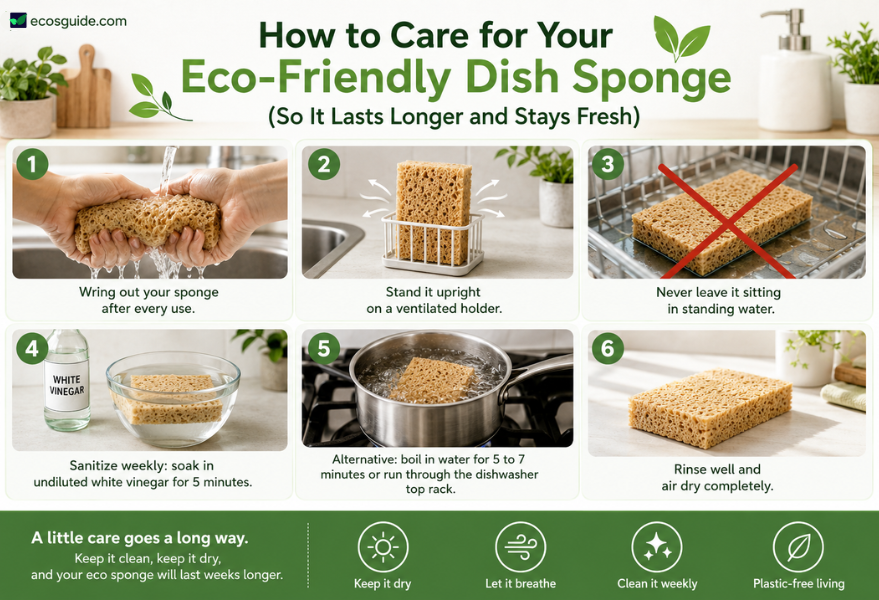
Sanitizing a natural dish sponge means killing the bacteria that accumulate during normal use without degrading the plant-based fibers.
Conventional sponges can harbor up to 54 billion bacteria per cubic centimeter, and natural sponges are no different if you skip basic hygiene habits.
This matters even more if you use the same sponge for dishes and appliance parts, since food residue from blender jars and air fryer baskets accelerates bacterial buildup.
1. Sanitize regularly using one of these methods:
- Soak the sponge in undiluted white vinegar for 5 minutes, then rinse and air dry.
- Boil the sponge in water for 5 to 7 minutes, then let it cool and wring out.
- Run the sponge through the top rack of your dishwasher on a hot cycle.
- For cellulose sponges only, microwave the sponge wet for 1 to 2 minutes. Do not microwave coconut coir or loofah sponges.
2. Wring out your sponge after every use. Squeeze out as much water as possible each time you finish washing.
3. Stand it upright on a holder with airflow. A ventilated sponge holder or dish rack edge works well.
4. Never leave it sitting in a pool of standing water. Sitting water speeds up bacterial growth and causes odor buildup faster than anything else.
If you are interested in other eco kitchen care routines, my guide on how to care for microfiber cloths covers similar principles for keeping reusable cleaning tools fresh.
When it comes time to replace, cellulose and loofah sponges should be swapped every 2 to 4 weeks with daily use.
Coconut coir scrubbers last 2 to 3 months. Reusable scrubs like the Skoy last until they no longer hold their structure.
To compost a spent sponge, cut it into small pieces and add it to your home compost or municipal green waste.
Small Kitchen Swaps, Real Impact
Switching your sponge is one of the smallest changes you can make in the kitchen. But it is one I genuinely believe matters.
Every conventional sponge you skip is one less piece of plastic shedding microplastics into the water, whether you are washing a dinner plate or scrubbing your air fryer basket after a batch of fries.
That adds up, quietly but meaningfully.
If you are just getting started, pick one sponge from this list and pair it with an eco-friendly dish soap to keep the whole routine plastic free.
Small steps, taken honestly, are how real change begins. And from where I stand, that is more than enough.
- 8 Verified Picks, Side by Side
- What Makes a Dish Sponge or Scrubber Eco-Friendly?
- Types of Eco-Friendly Dish Sponges and Scrubbers
- 8 Best Eco-Friendly Dish Sponges and Scrubbers
- Which Eco Scrubber Is Best for Your Kitchen Task?
- How to Spot Greenwashing in “Eco” Sponges
- How Do They Compare? Full Comparison Table
- How to Care for Eco-Friendly Dish Sponges
- Small Kitchen Swaps, Real Impact
- Frequently Asked Questions
Find More Tips At:


Frequently Asked Questions
Do eco-friendly dish sponges clean as well as regular ones?
Yes. Plant-based materials like coconut coir and walnut shell provide scrubbing power comparable to or better than conventional polyurethane sponges. The key difference is that natural sponges do this without shedding microplastics into your water supply. For heavy-duty jobs, coconut coir or walnut shell scrubbers outperform the soft side of a standard plastic sponge.
Are natural dish scrubbers safe on non-stick pans and appliance coatings?
Most natural scrubbers are safe for non-stick coatings, including those on air fryer baskets and waffle maker plates. Cellulose sponges, loofah, and walnut shell scrubbers are all non-scratch at normal pressure. Coconut coir is rougher and best reserved for stainless steel, cast iron, and heavy pots. Always test a small area first if you are unsure about a new sponge.
Which eco sponge is best for cleaning small kitchen appliances?
For appliances with non-stick coatings like air fryers and waffle makers, use cellulose, loofah, or walnut shell sponges. For glass blender jars and coffee maker carafes, cellulose or loofah works well. For stainless steel kettle and toaster exteriors, coconut coir or walnut shell handles grease and fingerprints without leaving marks. Pair any of these with an eco-friendly dish soap for the best results.
How long do eco-friendly dish sponges last?
It depends on the material. Cellulose sponges last 2 to 4 weeks with daily use. Loofah sponges last 4 to 6 weeks. Coconut coir scrubbers can last 2 to 3 months. Reusable cotton scrubs like the Skoy Scrub last several months with regular machine washing.
How do you sanitize a natural dish sponge?
Soak the sponge in undiluted white vinegar for 5 minutes, then rinse and air dry. You can also boil it in water for 5 to 7 minutes or run it through the top rack of a dishwasher. Cellulose sponges can be microwaved wet for 1 to 2 minutes to kill bacteria. Always wring out and allow to dry completely between uses.
Can you compost a dish sponge?
You can compost dish sponges that are made entirely from plant-based materials such as cellulose, coconut coir, or loofah. Cut the sponge into small pieces before adding it to your compost bin or municipal green waste. Do not compost sponges that have synthetic binders, polyester, or recycled plastic components in the scouring layer, as these will not break down.
