
Are sponges biodegradable? Some are, but most are not.
The common yellow-and-green sponge is made from polyurethane foam, a petroleum-based plastic that never truly breaks down and sheds microplastics into your dishwater with every scrub.
Cellulose, loofah, coconut coir, and other plant-based sponges are genuinely biodegradable and compostable, though some marketed as “eco” still hide plastic binders in the scouring layer.
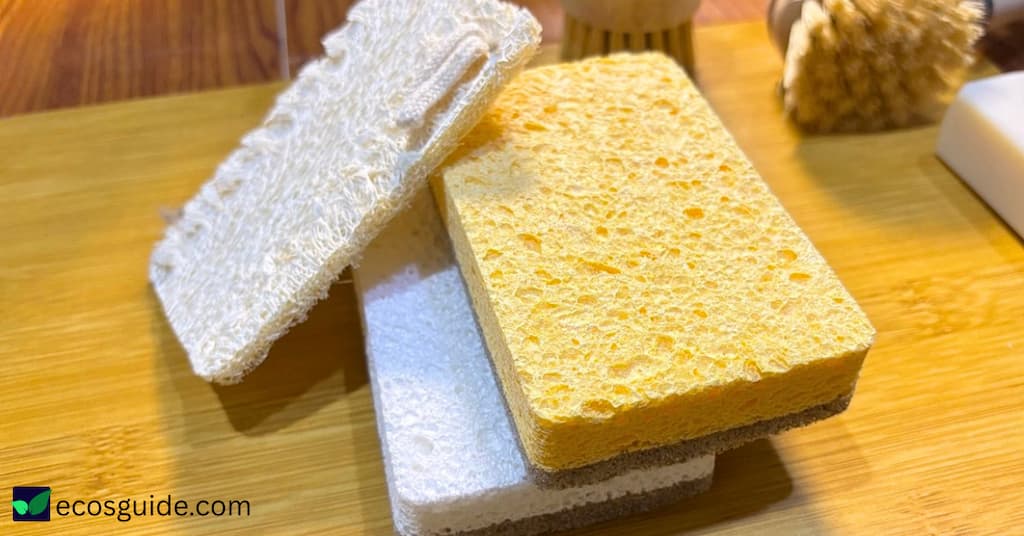
I used to think a sponge was just a sponge. Then I tore one open, the yellow-and-green kind we all grew up with, and saw what it actually was: plastic foam.
Every scrub was sending microscopic pieces of it down my drain, into the water system, and out to places I couldn’t see.
That’s when I started paying attention. What we clean with matters as much as what we clean.
Once you know what most sponges are made of, the answer to “are they biodegradable” makes a lot more sense.
Key Takeaways
- Most kitchen sponges are made from polyurethane foam and a polyester scouring layer, both petroleum-based plastics that don’t biodegrade and shed microplastics with every scrub.
- Genuinely biodegradable sponges are made from cellulose, loofah, coconut coir, sisal, hemp, or walnut shell, with no synthetic binders or dyes.
- A 100% cellulose sponge composts in about four to six weeks in a home bin; loofah and coconut coir take three to six months.
- The biggest environmental cost of a plastic sponge is microplastic shedding into your dishwater during use, not landfill disposal.
The Short Answer: It Depends on the Material
Whether a sponge is biodegradable comes down to what it’s made of.
There are two broad categories on the shelf. Plant-based sponges (cellulose, loofah, coconut coir, and hemp or sisal fibers) are biodegradable, and most are home-compostable when they’re free of synthetic additives.
Synthetic sponges (polyurethane foam, melamine foam, polyester scouring layers, and nylon scrubbers) are plastic, and they don’t biodegrade in any meaningful sense.
A biodegradable sponge is one made entirely from plant-based fibers, such as cellulose, loofah, or coconut coir, that break down through natural biological processes at end of life without leaving synthetic residue.
The eco question isn’t just about what happens after you throw the sponge out. It’s about what leaves your sink every time you wash a dish.
Synthetic sponges can release plastic particles as they wear during use. Plant-based sponges can also physically wear down, but their fibers are plant-derived rather than plastic.
Where the sponge ends up matters less than what it puts into the water system while you’re using it.
There’s also a real difference between “biodegradable” and “compostable,” and it’s a distinction the label industry loves to blur. That’s next.
Biodegradable vs Compostable vs “Eco”: What Those Words Actually Mean
Sponge packaging is full of soft claims: “eco-friendly,” “biodegradable,” “plant-based,” “planet-safe.” Most of them aren’t the same thing, and some don’t mean much at all.
“Biodegradable” means a material will eventually break down through natural processes, but says nothing about the timeframe or conditions required.
“Compostable” is stricter: the material must break down within a defined period (usually 90 to 180 days) in specific composting conditions, leaving no toxic residue.
Here’s how the three terms compare:
| Term | What it means | What it does not guarantee |
| Biodegradable | Will break down eventually through biological processes | Timeframe, conditions, or that the residue is non-toxic |
Compostable | Breaks down in defined conditions (home or industrial) within about 90 to 180 days into non-toxic material | Whether home or industrial composting is required, always check the label |
| Eco-friendly | Marketing term with no legal or scientific definition | Anything specific, always check the actual materials list |
“Eco-friendly” is the softest of all three. It has no legal definition, no certification requirement, and no independent verification behind it. Treat it as a signal to check the materials list, not as proof of anything.
What Most Kitchen Sponges Are Made Of (and Why They Don’t Biodegrade)
Pull the yellow-and-green sponge off any supermarket shelf and you’re holding two pieces of plastic: a soft yellow layer of polyurethane foam and a stiff green scouring layer of polyester or nylon mesh.
Both shed fragments as you use them.
Most kitchen sponges are made from polyurethane foam and a polyester scouring layer, both petroleum-derived plastics that shed microplastic fragments during normal use and do not biodegrade at end of life.
Polyurethane foam is the soft yellow layer. It’s petroleum-based, chemically stable for centuries, and every scrub releases tiny fragments into your dishwater.
Those fragments travel through your drain, through wastewater treatment (which captures very few microplastics that small), and out into rivers and oceans.
Melamine foam is the material behind “magic eraser” style sponges: a formaldehyde-based synthetic with a sandpaper-like structure that makes it a heavy microplastic shedder.
A 2024 study in Environmental Science and Technology by Su and colleagues estimated melamine sponges release millions of microplastic fibers per gram of material worn down, contributing over a trillion fibers to the environment globally each month.
Polyester and nylon scouring layers are plastic mesh. They shed the same way synthetic clothing sheds fibers in the wash.
If a sponge’s packaging does not clearly identify its fibers, backing, binder, or other materials, don’t assume that the finished product is entirely plant-based.
Check the manufacturer’s materials information before making that assumption.
So most sponges are plastic. That’s the deeper environmental problem: not that they sit in a landfill forever, but that they release plastic fragments into the water system every single day they’re used.
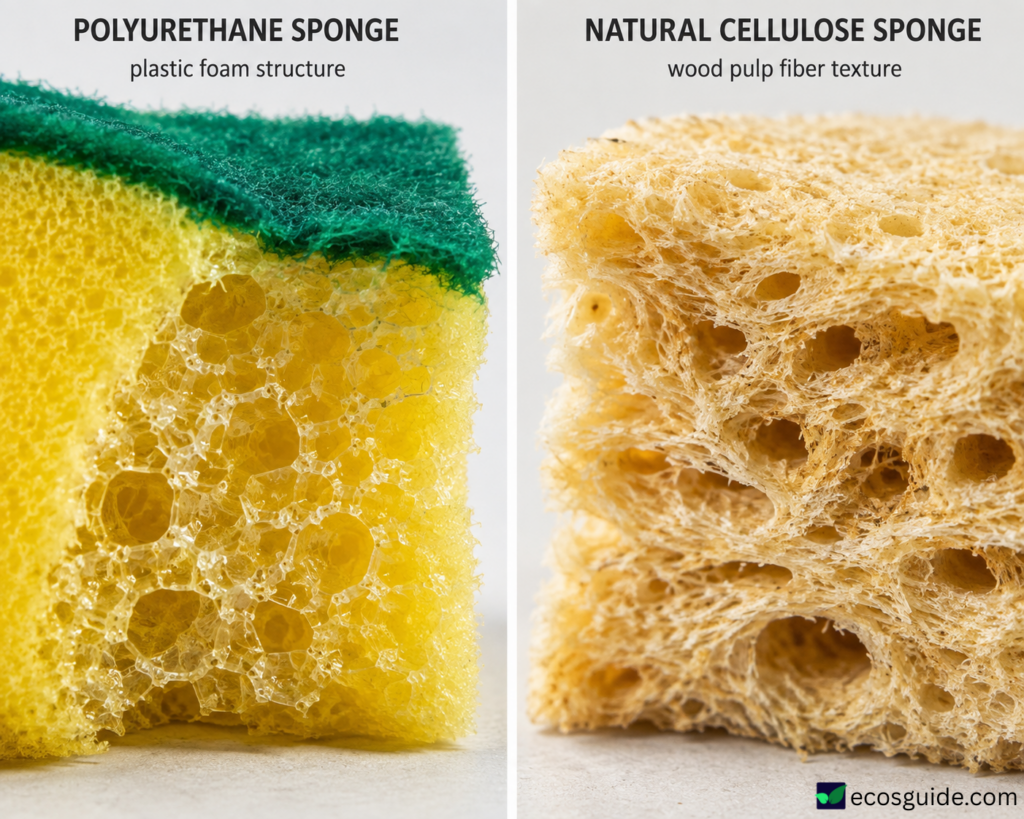
Illustration generated with AI for reference.
Are Scrub Daddy Sponges Biodegradable?
No. Scrub Daddy sponges are not biodegradable. They’re made from a polyurethane foam that the brand markets as FlexTexture, which changes firmness with water temperature.
That temperature-response is a clever design, but the underlying material is the same petroleum-based plastic used in most conventional kitchen sponges.
Polyurethane does not compost and sheds microplastics during use.
None of this makes Scrub Daddy uniquely bad. It’s the same base material as most yellow-and-green sponges, sold in a smarter shape at a higher price.
The issue isn’t the brand. It’s the material. If you’re specifically looking for a scrubber with that kind of firmness and durability, a walnut-shell or loofah scrubber does the same job with a plant-based fiber. Those are covered next.
Which Sponges ARE Biodegradable?
Five plant-based materials make up almost all of the genuinely biodegradable kitchen sponges on the market. Each has different strengths and different traps to watch for on the label.
A cellulose sponge decomposes in a home compost bin in about four to six weeks.
Coconut coir and loofah scrubbers take three to six months.
1. Cellulose sponges.
Made from wood pulp, cellulose sponges look and feel a lot like the conventional yellow sponge, but the fibers are 100% plant-based.
In a home compost bin, a clean cellulose sponge breaks down in about four to six weeks.
Watch for synthetic dyes, antibacterial treatments, or plastic-coated scouring layers laminated to the back: all three void the composting claim.
Look for a “100% cellulose” label and, ideally, FSC certification confirming the wood pulp is responsibly sourced.
2. Loofah.
The natural loofah plant (a member of the cucumber family) produces a fibrous, cage-like structure inside its dried fruit.
That’s the loofah sponge. It’s fully biodegradable and home-compostable, with a firmer texture that suits scrubbing better than absorbing.
In a home bin, a loofah takes about three to six months to break down. Watch for bleached loofah (chemical treatment) and pre-cut pads bonded to a latex or PET backing.
3. Coconut coir.
Coconut coir sponges are made from the tough fibers of coconut husks, and in raw form they’re fully biodegradable.
This is also the material with the biggest greenwashing risk.
Many “coconut” sponges use PET or plastic binders to hold the coir in a pad shape.
Look for 100% coconut coir with no synthetic backing named on the ingredients list. If the binder isn’t named, assume it’s plastic.
4. Sisal and hemp.
Sisal comes from the agave plant, hemp from the cannabis plant, and both are fully biodegradable plant fibers.
You’ll usually find them in knitted or crocheted scrubbers. The catch is the thread holding them together: cotton thread is fine, polyester thread is not.
Both are more durable than cellulose but less absorbent than loofah, which makes them good scouring pads for tougher jobs.
5. Walnut shell.
Walnut-shell scrubbers use ground walnut shells, sometimes bonded with plant-based binders, to produce excellent scouring power without scratching nonstick surfaces.
When the binder is plant-based (check the label), the whole scrubber is biodegradable. Walnut shell is the closest plant-based substitute for the abrasive feel of a plastic scouring pad.
For a full rundown of specific tested brands in each of these material types, my dish scrubber roundup covers the strongest picks I’ve found.
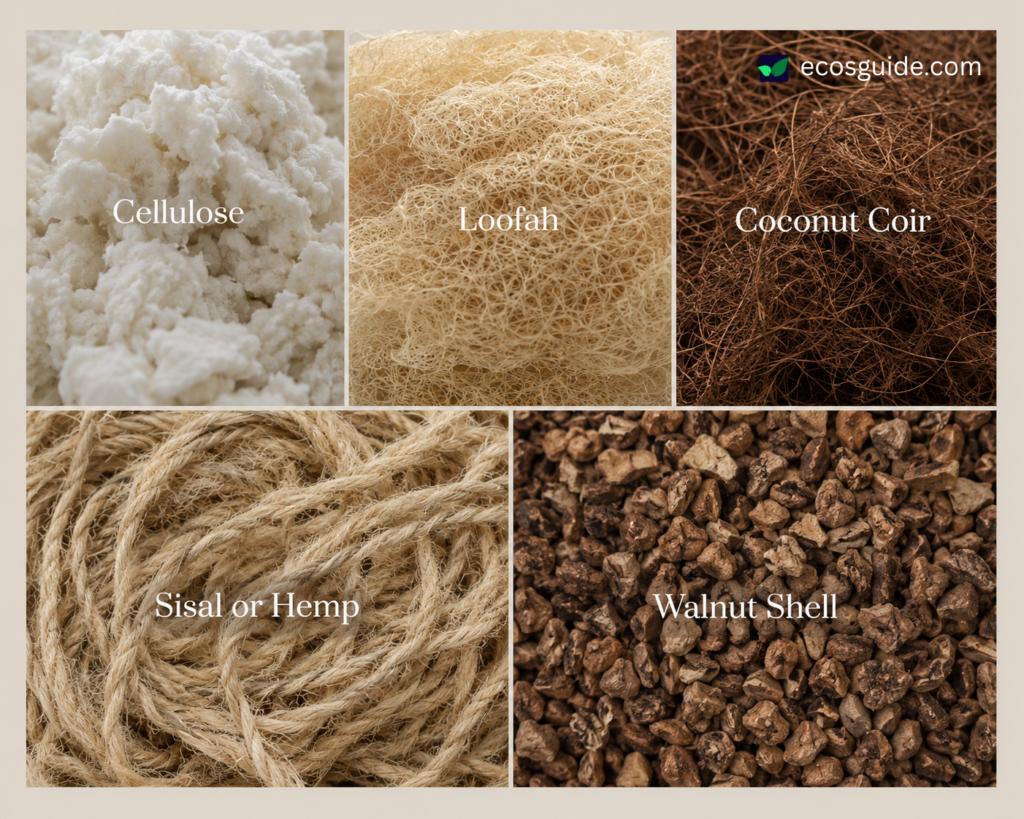
Illustration generated with AI for reference.
The Greenwashing Trap: How “Biodegradable” Sponges Can Still Have Plastic in Them
The word “biodegradable” on a sponge package isn’t a certification. It’s a claim, and sometimes the only biodegradable part is the wrapper.
Some sponges marketed as biodegradable use PET, PVC, or latex binders to hold coconut coir or loofah fibers in place.
These binders do not biodegrade and can shed microplastics during use. Genuine plant-based sponges name every fiber and every glue on their materials list.
Coconut coir pads are the most common offender. The coir itself is a beautiful plant fiber, but a rigid pad shape needs something to hold it together, and that something is often PET, PVC, or latex.
Pre-cut loofah pads have the same issue: a “sponge backing” attached to the natural loofah is often a bonded plastic layer the packaging quietly leaves out.
The practical way to read a sponge label: every fiber named specifically, every binder or backing named or absent, dyes and treatments disclosed, and the compost claim specified as home compostable, not just “biodegradable.”
Antibacterial or dye treatments can void a home-composting claim because the residue doesn’t break down cleanly.
One more label to know: PVA (polyvinyl alcohol). It’s marketed as biodegradable in some newer sponge and cleaning-product formulations, but the peer-reviewed evidence is mixed.
A 2021 study in the International Journal of Environmental Research and Public Health by Rolsky and Kelkar estimated that around 75% of PVA entering US wastewater treatment plants passes through intact.
Industry-funded reviews have contested that estimate, so treat PVA “biodegradable” as contested rather than certified.
Certifications help cut through the noise, but only the strict ones. The EPA Safer Choice program evaluates products against a defined ingredient standard, not just a marketing claim. B Corp, Cradle to Cradle, and OK Compost Home are the other strict ones worth trusting.
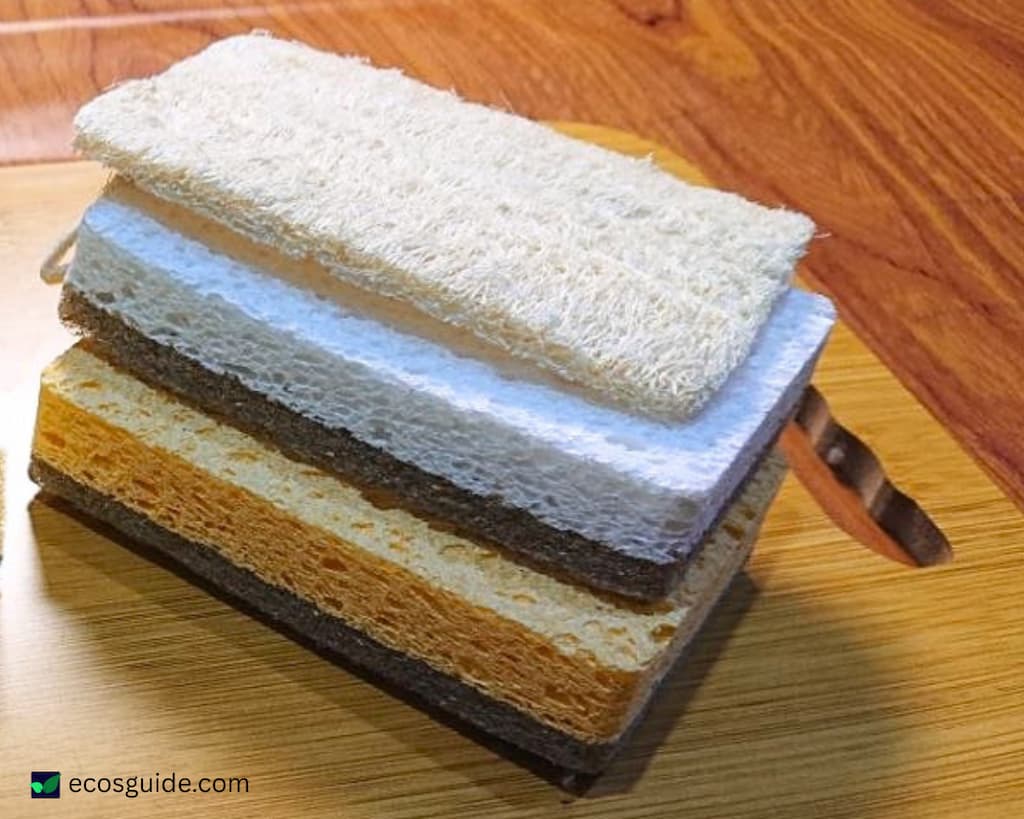
Different sponge pads can combine fibrous surfaces, foam, and backing layers. So check the full materials list before assuming a sponge is plastic-free.
Will a Biodegradable Sponge Actually Break Down in a Landfill?
Honestly? Not really. And that’s where a lot of the eco framing around sponges misses the point.
Biodegradable sponges do not fully break down in landfills.
Landfill conditions are oxygen-poor, which slows decomposition dramatically for all organic materials.
The bigger environmental issue with conventional sponges is microplastic shedding during everyday use: every scrub of a polyurethane or melamine sponge releases plastic fragments into your dishwater, and wastewater treatment plants pass a fraction of those particles into local waterways.
Landfills are anaerobic. Waste gets compacted under other trash, oxygen is cut off, and biological decomposition slows drastically.
Even food waste, which composts in weeks in an open bin, breaks down slowly enough that the EPA lists landfilling as one of the least preferred pathways for food scraps.
A cellulose sponge in that environment won’t compost in six weeks either.
What’s honestly true is that synthetic sponges persist for hundreds of years and fragment into microplastics long before that timeframe is relevant.
The real pivot is this: the sponge’s biggest environmental cost isn’t disposal. It’s use.
Every scrub of a plastic sponge sends microscopic fragments down the drain. A 2020 systematic review in the International Journal of Environmental Research and Public Health documented wastewater treatment plants as a source of microplastic release, both through their effluent and through sewage sludge applied to farmland. A plant-based sponge doesn’t shed at all. That’s the actual environmental win.
So, are sponges bad for the environment? The plastic ones, yes. But the reason isn’t what most people think.
How to Compost a Kitchen Sponge at Home
I haven’t composted a sponge in my own bin yet.
I’m on my last polyurethane one before I make the switch, but based on the material science and what home composters consistently report, here’s what to expect.
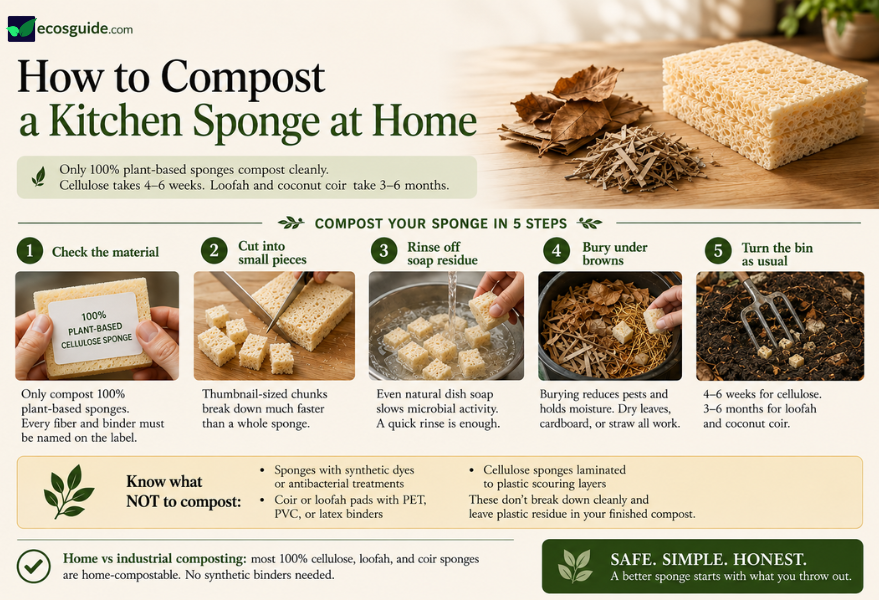
To compost a kitchen sponge at home, cut a 100% plant-based sponge into small pieces, rinse off soap residue, and bury under carbon-rich material like dry leaves.
Cellulose sponges break down in about four to six weeks; loofah and coconut coir take three to six months.
Here’s the process:
- Confirm the sponge is 100% plant-based. Use the label checklist from the greenwashing section: every fiber named, every binder named or absent, no synthetic dyes or antibacterial treatments.
- Cut it into small pieces. Thumbnail-sized chunks break down much faster than a whole sponge.
- Rinse off soap residue. Even natural dish soap can slow the microbial activity in your bin. A quick rinse is enough.
- Bury it under browns. Dry leaves, shredded cardboard, or straw work well. Burying the sponge, rather than leaving it on top, reduces pest attraction and helps it hold moisture.
- Turn the bin as usual. Expect breakdown around four to six weeks for cellulose, and three to six months for loofah or coir.
Home versus industrial composting matters here. Most 100% cellulose sponges are fine for a home bin.
Loofah and coir are also fine for home composting, just slower.
Anything with plastic binders or synthetic dyes belongs in neither: those don’t compost cleanly in either system, and the residue is what ends up in the finished compost.
The same principle applies to caring for other reusable kitchen cleaning tools: the material determines what’s actually possible at end of life.
What to Do With a Spent Conventional Sponge You Already Own
Don’t throw it out early. If there’s still life in your current sponge, use it up.
Tossing a working sponge into the trash and buying a new one, even a better one, creates more waste and undoes the benefit you’re trying to build.
Conventional polyurethane sponges cannot be recycled through most municipal programs.
Use them until they are worn out, then dispose of them in regular trash.
The bigger sustainability decision is what you replace them with.
When it’s genuinely worn out, a plastic sponge belongs in general waste. Most municipal recycling programs don’t accept sponges because the mixed materials, food residue, and small size aren’t compatible with standard recycling streams.
Before you toss it, you can extend its life for messy jobs like a garden knee pad, a dust seal for paint projects, or a greasy hand-tool wipe-down.
None of that undoes the microplastic problem, but it stretches the useful life of the plastic you’ve already bought.
For readers who’d rather swap to a brush shape than a sponge shape, my bamboo dish brush roundup covers the strongest plant-based options.
My Picks: Biodegradable Sponges I’d Reach for Next
When you’re shopping for a genuinely biodegradable sponge, look for three things: a fully named materials list (every fiber and every binder), a home-compost claim rather than just “biodegradable,” and no synthetic dyes or antibacterial treatments.
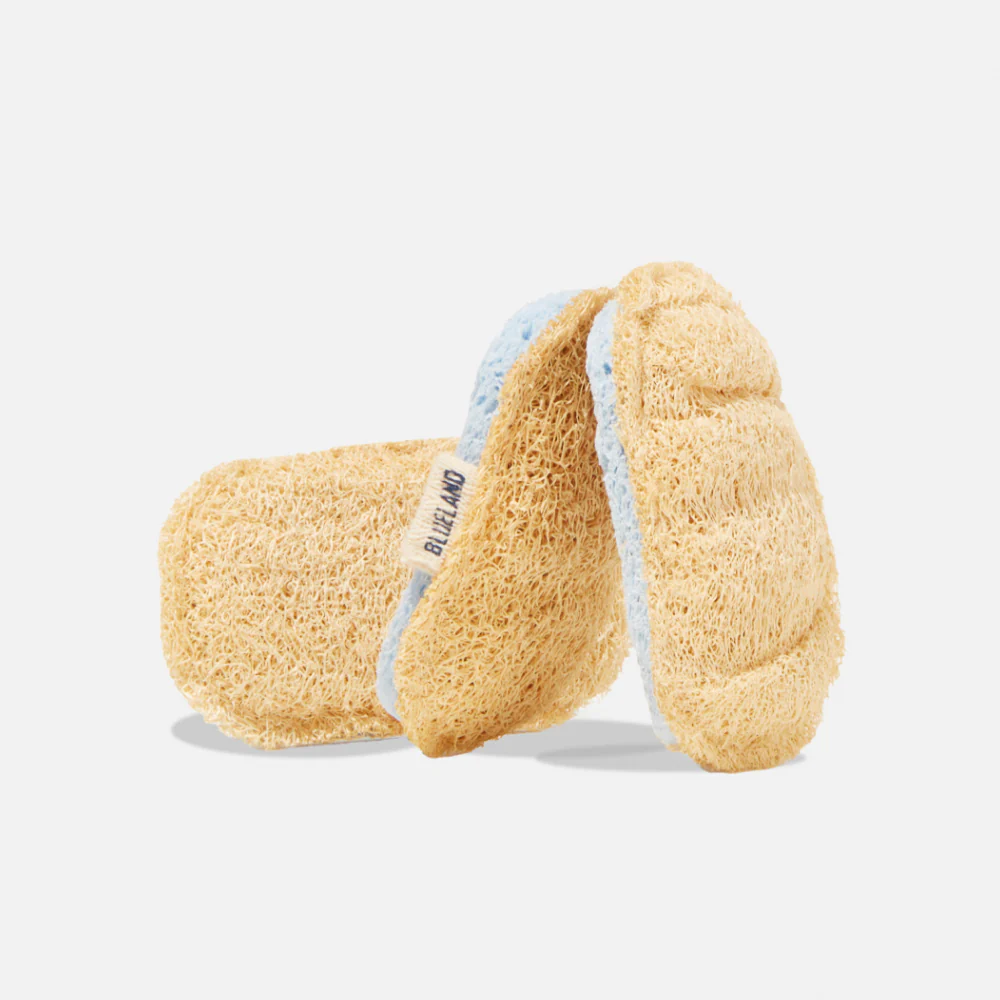
The most certified biodegradable sponge in the category. Blueland is B Corp and Cradle to Cradle certified, and their scrub sponge is 100% plant-based cellulose with no hidden binders. If you want the strongest independent verification behind a sponge, this is where I’d start. I haven’t tested this one in my own kitchen, but based on its ingredients and the reviews from eco-minded buyers, it checks the right boxes.
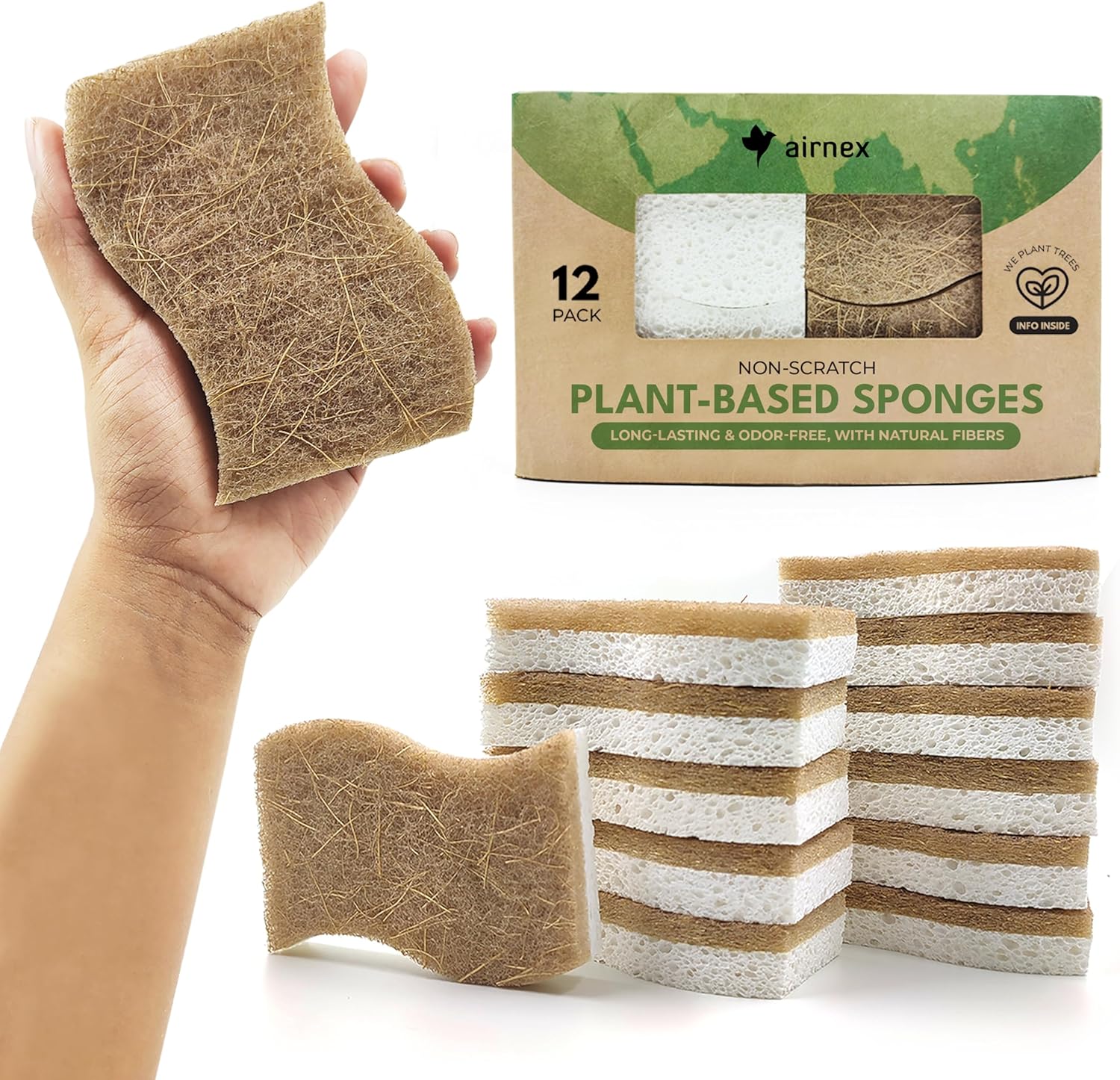
Fully plant-based cellulose in a bulk pack, with no synthetic dyes and no plastic scouring layer laminated to the back. That combination is rarer than the shelf makes it look, and it makes AIRNEX a genuinely honest cellulose option. Same disclaimer: I haven’t tested this one myself, but the materials list and eco-minded buyer feedback both hold up.
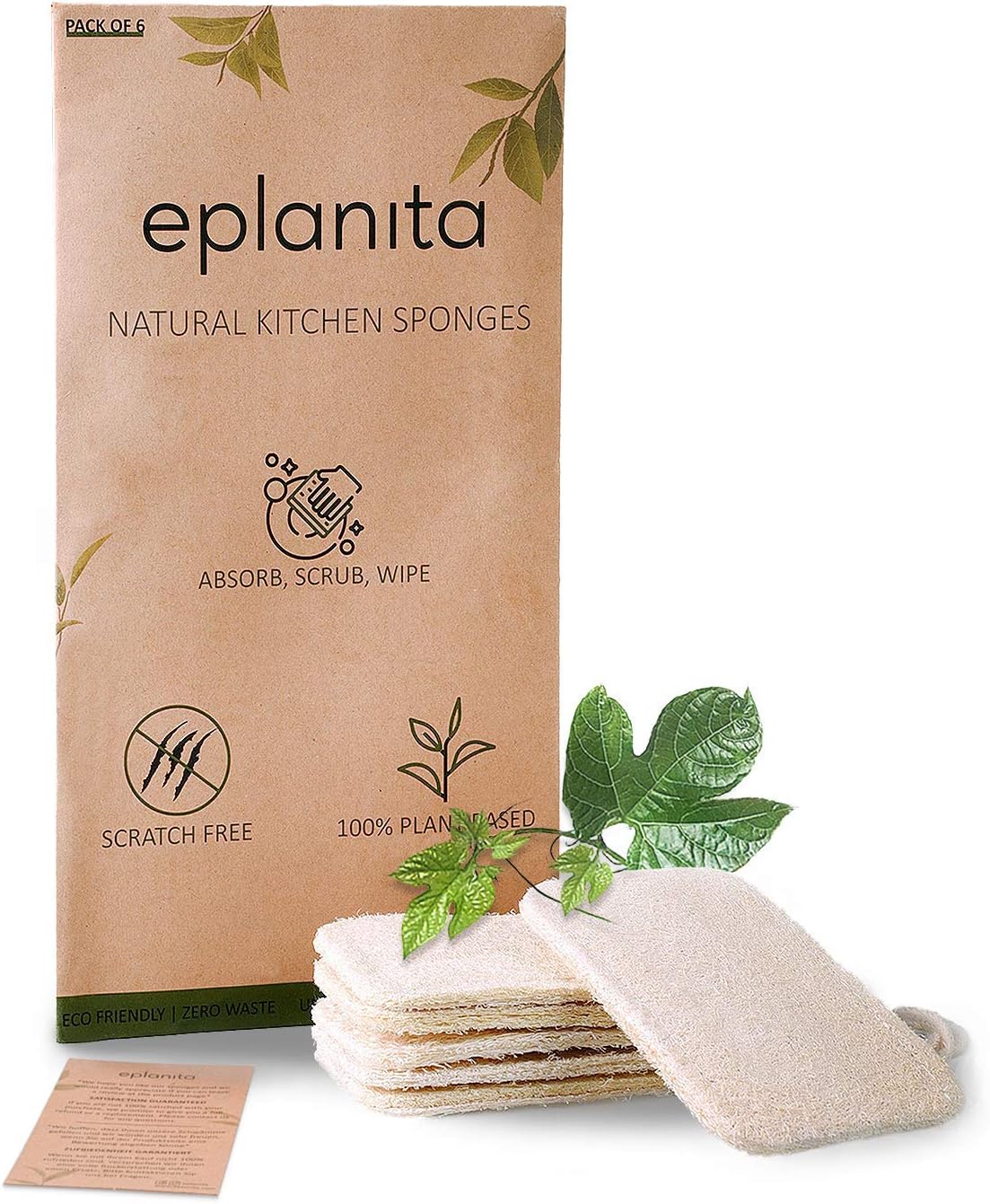
The purest single-material pick on this list. It’s 100% loofah, no binder, no dyes, no adhesive backing. The honest gold-standard example of “just one plant.” Best for scrubbing rather than absorbing, so I’d pair it with a cloth or cellulose sponge for wet cleanup. Same disclaimer applies here: I haven’t tested it in my own kitchen, but the ingredients are exactly what I want in a loofah scrubber.
So, Are Sponges Biodegradable?
The honest answer is that most kitchen sponges are not biodegradable, but the good ones genuinely are, and switching is one of the simplest kitchen changes anyone can make.
What matters most isn’t guilt about the sponge you already own. It’s what you choose next.
Every plant-based sponge that replaces a plastic one is one fewer source of microplastics flowing through your drain and into water that has to go somewhere.
That’s the whole point of paying attention to small kitchen choices. They add up quietly, and they matter.
- The Short Answer: It Depends on the Material
- Biodegradable vs Compostable vs “Eco”: What Those Words Actually Mean
- What Most Kitchen Sponges Are Made Of (and Why They Don’t Biodegrade)
- Which Sponges ARE Biodegradable?
- The Greenwashing Trap: How “Biodegradable” Sponges Can Still Have Plastic in Them
- Will a Biodegradable Sponge Actually Break Down in a Landfill?
- How to Compost a Kitchen Sponge at Home
- What to Do With a Spent Conventional Sponge You Already Own
- My Picks: Biodegradable Sponges I’d Reach for Next
- So, Are Sponges Biodegradable?
- Frequently Asked Questions
Find More Tips At:


Frequently Asked Questions
Are cellulose sponges biodegradable?
Yes. Cellulose sponges are made from wood pulp and are fully biodegradable and home-compostable when free of synthetic dyes, antibacterial treatments, or plastic binders. Look for sponges labeled “100% cellulose” or FSC-certified to avoid hidden additives. In a home compost bin, a cellulose sponge breaks down in about four to six weeks.
Are Scrub Daddy sponges biodegradable?
No. Scrub Daddy sponges are made from polyurethane foam, marketed by the brand as FlexTexture. Polyurethane is a petroleum-based plastic that does not biodegrade and sheds microplastics during use. For a biodegradable alternative with similar scrubbing power, look for a loofah or walnut-shell scrubber.
How long does a sponge take to biodegrade?
A 100% cellulose sponge decomposes in a home compost bin in about four to six weeks. Coconut coir and loofah scrubbers take three to six months. Polyurethane and melamine foam sponges are plastic and do not biodegrade. They fragment into microplastics that persist in the environment for centuries.
Are magic erasers biodegradable?
No. Magic erasers are made from melamine foam, a formaldehyde-based synthetic. A 2024 study in Environmental Science and Technology estimated that melamine sponges release millions of microplastic fibers per gram of material worn away during use, with total emissions of over a trillion fibers a month globally. Melamine foam does not biodegrade and continues shedding until fully worn down.
Can I recycle a plastic sponge?
Almost never. Most municipal recycling programs do not accept kitchen sponges because the mixed materials, food residue, and small size make them incompatible with standard recycling streams. The most sustainable option is to use conventional sponges until they are worn out, then switch to a biodegradable alternative for the next one.
Do biodegradable sponges clean as well as regular ones?
Yes, when you match the material to the task. Cellulose sponges absorb similarly to conventional yellow-and-green sponges. Loofah, walnut shell, and coconut coir scrubbers handle stuck-on food and grease as well as or better than polyester scouring pads, often with less scratching risk on nonstick surfaces.
