
Zero waste dishwashing is the practice of cleaning dishes using biodegradable products, reusable tools, and water-conscious techniques that leave as little behind, in the bin, in the water system, and on your dishes, as possible.
Zero waste dishwashing is the practice of cleaning dishes using biodegradable products, reusable tools, and water-conscious techniques that leave as little behind, in the bin, in the water system, and on your dishes, as possible. It comes down to three pillars:
- Products: dish soap bars, naked dishwasher tablets, no synthetic fragrance
- Tools: wooden brushes with replaceable heads, compostable scrubbers instead of plastic sponges
- Technique: full loads only, tap off between rinses, one wash cycle at a time
No routine is truly zero waste. This is the honest guide to getting close, without falling for the greenwashing.
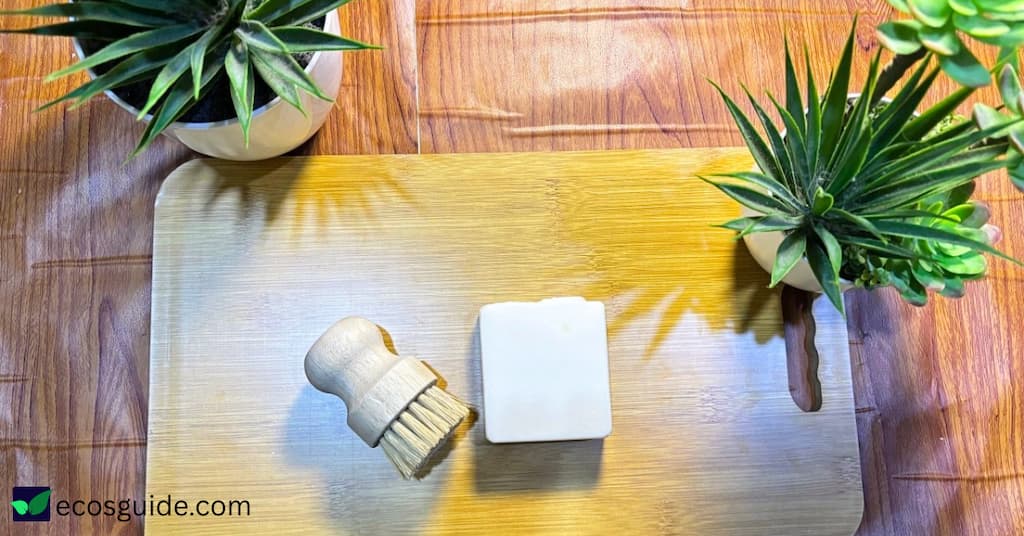
When I think about what leaves our kitchen sink every day, I don’t think about chemistry. I think about rivers.
Everything we wash down the drain has to go somewhere, a treatment plant first, then a waterway, then whatever is downstream of that.
Once I started paying attention to it, I couldn’t unsee it. That’s why this article isn’t really about dishes. It’s about what we’re quietly sending downstream, and what we can do to send less of it.
Key Takeaways
- The most eco-friendly way to wash dishes is a full-load dishwasher on eco mode with air-dry, followed closely by efficient hand-washing that keeps the tap off between rinses.
- Zero waste dishwashing rests on three pillars: biodegradable products, reusable tools, and water-conscious technique.
- Level 1 changes cost nothing and have the biggest immediate impact, so start there before buying anything new.
- Naked dishwasher tablets skip the PVA plastic film that wraps most conventional pods, sidestepping the microplastic debate entirely.
Is Dishwashing or Hand-Washing More Eco-Friendly? (The Honest Water Audit)
The most eco-friendly way to wash dishes is a full-load dishwasher run on eco mode with air-dry enabled, followed closely by efficient hand-washing that keeps the tap off between rinses.
You’ve probably seen the stat: hand-washing uses 27 gallons per load, while a modern dishwasher uses about 3.
It comes from Energy Star and NRDC data and isn’t wrong, but it assumes continuous-tap hand-washing with a full-sink pre-soak.
Efficient hand-washing, with a basin, the tap off between dishes, and a targeted rinse at the end, sits well under 10 gallons for a typical load. Not machine-level, but nowhere near 27.
If you already have a dishwasher, the real winning combo is straightforward: full loads only, eco mode, and air-dry instead of heated dry.
According to Energy Star, certified dishwashers use 3.5 gallons or less per cycle, and heated drying is the single biggest energy draw in the cycle.
For most kitchens, the machine wins on water. Hand-washing wins on flexibility, small loads, delicate items, and the occasional single-pan lunch. Both can be zero-waste-adjacent when paired with the right products and habits.
Here’s how the three levels compare at a glance:
| Level | Cost | Main change | Best for |
| Level 1: Habits | $0 | Full loads, tap off between dishes, eco mode, use up what you already have | Anyone, starting today |
| Level 2: Hand-washing setup | Under $30 | Dish soap bar, wooden brush with replaceable head, compostable scrubber | Sink-first kitchens |
| Level 3: Dishwasher setup | Around $25 starter | Naked tablets, eco mode, citric acid or vinegar rinse aid | Dishwasher households |
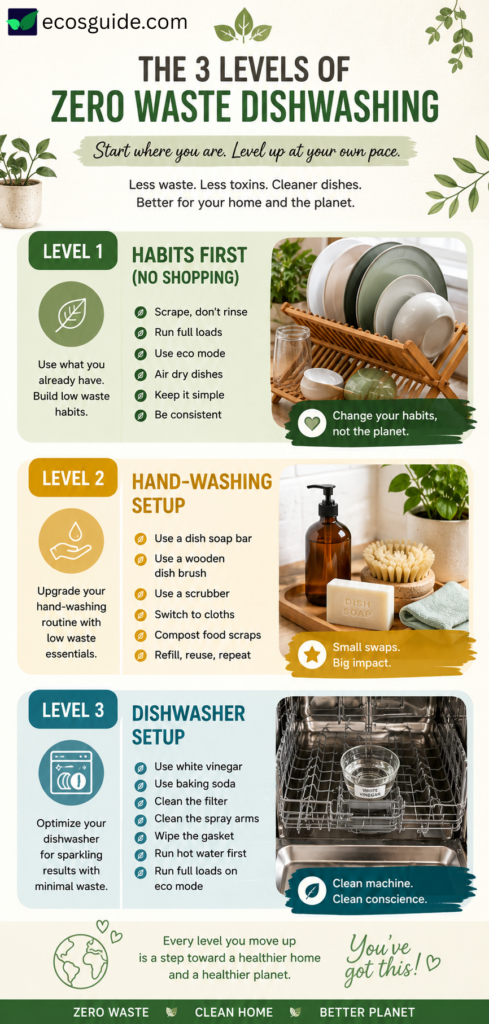
Level 1: What You Can Do Today Without Buying Anything
The first step in zero waste dishwashing costs nothing and requires no new products.
It’s about changing how you use the machine and the tap you already have. Every guide that leads with a shopping list skips this level, and it’s the one with the biggest immediate impact.
Here’s what actually moves the needle:
1. Stop pre-rinsing
Modern dishwashers are designed for scraped, not rinsed, dishes.
Pre-rinsing wastes water at the sink and can actually leave the machine “cleaner” than the detergent expects, which triggers weaker wash cycles and worse results.
Scrape food into the compost, load, and let the machine do its job.
2. Turn the tap off between dishes
This is the single biggest hand-washing water saver, bigger than any product swap. Fill a small basin or run the water only when you’re rinsing.
3. Run full loads only
A half-empty dishwasher uses almost the same water and energy as a full one. Wait a day, load it properly, then run.
4. Choose eco mode with air-dry
The eco cycle is longer at a lower temperature, and skipping heated dry cuts the biggest energy draw of the cycle.
Glassware lasts longer too.
5. Use up what you already have
The most sustainable dish soap is the plastic bottle already in your cupboard. Finish it before you swap.
Throwing a half-used bottle away to buy something greener is a lateral move for the planet, not a forward one.
Level 2: Setting Up a Zero Waste Hand-Washing Kitchen
A zero waste hand-washing setup usually includes a dish soap bar, a wooden dish brush with a replaceable head, and a compostable scrubber for pots, replacing the plastic bottle, plastic-handled brush, and synthetic foam sponge of a conventional kitchen.
A full starter kit sits under $30, and once you have the right tools, the switch stops feeling like a project and starts feeling like your kitchen.
Before we get into specific swaps, here’s what I look for in an eco cleaner or tool for the sink:
- Ingredient transparency. No synthetic fragrance, no undisclosed surfactants, no “proprietary blend” that hides what’s actually in the bottle.
- Packaging that isn’t a workaround. Refillable, compostable, or minimal recyclable. Not “recyclable” as a fig leaf on a plastic bottle.
- Certification where available. EPA Safer Choice, MADE SAFE, or B-Corp are the ones I trust most.
- Availability that doesn’t cancel out the eco math. If a product only ships from overseas, the shipping footprint often erases the plastic savings.
Dish Soap Bars (The Honest Tradeoff)
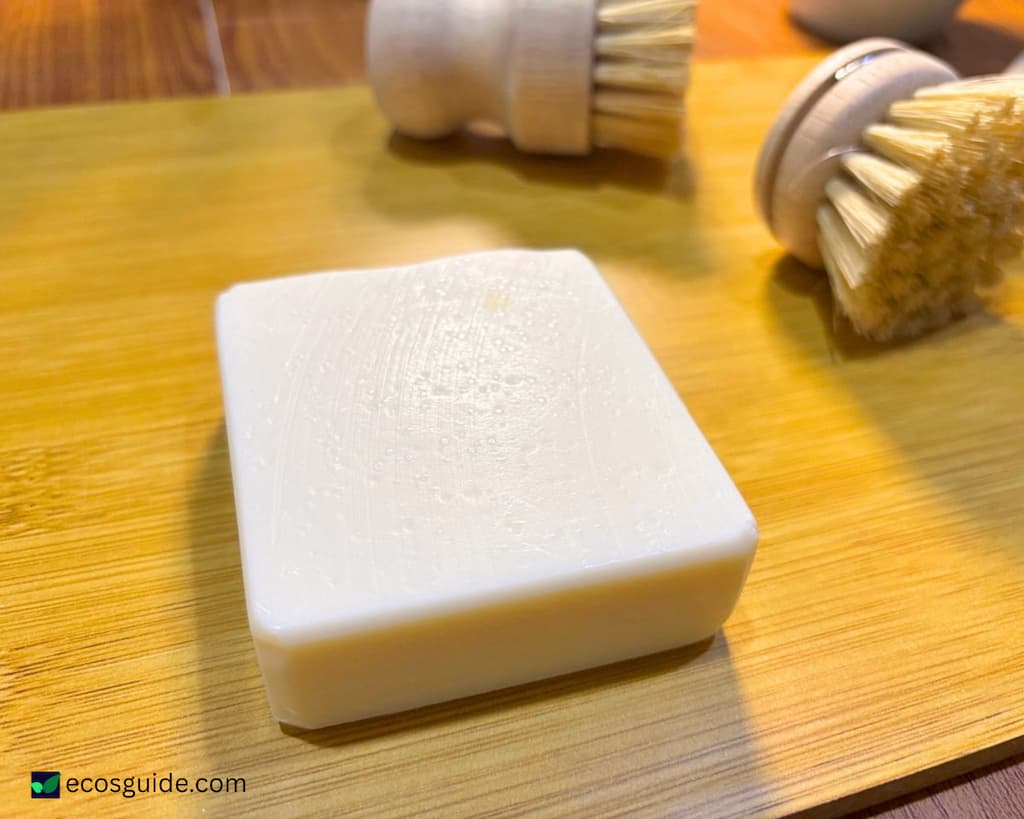
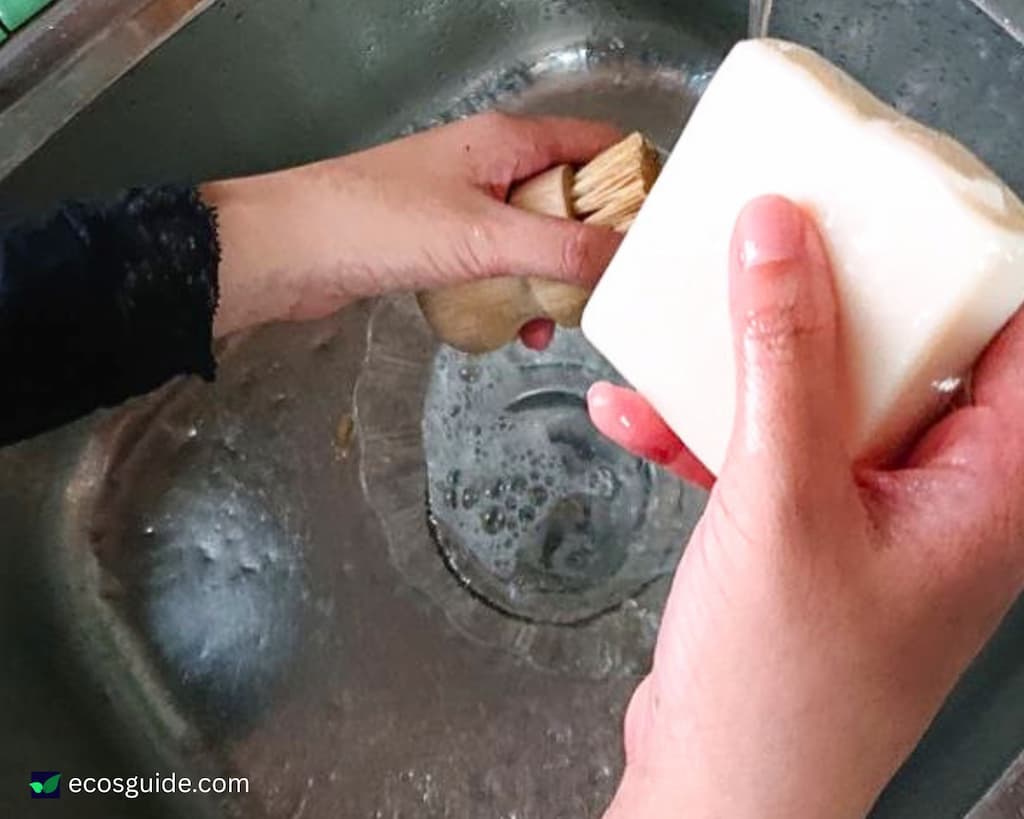
A dish soap bar is a solid, concentrated bar of soap that lathers onto a wet brush or sponge, the same way you’d lather hand soap.
It was a solid washing up liquid. Because there’s no water in the formula, there’s no plastic bottle needed to carry it, which is the whole point.
The honest tradeoff: bar soap has a learning curve. It doesn’t foam as instantly as Dawn. It needs a soap dish with drainage or it turns into gray slime by day five.
Some hard-water areas find rinse takes a beat longer. None of this is a dealbreaker, but knowing it up front means you don’t give up on day two.
The most-recommended pick in this category is the No Tox Life DISH BLOCK, a 6-ounce solid bar made in the US, free of sulfates, parabens, and synthetic fragrance.
The updated 2025 formula works in hard and cold water, and the bar is fully septic-safe.
Brushes and Scrubbers
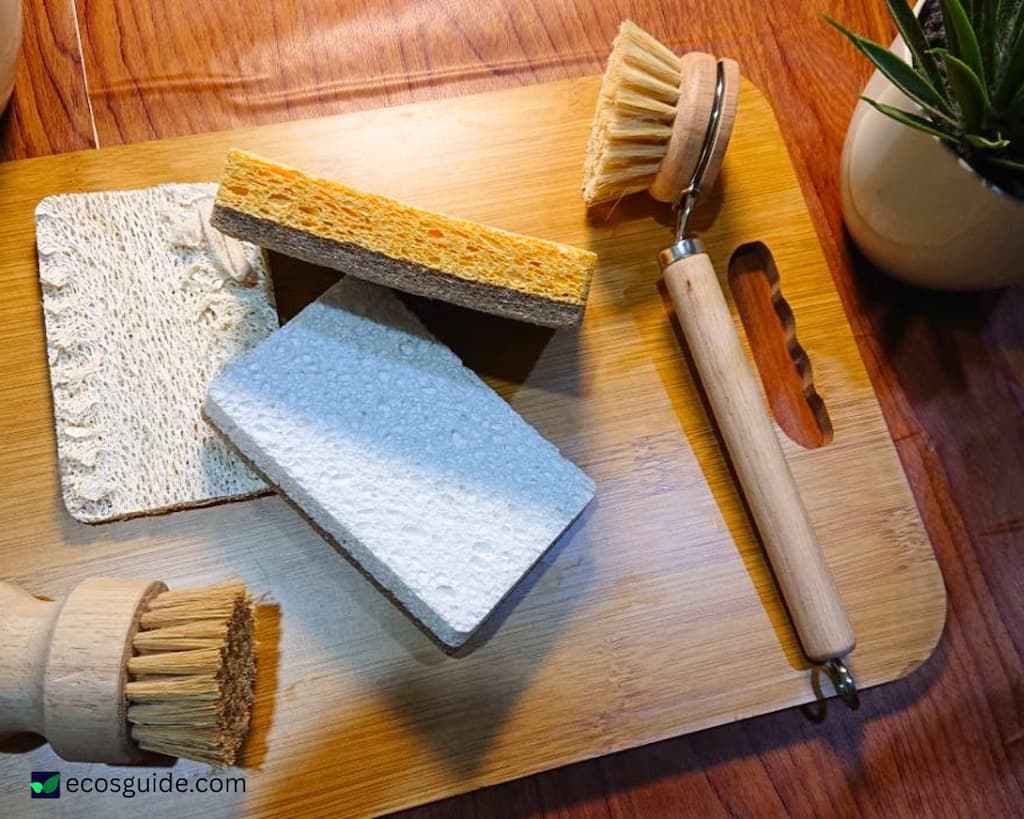
The daily driver in a zero waste kitchen is a wooden dish brush with a replaceable head.
What you want is a wooden handle with a natural-bristle head (sisal, tampico, or coconut fiber are the usual three), with no plastic in the joint.
Replacing just the head every few months means the handle can last years.
For compostable scrubbers, the three practical options are loofah (grown, not manufactured, fully compostable), coconut fiber (rough enough for pots and cast iron), and cellulose sponges
One honest note on cellulose: sponges labeled “compostable” usually mean industrially compostable, not backyard-bin compostable.
If your city doesn’t offer industrial composting, they’ll still end up in landfill, just slower.
For a full comparison of the wooden dish brushes I’ve been researching, see my guide to eco-friendly dish brushes.
For the sponge side of the setup, my eco-friendly dish scrubber roundup covers what actually decomposes and what just claims to.
And if you’d rather stick with liquid dish soap and just swap to a better brand, my eco-friendly dish soap picks is the roundup to check next.
Little Upgrades That Make Level 2 Stick
Two small things make or break the switch:
1. A soap dish with drainage
Standing water is what breaks a bar down fastest, so a dish with proper drainage meaningfully extends how long it lasts.
It’s the difference between “the bar is great” and “the bar turned to mush.” Most people give up on bar soap before they figure this out.
2. A small basin for rinse-water reuse
Nothing fancy, a $5 tub works. The rinse water goes on houseplants, wipes counters, or mops floors. It’s not zero, but it stretches every gallon further.
Level 3: Setting Up a Zero Waste Dishwasher
A zero waste dishwasher setup means using naked tablets or powder with no PVA plastic film wrapping, running full loads on eco mode, and choosing a rinse aid alternative like citric acid or white vinegar where the manufacturer permits it.
It’s a smaller learning curve than the hand-washing setup, because the machine does most of the work.
Naked Tablets vs Pods vs Powder
“Naked” tablets are compressed detergent tablets that arrive without the plastic-derived film (PVA or PVOH) that wraps most conventional dishwasher pods.
They ship in refillable metal tins or compostable pouches, not plastic jugs.
Even where the film’s environmental fate is debated (more on that in a moment), choosing a naked tablet removes the debate entirely.
You get the same convenience as a pod, without the wrapper question.The three main dishwasher detergent formats stack up like this:
| Format | Plastic film (PVA)? | Packaging | Best when |
| Naked tablets | No | Refillable metal tin or compostable pouch | You want pod convenience without the wrapper question |
| Conventional pods | Yes | Almost always plastic, in constant contact with boiling water | You already have some (use them up before switching) |
| Loose powder | Varies | Steam (hotter than boiling water) contacts this surface every boil | You want to dose smaller loads precisely |
The most established option in this space is Blueland’s Dishwasher Detergent Tablets, sold as a starter set with a reusable Forever Tin for around $25, with refills at $16.80 for 60 tablets.
The formula is EPA Safer Choice certified, plant and mineral-based, septic-safe, and available in fragrance-free or lemon zest. Tablets fully dissolve, so there’s no film residue to worry about.
For readers who prefer powder over tablets for hand-washing, Blueland also makes a Dish Soap Powder that pairs with a silicone Forever Bottle.
It’s hypoallergenic, fragrance-free, and one refillable shaker replaces roughly 30 single-use plastic dish soap bottles a year.
If you want another genuinely PVA-free tablet, Branch Basics Dishwasher Tablets use a plant-based binder instead of plastic film, and come EWG Verified, MADE SAFE certified, and Leaping Bunny approved.
They cost more per tablet than Blueland, but for anyone specifically avoiding PVA, they’re one of the few options that actually deliver on the claim.
For the full lineup I’ve researched, see my guide to the best eco-friendly dishwasher detergents.
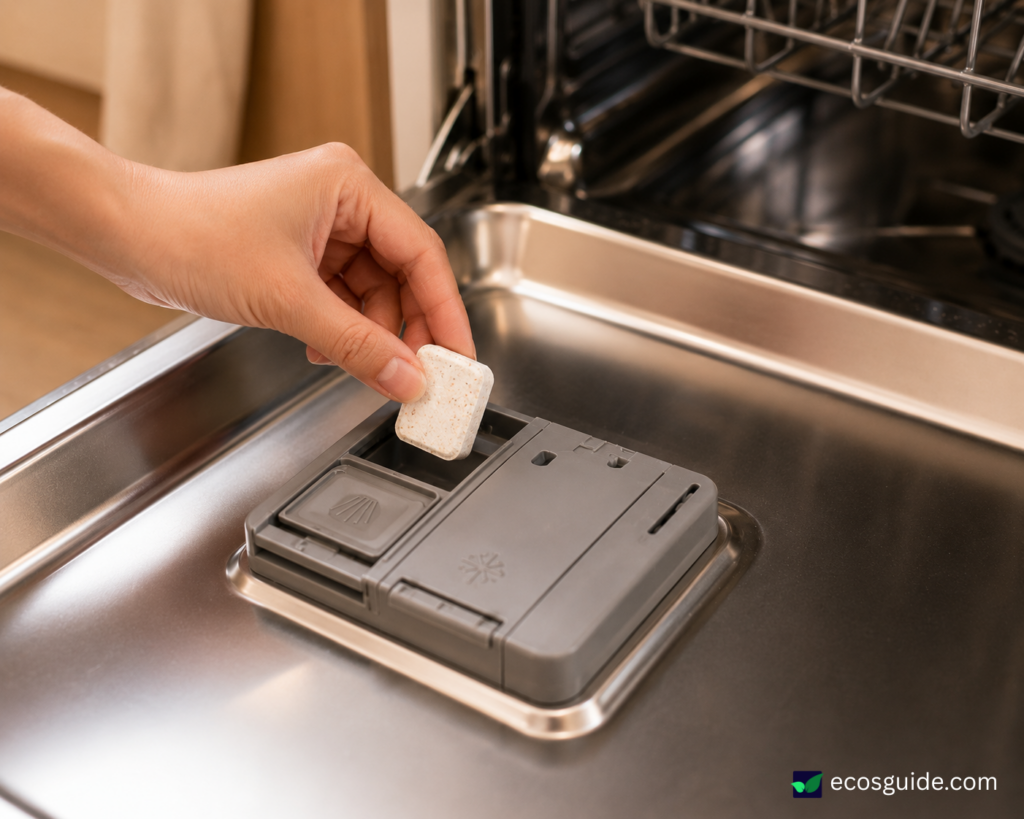
Illustration generated with AI for reference.
The PVA Question (A Quick, Honest Note)
PVA (polyvinyl alcohol, or PVOH) is the water-soluble film that wraps most dishwasher pods, designed to dissolve in the wash.
The debate is genuine: some zero waste communities argue that any undissolved PVA becomes microplastic pollution downstream.
Industry groups counter that detergent-grade PVA is engineered to break down safely in typical wastewater treatment conditions.
The peer-reviewed science on real-world breakdown is mixed.
A widely-cited 2021 study estimated that around 75% of PVA passes through US wastewater treatment plants intact, while a later expert-panel review concluded the study’s methodology was flawed and that PVA is readily biodegradable in typical treatment conditions.
The answer depends on treatment plant temperature and microbial community.
Here’s what EcosGuide recommends: if you want to be on the safer side, choose a naked tablet.
Not because the PVA case is proven, but because the naked option costs nothing extra to choose, and it sidesteps the debate. No alarmist framing needed. Just the safer default.
Rinse Aids and Machine Maintenance
White vinegar in the rinse aid compartment is the classic zero waste rinse aid, and it works, but the manufacturer picture is mixed.
KitchenAid, Whirlpool, Bosch, and Miele have varying warnings about long-term vinegar use damaging seals and gaskets.
The safe consensus: monthly is fine on most machines. Weekly, over years, isn’t.
Citric acid powder is the manufacturer-friendly alternative. It handles hard water spotting well, doesn’t damage seals, and comes in cardboard rather than plastic.
For the deeper walk-through on the vinegar and baking soda method, including which manufacturers warn against it and when to reach for citric acid, see my guide to cleaning the dishwasher with vinegar and baking soda.
What Not to Buy: Greenwashing to Watch For
Greenwashing in the dishwashing category usually means one of three things:
- Products that claim “biodegradable” but only in industrial composting
- “Plastic-free” pods that still contain PVA film
- “Zero waste” starter kits that ship in plastic-wrapped boxes from overseas
The EPA’s Safer Choice program is a useful shortcut when the label is doing a lot of work and the ingredients are doing very little. Here’s the short list of what else to watch for in the sink aisle:
- “Compostable” sponges that only break down in industrial facilities most US and UK homes don’t have access to. If your city doesn’t offer industrial composting, they’ll sit in landfill just as long as a regular sponge.
- “Plastic-free” dishwasher pods where PVA or PVOH content isn’t disclosed on the label. If the ingredient list doesn’t say “no PVA,” check the manufacturer site directly.
- Imported “zero waste” starter kits shipped from Europe to the US, or the other way around. The shipping footprint often outweighs the plastic savings of the products inside.
- Subscription-model eco brands that push more product than a normal kitchen actually uses. A refill schedule you can’t keep up with is more waste, not less.
- Any DIY recipe that mixes baking soda and vinegar in the machine at the same time. They neutralize each other into salty water and do nothing useful. Run them as separate cycles, or check the guide to cleaning the dishwasher the right way.
My Honest Take: How I’d Actually Approach This
If you’re standing in your kitchen wondering where to start, here’s how I’d think about it.
I’d spend a week on Level 1 before I bought anything. Not because it’s virtuous, but because it’s where you find out which habits you’ll actually keep.
If you can’t remember to run full loads or turn off the tap between dishes, no dish soap bar will save the routine. Level 1 is the foundation. Everything above it stacks on top.
The failure point everyone hits with bar soap isn’t the bar itself, it’s the soap dish.
Leave a bar sitting in standing water and it turns to slime fast. A soap dish with drainage solves the “bar soap doesn’t work for me” complaint before it starts. Budget for both from the beginning.
The thing I’d be most cautious about is the greenwashing side, particularly on dishwasher pods. “Plastic-free” and “no PVA” are not the same claim, and the label often blurs them.
When in doubt, the naked tablet is the safer default.
And the honest gap: hard water. Bar soap rinse takes an extra beat in hard water areas, and no amount of eco commitment fixes water chemistry.
If your kitchen is on hard water, expect a small adjustment period, and don’t take it as a sign the product isn’t working.
Final Thought
What leaves our kitchen sink has to go somewhere. A treatment plant, a river, a coastline, an ecosystem that’s already carrying more than it should.
That’s the frame I’d keep in mind, not because it’s meant to weigh on you, but because it’s where the honest goal lives.
No routine is truly zero waste. The honest goal is less. Less plastic in the bin, less chemistry in the drain, less shipping across oceans to fix something you could quietly solve with what’s already in your cupboard.
Pick one Level 1 change to try this week. Come back for Level 2 when you’re ready, or start with my eco-friendly dish soap picks if that’s the swap you’re most curious about.
- Is Dishwashing or Hand-Washing More Eco-Friendly? (The Honest Water Audit)
- Level 1: What You Can Do Today Without Buying Anything
- Level 2: Setting Up a Zero Waste Hand-Washing Kitchen
- Level 3: Setting Up a Zero Waste Dishwasher
- What Not to Buy: Greenwashing to Watch For
- My Honest Take: How I’d Actually Approach This
- Final Thought
- Frequently Asked Questions
Find More Tips At:


Frequently Asked Questions
Is a dishwasher more eco-friendly than hand-washing?
For most kitchens, yes. A full-load dishwasher on eco mode uses less water and energy than continuous-tap hand-washing. Full loads, eco mode, and air-drying instead of heated drying win on both sides.
Are dishwasher pods bad for the environment?
Most conventional pods use a water-soluble plastic film called PVA (or PVOH), and the peer-reviewed science on how completely it breaks down in wastewater is mixed. If you want to err on the safer side, choose a naked tablet from a brand like Blueland or Branch Basics that skips the film entirely.
Do dish soap bars work as well as liquid dish soap?
A $5 soap dish with drainage triples the bar’s lifespan, and skipping it is why most people give up. A $5 soap dish with drainage meaningfully extends the bar’s life, and skipping it is why most people give up.
What can I use instead of a plastic sponge?
The three main plastic-free alternatives are loofah scrubbers, coconut fiber scrubbers (best for pots and pans), and cellulose sponges (usually only industrially compostable). A wooden dish brush with a replaceable natural-bristle head is the most zero-waste-adjacent daily driver.
Can I make my own zero waste dish soap or dishwasher detergent?
Mostly not worth it. DIY castile-and-vinegar dish soap underperforms because the two neutralize each other, and DIY dishwasher powder often leaves residue in hard-water homes. For most kitchens, a store-bought bar or naked tablet outperforms the DIY.
Is Dawn dish soap eco-friendly?
Dawn (Original) is biodegradable and cuts grease effectively, but it contains synthetic fragrance, methylisothiazolinone, and a plastic bottle. It’s a step up from many conventional soaps but sits below the plant-based, fragrance-free, plastic-free bars this article recommends. For a middle-ground brand pick, Seventh Generation Free & Clear is a common compromise.
