The best eco-friendly Swiffer alternative depends on what you need.
Here are the key takeaways from my research, so you can find the right pick to suit your needs.
Key Takeaways
- Bona Premium Spray Mop is the best overall, GreenGuard Gold certified, refillable cartridge, machine-washable pad
- E-Cloth Deep Clean Mop is the best chemical-free option, cleans with water only, pads last 300+ washes
- Turbo Microfiber Mop is the best all-floor pick, works with any cleaning solution, not locked into a proprietary formula
- Cuban Mop is the best zero-waste option, fully plastic-free, compostable at end of life
- For a Swiffer Wet Jet alternative without buying a new mop, swap to reusable pads and refill the solution bottle with a DIY vinegar mix
- Most households save $100+ per year switching from disposable Swiffer pads to a reusable system
When I started thinking about how many disposable pads a single household goes through in a year, and where all of that ends up, it was hard to keep ignoring.
These are not products that break down. They sit in landfill for decades, and the cleaning chemicals soaked into them leach into soil and water over time.
I wanted to find alternatives that actually clean well, so I could stop contributing to that cycle without sacrificing a clean floor.
Here is what I found after researching the best options.
Quick Picks at a Glance
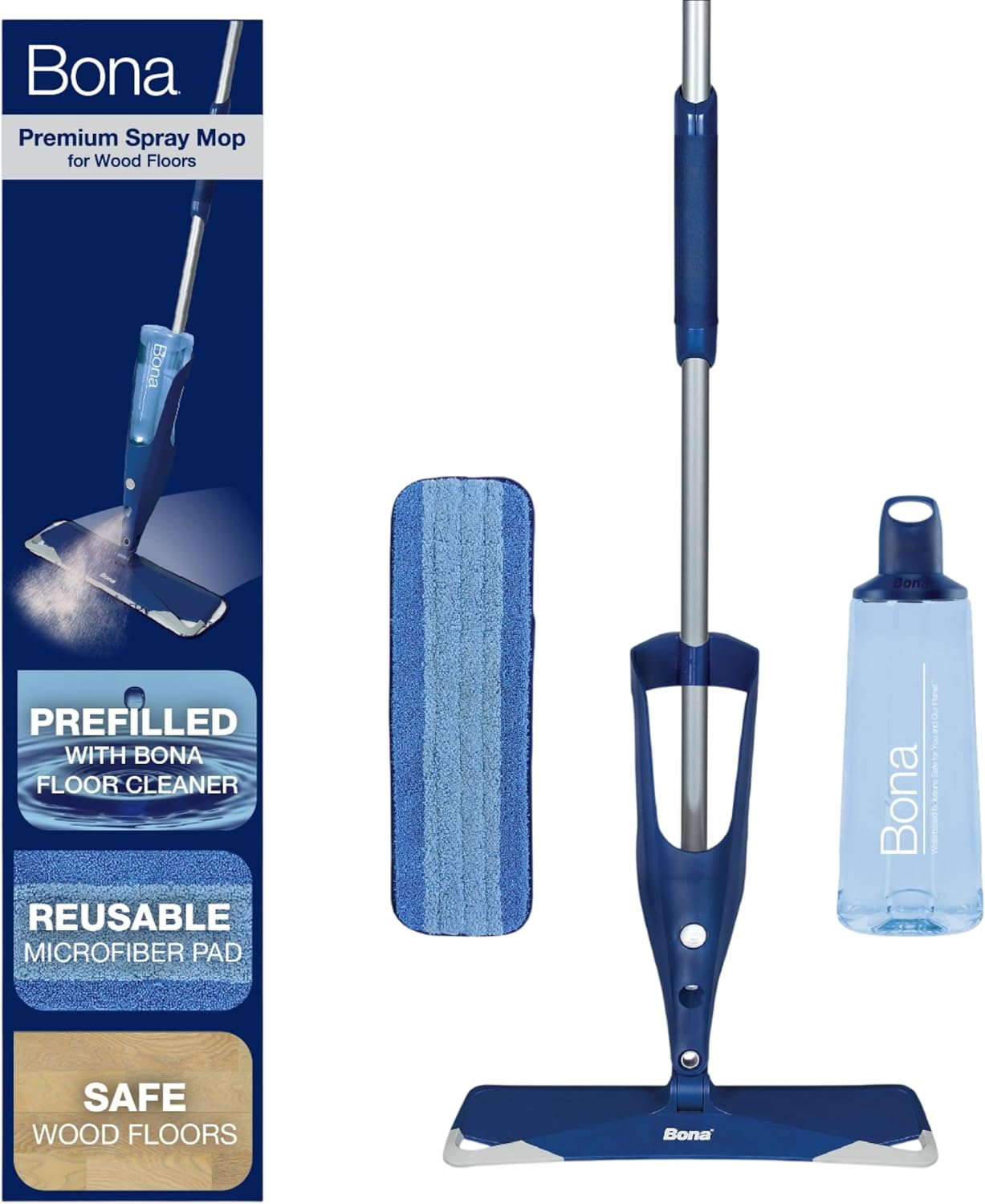
Bona Premium Spray Mop Rating
GreenGuard Gold certified, refillable, washable pad
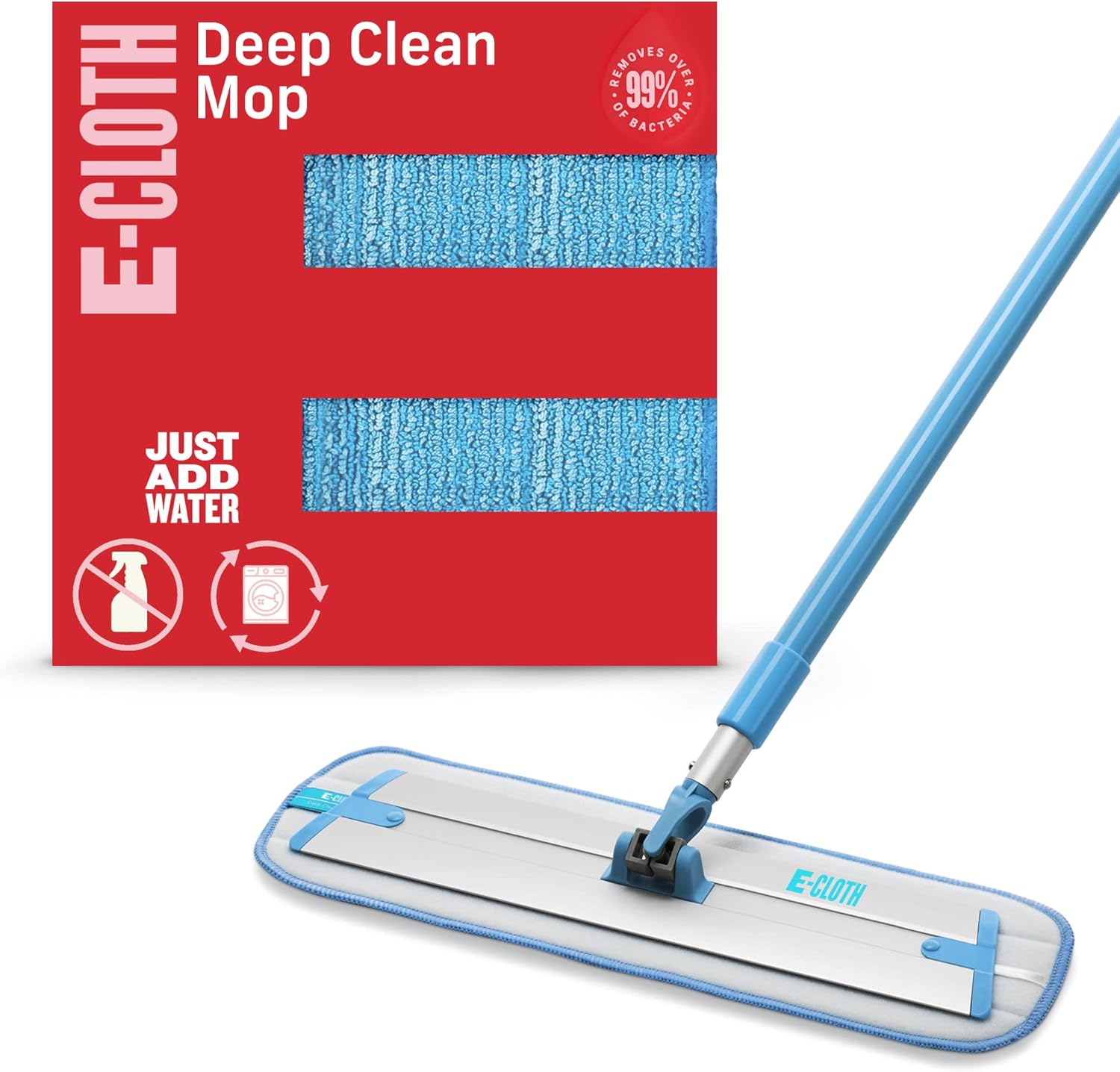
E-Cloth Deep Clean Mop Rating
Water-only cleaning, pads last 300+ washes
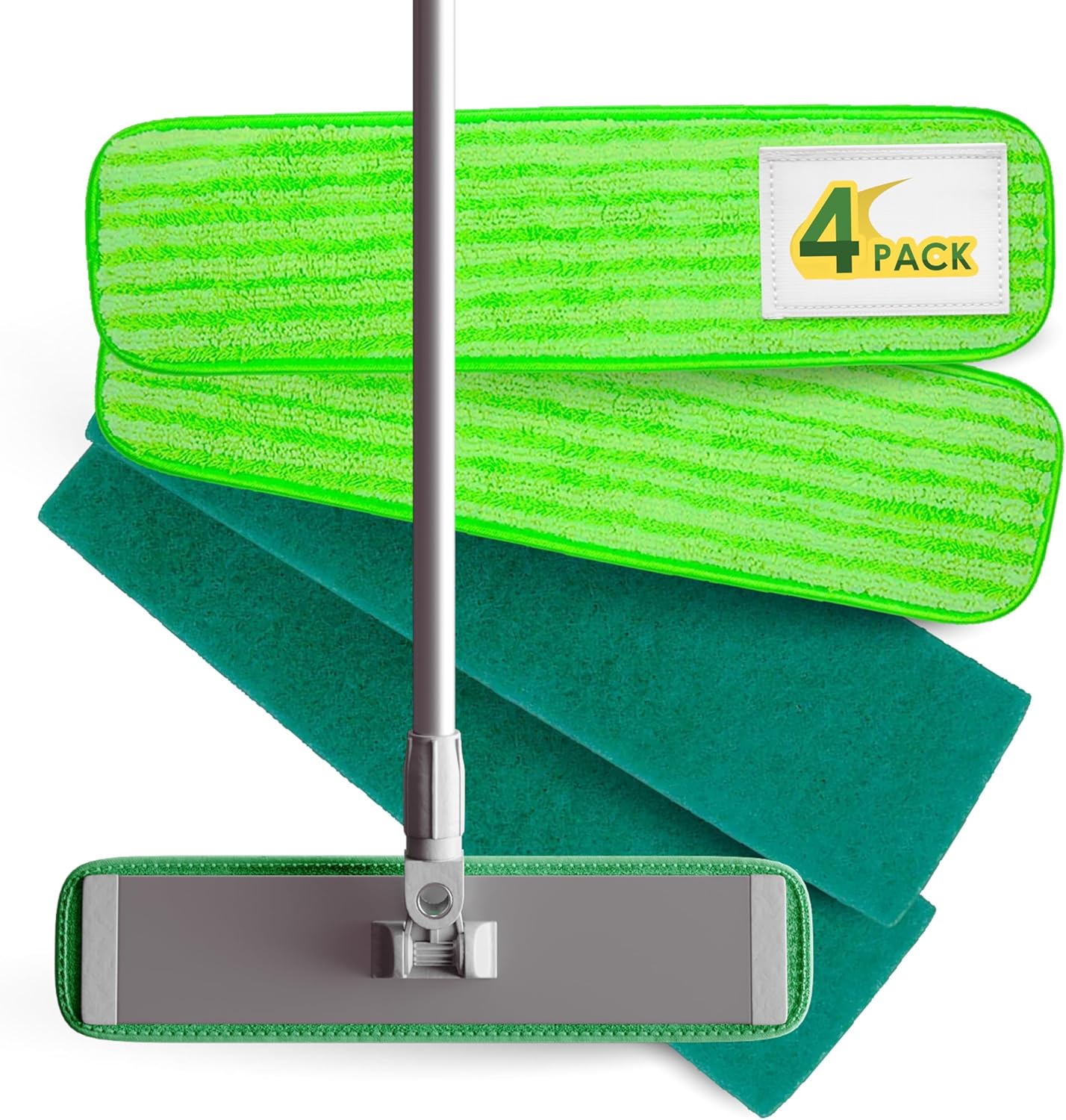
Turbo Microfiber Mop
Any solution, reusable pads, all hard floors
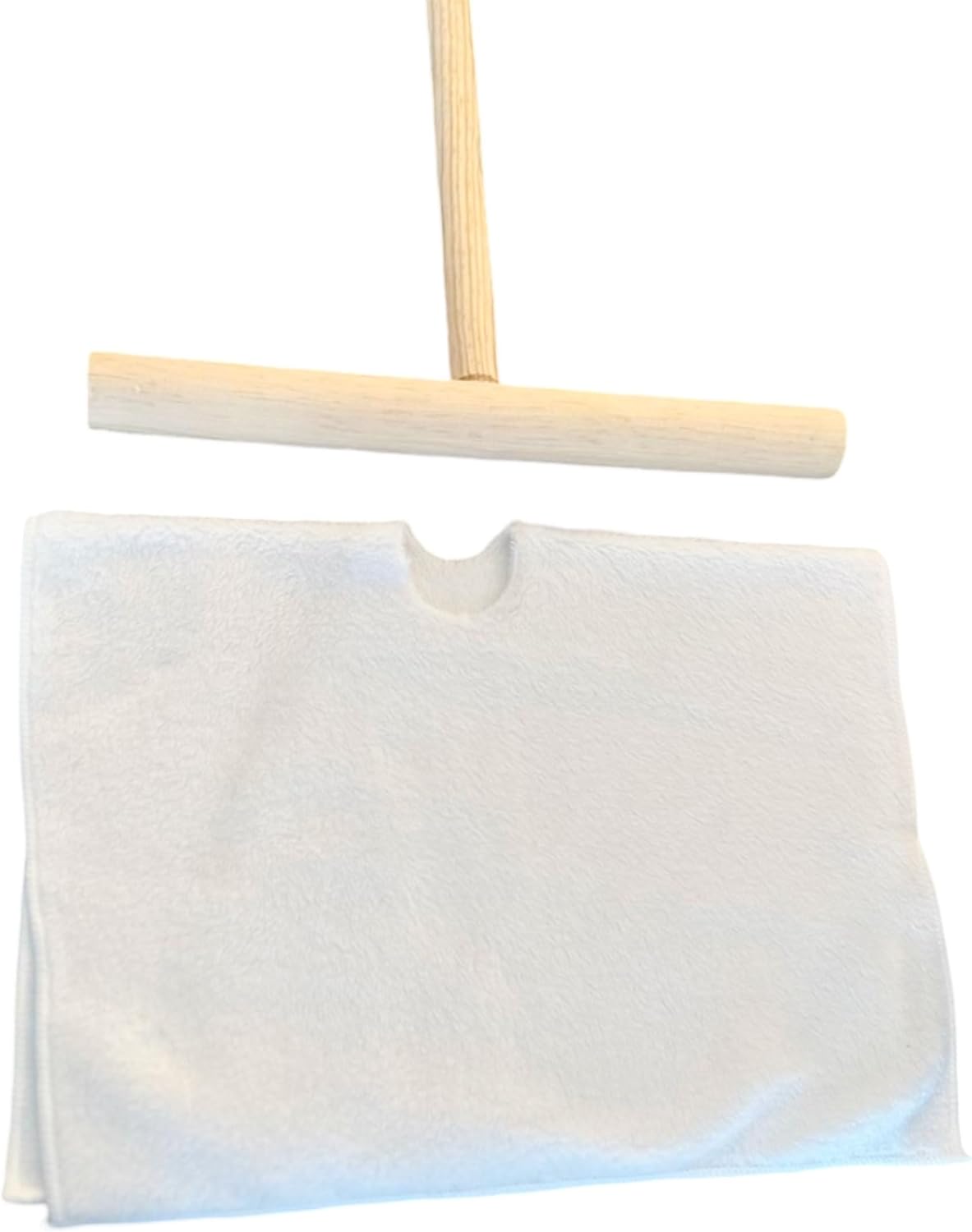
Cuban Mop
Fully plastic-free, uses any towel, compostable
Why Switch Away from Swiffer?
There are three honest reasons most people start looking for a Swiffer alternative, and they tend to overlap.
The first is the waste. The second is the chemicals. The third, and this is the one almost everyone feels first, is the cost.
The Waste Problem
An average household uses roughly 100 to 150 Swiffer pads per year.
A Swiffer pad is made from polyester and polypropylene, both petroleum-derived plastics that do not biodegrade in landfill.
Each pad gets used once for about 10 minutes of mopping, then goes straight to the trash.
When you consider that synthetic textiles are a growing contributor to municipal solid waste, the numbers across millions of households get difficult to brush aside.
That is also money going into the bin every week. A pad you use once and throw away is essentially a subscription to single-use plastic, and once you see it that way, it is hard to unsee.
What Is Actually in Swiffer Cleaning Solution?
This is where things get more nuanced than some websites make it sound.
The Environmental Working Group (EWG) has flagged Swiffer WetJet solution.
For containing fragrances and preservatives like methylisothiazolinone, both of which raise concerns for people looking to reduce chemical exposure in their homes.
Phthalates are chemical compounds commonly added to fragrances that have been linked to endocrine disruption, and they are found in many conventional floor cleaning solutions including Swiffer WetJet.
But the ingredients are worth looking into if you are already trying to reduce synthetic chemicals in your home, especially ones that wash down the drain after every use.
If you are also looking for non-toxic options for kitchen surfaces, here is our guide to eco-friendly disinfectants that are safe for your family.
The Cost Over Time
This is the part that surprises most people. Between replacement pads and cleaning solution refills, a Swiffer costs roughly $120 to $180 per year to keep running.
A reusable mop system costs $30 to $50 upfront, and the machine-washable pads last for hundreds of washes.
Most households recoup the cost within two to three months, and everything after that is savings.
Even if the eco argument does not move you, the math usually does.
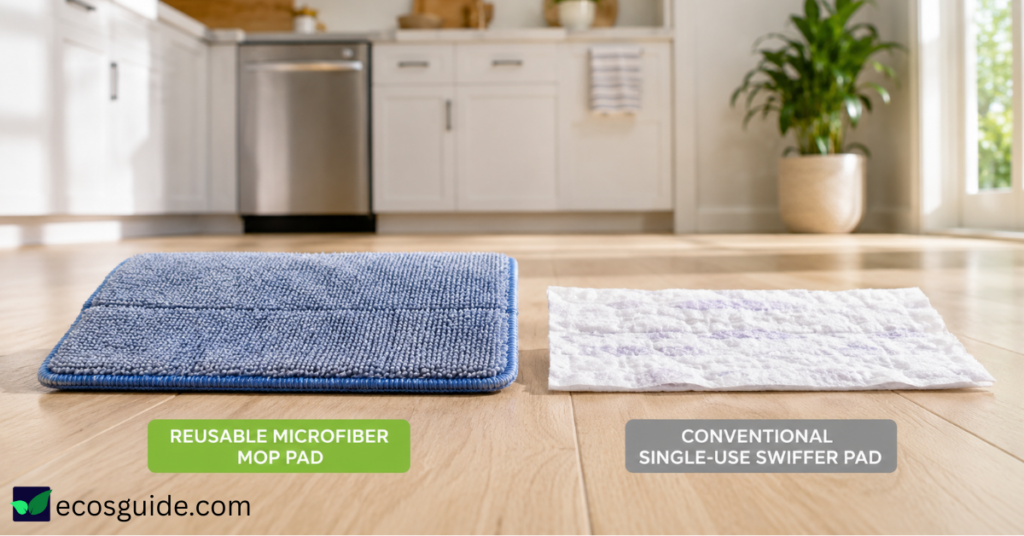
Reusable Mop Pad vs. Conventional Swiffer Pad
| Component | Reusable Microfiber Mop Pad | Conventional Swiffer Pad |
| Cost per year | $25 to $50 upfront, near-zero after | $120 to $180 in pads and solution |
| Waste | One pad lasts hundreds of washes | 100 to 150 pads per year to landfill |
| Cleaning power | Picks up more dirt, works with any solution | Adequate for light cleaning only |
| Chemicals | Your choice (water, vinegar, plant-based soap) | Locked into Swiffer solution with phthalates |
| Convenience | Requires laundry after use | Use once and toss |
| Environmental trade-off | Sheds microplastics during washing | Non-biodegradable polyester in every pad |
Best Eco-Friendly Swiffer Replacements
If you are ready to move on from your Swiffer entirely, these are the mops I would look at.
Each one was chosen because it meets the criteria I care about most: reusable or washable pads, non-toxic or chemical-free cleaning, minimal plastic in the construction, and durability that lasts more than a few months.
A mop that breaks quickly is not eco-friendly regardless of what it is made from.
I have tested several of these in my own kitchen and I keep coming back to the Bona for everyday hardwood floors.
But the right pick genuinely depends on your floor type and how much convenience matters to you.
Here is how the four best eco-friendly Swiffer alternatives compare side by side.
| Component | Bona Premium Spray Mop | Turbo Microfiber Mop | E-Cloth Deep Clean Mop | Cuban Mop |
| Best for | Hardwood floors | All hard floors | Chemical-free cleaning | Zero-waste households |
| Cleaning method | GreenGuard certified spray solution | Any solution or water | Water only | Any solution or water |
| Pad type | Machine-washable microfiber | Machine-washable microfiberl | Machine-washable microfiber (300+ washes) | Any cotton towel or cloth |
| Plastic-free? | No (plastic mop body) | No | No solution needed | No |
| Proprietary solution? | Yes (Bona refills only) | No | No solution needed | No |
| Approximate cost | $35 to $45 | $25 to $35 | $30 to $40 | $15 to $25 |
1. Bona Premium Spray Mop
Best for: Hardwood floor owners who want a certified eco cleaner with no DIY mixing
Key features:
- GreenGuard Gold certified cleaning solution
- USDA Certified Biobased Product
- Refillable solution cartridge
- Machine-washable microfiber pad
- Controlled spray trigger (prevents excess moisture on wood)
The cleaning solution is GreenGuard Gold certified (meaning it has been independently tested for low chemical emissions) and is a USDA Certified Biobased Product.
The microfiber pad is machine-washable, and the solution cartridge is refillable with Bona refill bottles, so you are not throwing away plastic cartridges after every few uses.
One honest note: Bona officially recommends refilling only with their own formula. But the cartridge cap unscrews easily, so you can fill it with your own DIY solution if you prefer.
But the formula itself holds real eco certifications, and the refillable design means far less plastic waste than Swiffer’s single-use model. For hardwood floors specifically, this is where I would start.
Check Latest Price2. Turbo Microfiber Mop
Best for: Mixed-flooring households who want full control over their cleaning solution
Key features:
- Works with any cleaner, vinegar mix, or plain water
- Machine-washable microfiber pads
- Lightweight design with minimal plastic packaging
- Fits all hard floor types (tile, laminate, sealed hardwood, vinyl)
- No proprietary refills or locked-in solution
The Turbo Microfiber Mop takes a different approach. It is not locked into any proprietary cleaning solution, which means you can use plain water, your own vinegar mix, or any cleaner you trust.
The pads are machine-washable microfiber, and the mop itself is lightweight with minimal plastic packaging.
It works on all hard floor types, from tile to laminate to sealed hardwood, which makes it a solid pick if you have mixed flooring throughout your home.
Check Latest Price3. E-Cloth Deep Clean Mop
Best for: Pet owners and families who want to eliminate cleaning chemicals entirely
Key features:
- Cleans with water only, zero chemicals needed
- Densely woven microfiber picks up dirt and bacteria
- Pads rated for 300+ machine washes
- Safe for chemical-sensitive households
- Works on all sealed hard floors
If your goal is to eliminate cleaning chemicals entirely, the E-Cloth Deep Clean Mop cleans with water only.
The densely woven microfiber pad picks up dirt and bacteria without any cleaning solution at all. E-Cloth rates their pads for 300 or more washes, so a single pad lasts for years.
This is especially appealing if you have pets, small children, or anyone in your household with chemical sensitivities. Nothing goes down the drain except water.
Check Latest Price4. Cuban Mop
Best for: Zero-waste households who prioritize fully plastic-free cleaning
Key features:
- Wooden T-bar handle, fully compostable at end of life
- Uses any cotton towel, flour sack cloth, or linen rag
- No proprietary parts, pads, or refills to buy
- Lowest ongoing cost of any mop option
- Best suited for tile and stone floors
For readers who want to go fully plastic-free, the Cuban mop is as simple as it gets: a wooden stick with a T-bar that holds any cotton or linen towel.
Nothing disposable, nothing synthetic, and the entire thing is compostable at end of life. You can use old bath towels, flour sack cloths, or purpose-made cotton pads.
A Cuban mop works especially well on tile and stone floors where moisture is less of a concern.
This is the least convenient option. It requires wringing by hand and you will not get the spray-and-glide experience of a Swiffer.
But if your goal is truly zero waste, nothing else comes close.
Check Latest PriceHow to Make Your Existing Swiffer Eco-Friendly
Not everyone is ready to replace their mop, and that is completely fine.
If you already own a Swiffer Sweeper or WetJet, there are two simple swaps that reduce waste and chemical exposure without buying a new mop.
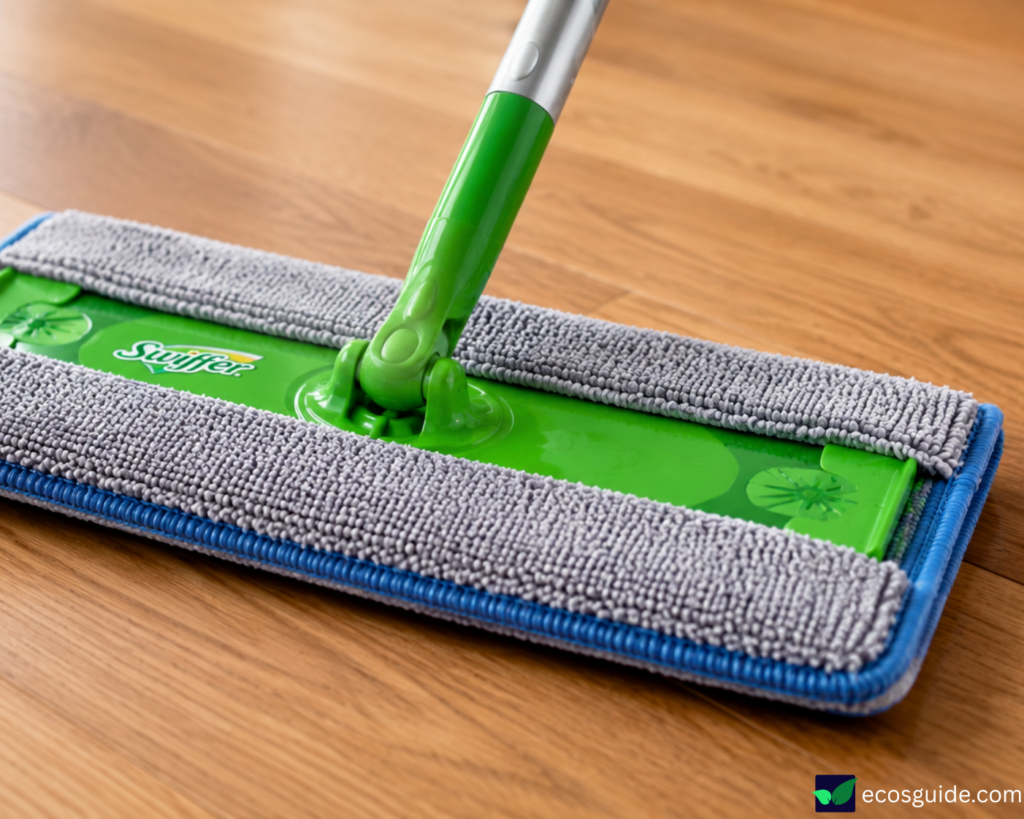
Reusable Pads That Fit Your Swiffer
Several brands now make reusable microfiber or cotton pads designed to clip directly onto Swiffer Sweeper and WetJet heads using elastic edges or velcro.
The Turbo Mops reusable pads are a strong option here. They are machine-washable, fit standard Swiffer heads without modification, and one pad replaces dozens of disposable ones.
This is the lowest-barrier eco swap for Swiffer owners: same handle, same mopping routine, dramatically less waste.
DIY Non-Toxic Floor Cleaning Solution
A non-toxic floor cleaner is one free from synthetic fragrances, phthalates, chlorine, and ammonia, using plant-derived or mineral-based ingredients that biodegrade safely.
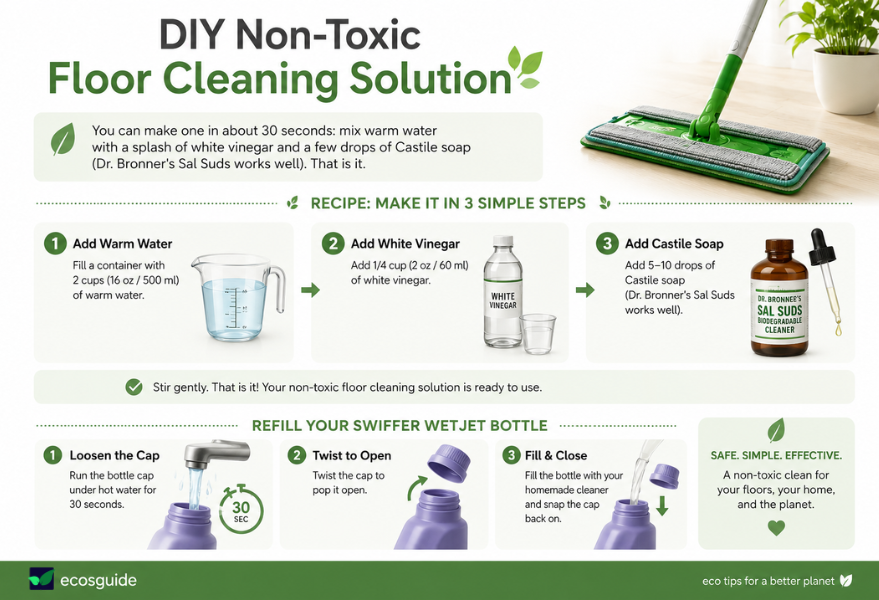
You can make one in about 30 seconds: mix warm water with a splash of white vinegar and a few drops of Castile soap (Dr. Bronner’s Sal Suds works well). That is it.
If you own a Swiffer WetJet, you can refill the solution bottle yourself. Run the bottle cap under hot water for 30 seconds, then twist to pop it open.
Fill it with your homemade cleaner and snap the cap back on.
For more DIY recipes and zero-waste cleaning ideas, check out our guide on how to clean microfiber cloths the right way so your reusable pads last as long as possible.
Even keeping your Swiffer handle and just swapping the pads and solution makes a measurable difference. You do not have to overhaul everything at once.
What About Microfiber and Microplastics?
If you have been researching eco-friendly cleaning, you have probably come acrossconcerns about microfiber shedding.
This is a fair question and one I think more cleaning sites should address openly. Microplastics are tiny plastic particles under 5mm that shed from synthetic fabrics like microfiber during washing and can enter waterways through household drainage.
Microfiber mop pads are made from polyester or polyamide, both synthetic materials, and they do release microplastics when you wash them.
Here is the trade-off: a single reusable microfiber pad replaces hundreds of disposable Swiffer pads over its lifetime.
The net waste reduction is significant, even accounting for microplastic shedding. But if you want to minimize that shedding, you have a couple of options. Cotton mop pads (like those used with a Cuban mop) are fully plastic-free.
And if you prefer to stick with microfiber for its cleaning performance, a wash bag like the Guppyfriend captures most microplastic particles before they reach the drain.
Which Swiffer Alternative Is Right for Your Floor Type?
Not every mop suits every floor.
Hardwood floors require a barely-damp mop and pH-neutral cleaning solution to avoid warping and finish damage, which is why spray mops with controlled output are the safest choice.
Here is a quick guide to matching the right mop to your floor:
Hardwood floors:
Tile and stone:
Cuban mop or Turbo Microfiber Mop. Tile handles more moisture than wood, so wring-and-go methods work well. The Cuban mop’s cotton towel is especially good on textured tile where you need to scrub grout lines.
Laminate:
E-Cloth Deep Clean Mop or Turbo Microfiber Mop. Laminate needs minimal moisture (too much water seeps into the seams and causes swelling). A damp pad with no pooling liquid is the safest approach.
Vinyl:
Any of the recommended options work. Vinyl is the most forgiving floor type for eco mops.
Small Swaps, Real Difference
Switching away from single-use pads is not about being perfect.
It is about being a little more thoughtful with what we use and where it ends up. Every reusable pad you wash instead of throw away is one less piece of synthetic material sitting in landfill for the next few hundred years.
And every time you skip a chemical-laden cleaning solution, that is one less mix of phthalates and preservatives washing down the drain.
That matters. It matters to the water systems that process what leaves our homes, and it matters to the soil and ecosystems downstream.
I do not think anyone has to overhaul their entire cleaning routine overnight. But one swap, even just clipping a reusable pad onto the Swiffer you already own, changes the direction.
If you are ready to go further, the Bona Premium Spray Mop is where I would start. And if you are upgrading your mop, it might be worth swapping your kitchen sponge too.
Here are our picks for the best eco-friendly dish sponges if you want to swap those out too.
- Quick Picks at a Glance
- Why Switch Away from Swiffer?
- Reusable Mop Pad vs. Conventional Swiffer Pad
- Best Eco-Friendly Swiffer Replacements
- How to Make Your Existing Swiffer Eco-Friendly
- DIY Non-Toxic Floor Cleaning Solution
- What About Microfiber and Microplastics?
- Which Swiffer Alternative Is Right for Your Floor Type?
- Small Swaps, Real Difference
- Frequently Asked Questions
Find More Tips At:


Frequently Asked Questions
Are Swiffer chemicals toxic?
Swiffer WetJet solution is not acutely toxic, and the widely circulated claim that it kills pets has been debunked by the ASPCA. However, the solution does contain fragrances with phthalates and preservatives like methylisothiazolinone, both flagged by the Environmental Working Group and the Center for Environmental Health as ingredients worth avoiding. If non-toxic alternatives exist that clean just as well, they are worth considering.
What is the most eco-friendly way to mop floors?
The most eco-friendly mopping method combines a reusable mop with washable pads and a homemade cleaning solution made from vinegar, water, and plant-based soap. For fully chemical-free cleaning, a water-only microfiber mop (like E-Cloth) or a steam mop eliminates cleaning solution entirely. An eco-friendly mopping system is one that produces no single-use waste, uses no synthetic chemicals, and relies on reusable or compostable materials.
Can you use reusable pads on a Swiffer WetJet?
Yes. Several brands make reusable microfiber pads designed to fit Swiffer WetJet and Sweeper heads. The pad attaches with elastic edges or velcro strips. You can also refill the WetJet solution bottle with a homemade cleaner by running the cap under hot water and twisting it open. This is the lowest-barrier eco swap for existing Swiffer owners.
Is a steam mop better than a Swiffer?
A steam mop cleans with heat and water only, producing no chemical waste and requiring no disposable pads, making it a strong eco alternative. It sanitizes floors more effectively than Swiffer. The trade-off is a higher upfront cost and the need to wait for heat-up time. Steam mops are also not recommended for unsealed hardwood or laminate floors, so check your flooring first.
Are microfiber mop pads bad for the environment?
Microfiber pads do shed microplastics during washing, which can enter waterways. However, a single reusable microfiber pad replaces hundreds of disposable Swiffer pads, so the net environmental impact is significantly lower. For a fully plastic-free option, cotton mop pads or a Cuban mop are the best alternatives. A Guppyfriend wash bag can also catch microfiber particles during laundry.
How much money do you save switching from Swiffer to a reusable mop?
An average household spends roughly $120 to $180 per year on Swiffer pads and cleaning solution refills. A reusable mop system costs $30 to $50 upfront with machine-washable pads that last hundreds of washes. Most households recoup the cost within two to three months, and the annual savings add up quickly from there.