
To clean a gas stove top naturally, let it cool completely, lift off the grates and burner caps, and wipe away the loose crumbs and grease.
Then clean the surface with a lemon-water or diluted-vinegar spray and a microfiber cloth, saving a baking soda scrub for any baked-on spots.
That short routine handles everyday messes without harsh chemicals or a scratched finish.
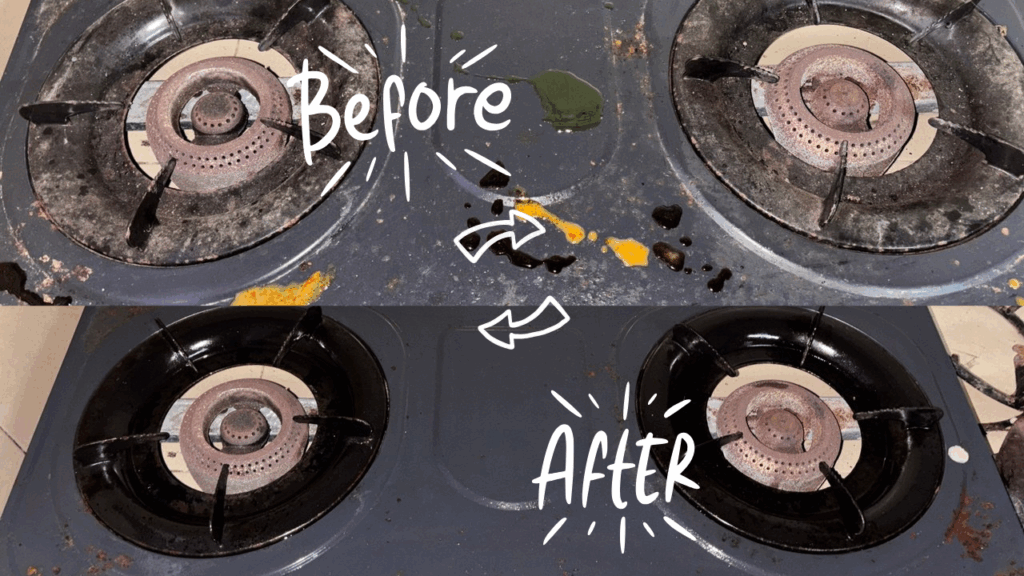
I’m Hajar, the founder of EcosGuide. When I think about what we scrub off a greasy stovetop, I don’t picture chemistry.
I picture where it all goes once it leaves the sink. Grease, foaming degreasers, and the fibers from whatever cloth we used all rinse down the drain and into the wider water system.
That one thought changed how I clean my own kitchen. In this guide, I’ll walk you through how to clean a gas stove top naturally, from the everyday wipe-down to baked-on spots, grates, and burner caps.
Key Takeaways
- Clean a gas stove top naturally by letting it cool, lifting off the grates and caps, then wiping the surface with a lemon-water or diluted vinegar spray and a microfiber cloth.
- Use vinegar and baking soda in sequence, never mixed into a paste, since combined they mostly cancel each other out.
- Never soak or dishwasher uncoated cast-iron grates, as the porous metal rusts; only coated or porcelain-enamel grates can soak safely.
- Dry every part fully before reassembling, and clear a yellow flame’s clogged port with a thin metal pin, never a wooden toothpick.
Why Does Cleaning Your Gas Stove Top Matter?

A clean gas stove top burns more efficiently because clear burner ports let gas flow evenly, producing a steady blue flame instead of a weak or uneven one.
When grease and food bits clog those ports, the flame turns patchy, pans heat unevenly, and you waste gas.
There is a safety side too. Built-up grease near a live flame is a flare-up risk. Keeping the surface clean also protects the finish and leaves you with a surface you actually want to cook on.
And the part I think about most: what you wipe off does not vanish. It heads for the drain, so the gentler your method, the kinder that runoff is.
What You’ll Need (and What to Skip)
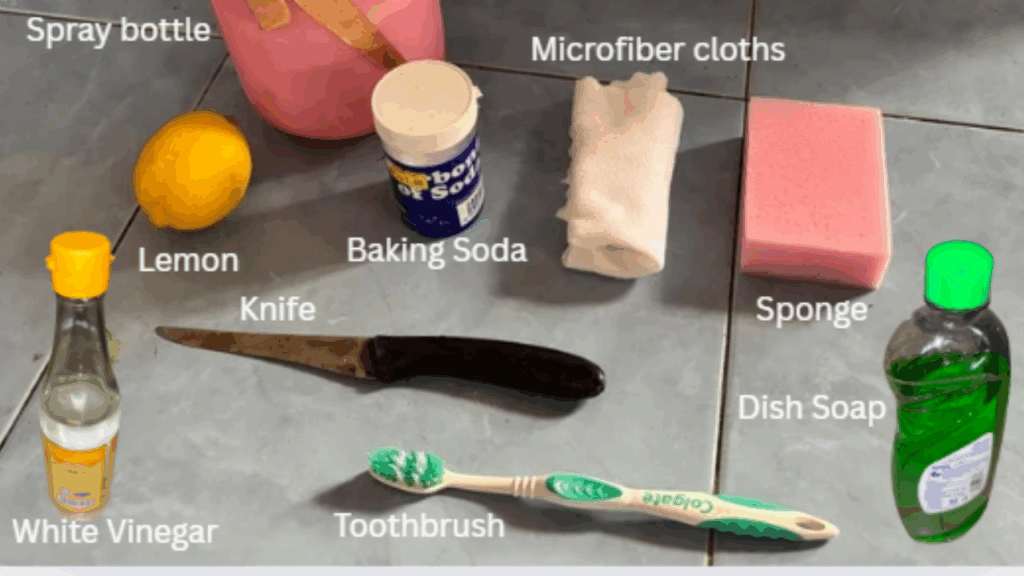
You don’t need anything fancy to clean a gas stove top well. Most of what works is already in your kitchen:
- Lemon, baking soda, and white vinegar
- Little dish soap and an old toothbrush
- Microfiber or cotton cloths and a non-abrasive sponge
- Spray bottle and a small bowl for soaking caps
- Gentle agents like dish soap, vinegar, or baking soda
What to skip is just as important. Lye-based oven-cleaner foams, heavy solvent degreasers, abrasive scouring powders, steel wool, and bleach or ammonia all cause problems here.
They can damage the finish, leave residue on a surface you cook food on, and send harsh, often aquatic-toxic chemistry into your drain.
A few reusable tools make the gentle approach easier, and I point to the ones I keep on hand further down.
How Do You Clean the Surface of a Gas Stove Top?
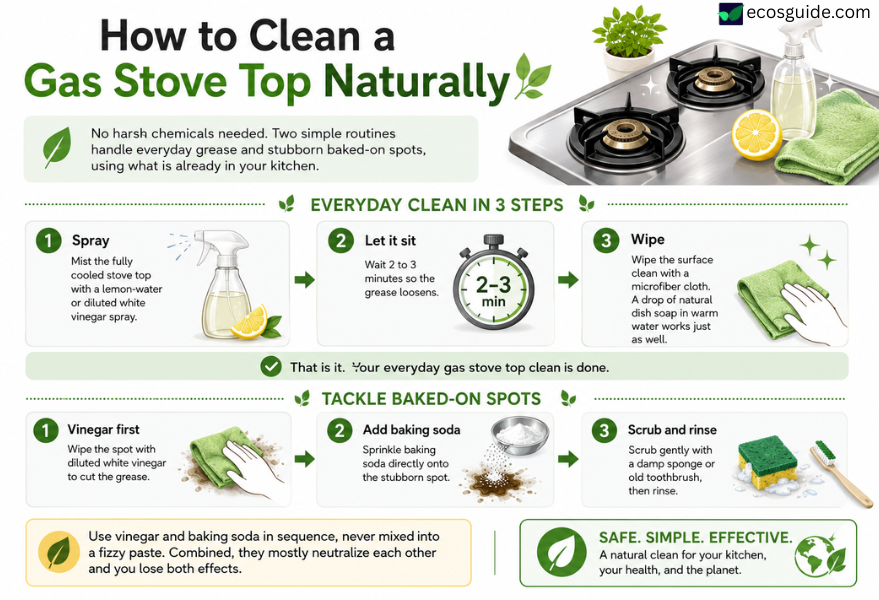
For everyday cleaning, spray the cooled surface with a simple lemon-water or diluted white vinegar mix, let it sit two to three minutes to loosen the grease, then wipe it away with a microfiber cloth.
A drop of natural dish soap in warm water works just as well for daily grease.
For baked-on spots, the order matters. Vinegar and baking soda clean best when used in sequence, not mixed: vinegar’s acid cuts grease, while baking soda’s mild abrasion lifts stuck-on residue.
Combined into a fizzy paste they mostly neutralize each other, so you lose both effects.
So do it in steps. Wipe the area with diluted vinegar first to cut the grease.
Then sprinkle baking soda onto the stubborn spot, scrub gently with a damp sponge or toothbrush, and rinse.
If you want the science, here is how baking soda actually works as a gentle abrasive. One trick saves the most effort: before any cleaner, lift hardened spills with a plastic or silicone scraper.
For truly baked-on, burnt residue, the same patient baking soda method that rescues a scorched pan works on a stovetop.
How Do You Clean Gas Stove Grates and Burner Caps?
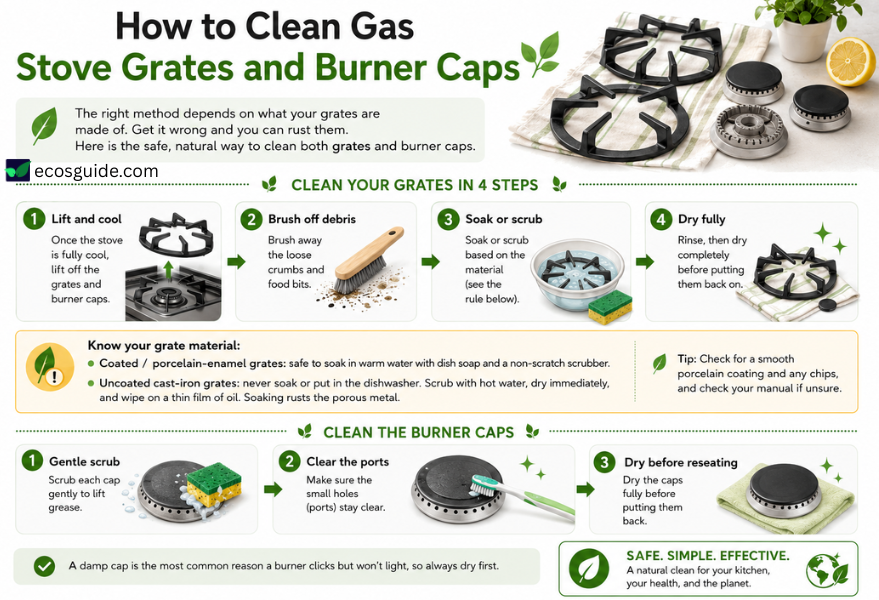
Lift the grates and burner caps off once the stove is fully cool, brush away the loose debris, then soak or scrub them depending on what they are made of.
Rinse, and dry them completely before they go back on.
Here is the rule that saves grates: uncoated cast-iron grates should never be soaked or put in the dishwasher, because the porous metal absorbs water and rusts; only coated or porcelain-enamel grates can safely soak.
The makers at Lodge Cast Iron are clear that cast iron should be washed by hand and dried right away, or it will rust.
Check your grates for a smooth porcelain coating and any chips, and check your manual if you are unsure.
For coated grates, a warm soak with dish soap and a non-scratch scrubber lifts grease without marking the finish.
For bare cast iron, skip the soak: scrub with hot water, dry immediately, and wipe on a thin film of oil.
Burner caps need a gentle scrub too, and the one thing that matters is keeping the small ports clear, then drying the caps fully before reseating. A damp cap is the most common reason a burner clicks but won’t light.
Why Is My Gas Flame Yellow or Orange?
A yellow or orange gas flame usually signals a clogged burner port; clearing the port with a thin metal pin or wire restores the steady blue flame that means clean, efficient combustion.
After a cleaning, it often just means a port is blocked or a part went back on damp.
Let everything cool, lift off the cap, and clear each tiny port with a straight pin, sewing needle, or thin wire.
GE’s burner-care guidance suggests a paper clip or fine wire for exactly this.
Never use a wooden toothpick, because it can snap off inside the port and block the gas for good. Reassemble, make sure the parts are dry, and check for a steady blue flame.
If the flame stays yellow, you smell gas, or you are not sure what you are looking at, stop and call a licensed or registered professional.
A flame problem is the one part of stovetop care that is worth handing to an expert.
Caring for Different Stove Top Surfaces
Each gas stove top surface needs a matched method: soft cloths and non-abrasive cleaners protect enamel and stainless steel, which scratch or discolor under steel wool, bleach, or scouring powders.
Knowing your surface saves you from permanent marks.
On enamel, skip the steel wool and stick to a soft sponge and a gentle cleaner. On stainless steel, wipe with the grain rather than in circles, then buff dry to avoid streaks, and keep bleach away.
Sealed-burner cooktops, where the top is one smooth piece, just need a gentle wipe and a dry finish.
Drying is the step people skip, and it is where trouble starts. Moisture left sitting on the surface or in seams leads to rust and oxidation over time, the same way it does on a knife or a pan.
A quick buff with a dry cloth after every clean is the cheapest stove-protection habit there is.
Gas Stove Top Cleaning: Quick Reference
The safest cleaning method depends on the part and what it is made of. Use this table at a glance.
| Part or material | Safe to soak? | How to clean | What to avoid |
| Coated / porcelain-enamel grates | Yes | Warm soak with dish soap, scrub with a non-scratch scrubber, dry fully | Steel wool, scouring powder |
| Uncoated cast-iron grates | No | Scrub with hot water, dry immediately, wipe on a thin film of oil | Soaking, dishwasher |
| Burner caps | Brief only | Gentle scrub, keep the ports clear, dry fully before reseating | Reseating while damp |
| Enamel cooktop surface | Not removable | Soft sponge with a gentle cleaner, then buff dry | Steel wool, abrasive pads |
| Stainless steel surface | Not removable | Wipe with the grain, buff dry to remove streaks | Bleach, scouring powder |
What Actually Goes Down Your Drain?
What you clean a stove top with doesn’t disappear: grease, synthetic degreasers, and microfibers rinse into the drain and eventually the water system, which is why reusable, biodegradable cleaning choices matter.
This is the part that keeps me reaching for the gentle method even on a stubborn night.
Heavy degreaser chemistry is built to be effective, but a lot of it is hard on aquatic life once it leaves your home.
The EPA’s Safer Choice program screens cleaning ingredients partly on how toxic they are to fish and waterways, and once you start reading what’s in conventional cleaners, it is hard to unsee.
Even our cloths matter: synthetic ones can shed plastic in the wash, so it helps to know that reusable cloths shed microfibers unless you wash them with care.
None of this is a lecture. It is just why EcosGuide leans on reusable tools and simple, biodegradable cleaners. Not because they are trendy, but because of where the rinse water goes.
Common Mistakes to Avoid
A few small habits cause most of the damage I see on gas stove tops. Steel wool is the big one, because it scratches enamel and stainless steel in a way you cannot undo, so reach for a non-scratch sponge instead.
Letting parts air-dry is another, since standing water leaves spots and invites rust.
And skip bleach and ammonia near the burners: ammonia can discolor burner caps, and neither belongs on a surface where you prepare food.
How to Keep Your Gas Stove Top Clean

The easiest stove to clean is one that never gets the chance to build up.
A quick wipe with a damp cloth after cooking, while the surface is barely warm, takes under a minute and stops grease from baking on.
I do a slightly deeper clean once a week, usually on a slow Sunday with my coffee nearby.
Keep a set of reusable cloths and a non-scratch scrubber within reach so the habit stays easy. Choosing washable cloths over paper towels means less waste in the bin and fewer rolls to buy, a small win for the kitchen and the planet both.
The Best Eco-Friendly Tools for Cleaning a Gas Stove Top
Here are the three I would keep within reach.
I haven’t tested every brand in my own kitchen, but based on their materials and the reviews from eco-minded buyers, these check the right boxes.
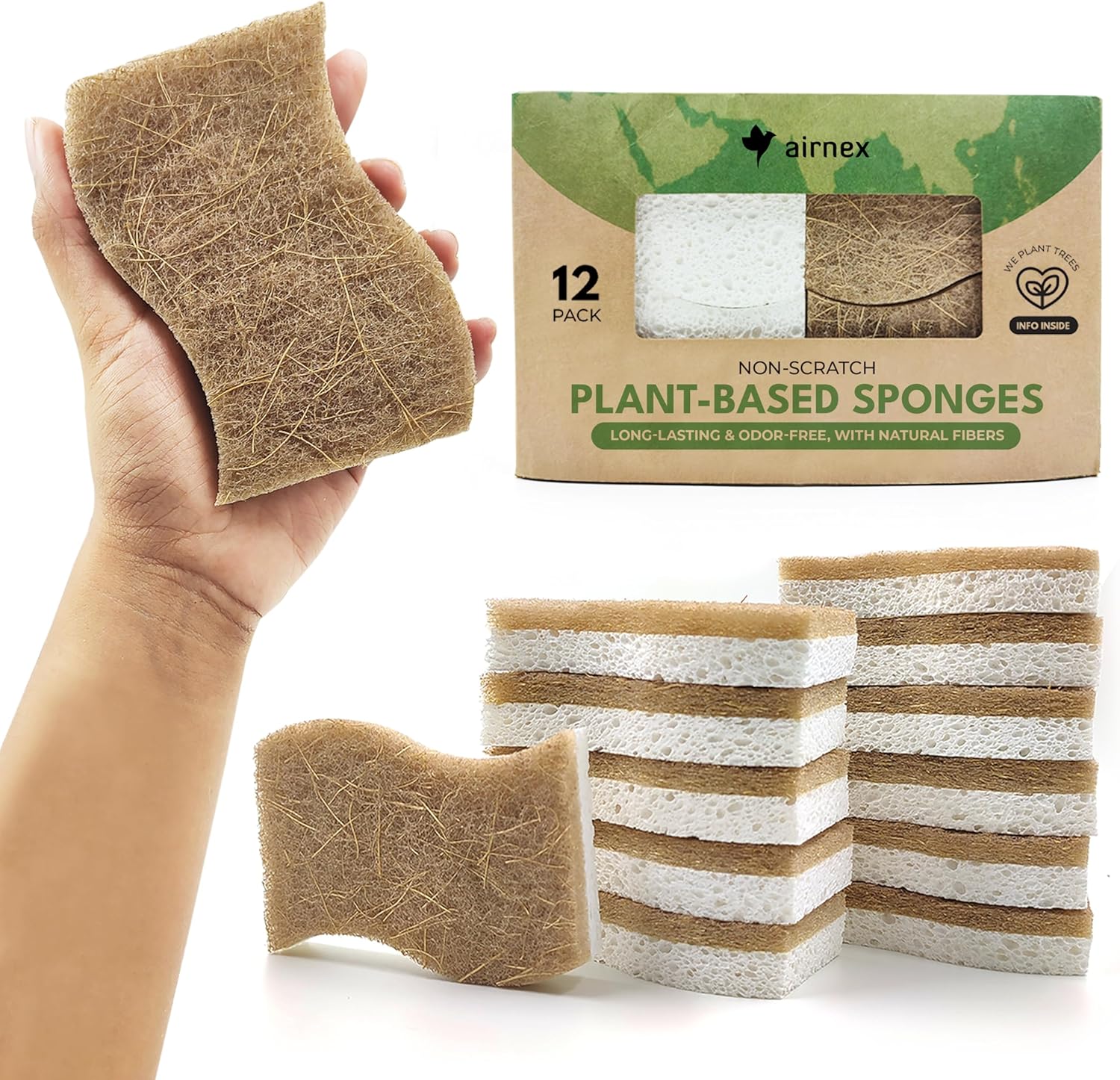
This is my go-to for grates and stuck-on spots. The soft cellulose side soaks up grease and wipes the surface, while the coconut-fiber side gives you enough bite to lift baked-on bits without scratching the finish.
I love that it dries fast instead of staying damp and smelly like an old plastic sponge, and when it finally wears out, the cellulose part is compostable rather than another bit of plastic headed for landfill.
If you want a deeper look at the options, here is my guide to a good non-scratch scrubber.

I keep a couple of these set aside just for the cooktop. They are a genuine no-shed alternative to microfiber, so you are not rinsing plastic fibers down the drain every time you wash them.
Each one is absorbent enough to handle a real spill, wrings out and dries quickly between uses, and replaces a surprising number of paper towel rolls over its life, which is easier on both your bin and your budget.

The trick that saves the most scrubbing is to scrape first, then wipe.
This one pairs a firm edge for lifting dried, baked-on spills with a softer silicone side for gentler residue, and the shaped corners get into the curves around burners where a flat cloth just slides past.
It is BPA-free and built to last for years, so it quietly replaces the harsh chemicals and hard scrubbing you would otherwise reach for.

Mix your spray once and refill it forever, instead of buying a new plastic bottle of cleaner every few weeks.
The glass handles vinegar and lemon far better than thin plastic, which can cloud and pick up odors over time, and the UV-protective amber tint keeps a citrus or essential-oil mix stable for longer.
The adjustable nozzle lets you switch between a light mist for everyday wiping and a direct stream for stubborn spots, so this one bottle covers both routines in the article.
Prefer to Watch? Here’s the Quick Version
Prefer to watch? This short video walks through cleaning a gas stove top naturally, from the everyday spray-and-wipe to tackling baked-on spots.

Small Kitchen Choices, Real Change
Cleaning a gas stove top naturally comes down to a cool surface, a gentle spray, the right cloth, and a little patience with baked-on spots.
No lye, no bleach, no scratched finish. It is genuinely that simple.
What keeps me doing it this way is not just a tidy kitchen, though I do love that. It is knowing the choices I make at the sink are kinder to my own health and to the water everything rinses into.
Small kitchen habits really do add up, for the planet and for you.
If you want to start with one thing, start with a good non-scratch scrubber. It is the tool that turns the gentle method from a nice idea into something you actually keep up.
- Why Does Cleaning Your Gas Stove Top Matter?
- What You’ll Need (and What to Skip)
- How Do You Clean the Surface of a Gas Stove Top?
- How Do You Clean Gas Stove Grates and Burner Caps?
- Why Is My Gas Flame Yellow or Orange?
- Caring for Different Stove Top Surfaces
- Gas Stove Top Cleaning: Quick Reference
- What Actually Goes Down Your Drain?
- Common Mistakes to Avoid
- How to Keep Your Gas Stove Top Clean
- The Best Eco-Friendly Tools for Cleaning a Gas Stove Top
- Prefer to Watch? Here’s the Quick Version
- Small Kitchen Choices, Real Change
- Frequently Asked Questions
Find More Tips At:


Frequently Asked Questions
Can you put gas stove grates in the dishwasher?
It depends on the material. Coated or porcelain-enamel grates can usually go in the dishwasher, though hand washing is gentler on the finish, so check your manual first. Uncoated cast-iron grates should never go in the dishwasher, because the porous metal soaks up water and rusts. When in doubt, hand wash and dry right away.
Is vinegar safe to use on a gas stove top?
Yes, diluted white vinegar is safe and effective on most gas stove tops, and its acidity cuts grease well. Avoid prolonged contact with natural stone or delicate finishes, and never mix it with bleach, which creates toxic fumes. For daily use, a quick spray and wipe is all you need.
Why is my gas flame yellow after cleaning?
A yellow flame after cleaning usually means a burner port is clogged or a part went back on damp. Let everything cool, clear each port with a thin metal pin or wire, never a wooden toothpick, and make sure the cap and head are completely dry before relighting. If the flame stays yellow or you smell gas, stop and call a professional.
What can I use instead of chemical stove cleaner?
A lemon-water spray, diluted white vinegar, baking soda used as a gentle scrub, and a drop of natural dish soap handle almost every stovetop mess. Pair them with a non-scratch scrubber and a reusable cloth and you rarely need anything stronger. These pantry basics clean well without the harsh residue or runoff of chemical degreasers.
How often should you clean a gas stove top?
A quick wipe after each cooking session plus one deeper clean a week keeps a gas stove top from building up heavy grease. The daily wipe takes under a minute while the surface is still slightly warm. Staying ahead of it means you almost never face a baked-on mess.
