
To clean wooden kitchen utensils, hand-wash them in warm soapy water right after use, rinse, and dry them upright straight away.
Never soak them, never put them in the dishwasher, and oil them now and then with food-grade mineral oil or a beeswax conditioner.
Cared for this way, a good wooden spoon lasts for years. This guide also covers how to sanitize wooden utensils after raw meat and how to rescue ones that have gone rough or fuzzy.
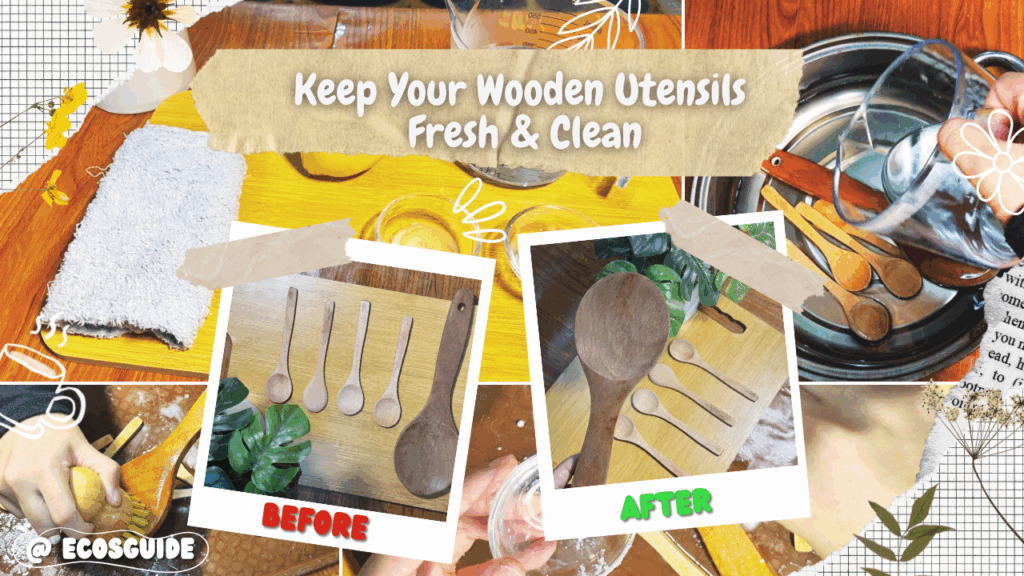
I came back to wooden utensils after years of plastic ones, and I am so glad I did. What keeps me there is not only how they feel in my hand.
It is knowing they are not shedding tiny bits of plastic into my food, or sitting in a landfill for centuries after I am done with them.
I have also watched friends ruin gorgeous spoons in a single dishwasher cycle, and it always makes me wince. A little care goes a long way.
Below, I will show you how to clean wooden kitchen utensils the gentle way, the same routine I use to keep mine going for years.
Key Takeaways
- Wash wooden utensils in warm soapy water right after use, dry them upright, and never soak them or put them in the dishwasher.
- To sanitize after raw meat, scrub with coarse salt and half a lemon. You do not need bleach, and you do not need to boil them.
- Oil them now and then with food-grade mineral oil or a beeswax conditioner. Avoid olive, vegetable, and seed oils, which turn rancid.
- Rough or fuzzy spoons are not ruined. A light sand with fine-grit sandpaper, then a re-oil, brings them back.
Why Do Wooden Utensils Need Special Care?
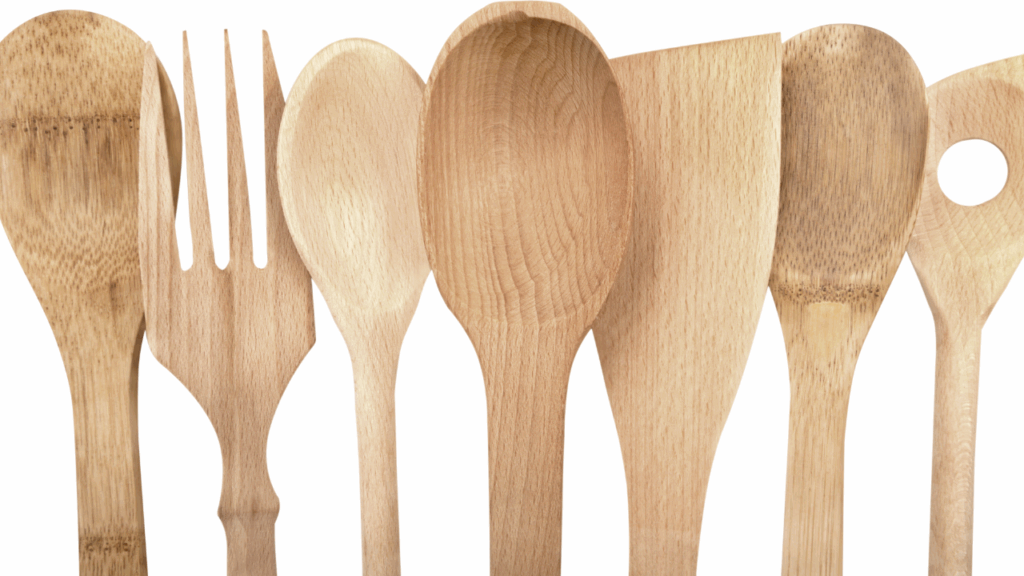
Wooden utensils need special care because wood is porous, which means it absorbs water, oils, and odors in a way that metal and plastic simply do not.
A wooden utensil is a natural material with an open grain that swells when it is wet and dries out when it is not, so heat, long soaks, and harsh detergents all work against it.
Treat it gently and it rewards you for years. Drown it or bake it and it cracks, splinters, or warps.
That is the whole reason the rules below exist. Everything comes back to one simple idea: keep water contact short, keep heat low, and put the natural oils back now and then.
What You Need to Clean Wooden Utensils
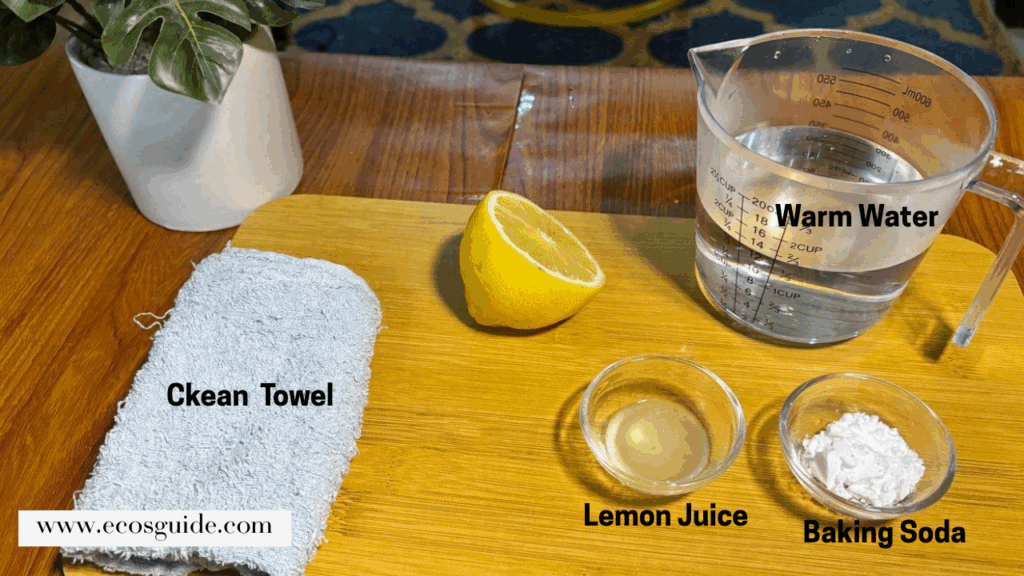
For everyday cleaning you need almost nothing: warm water, a gentle dish soap, a soft brush or scrubber, and a clean towel.
For a deeper refresh you will want baking soda and a lemon. For conditioning, keep food-grade mineral oil or a beeswax conditioner on hand. That is the entire kit.
I use a plain, fragrance-free eco-friendly dish soap, so there is nothing harsh soaking into the grain, and the baking soda I reach for is the same box I use for half the jobs in my kitchen.
For sanitizing after raw meat, all you need is coarse salt and half a lemon.
A quick word on oils, because this is where most wooden spoons quietly die: skip olive, vegetable, and seed oils. They turn rancid over time and leave your utensils smelling off. Food-grade mineral oil or beeswax is the safe, lasting choice.
How to Clean Wooden Kitchen Utensils Safely
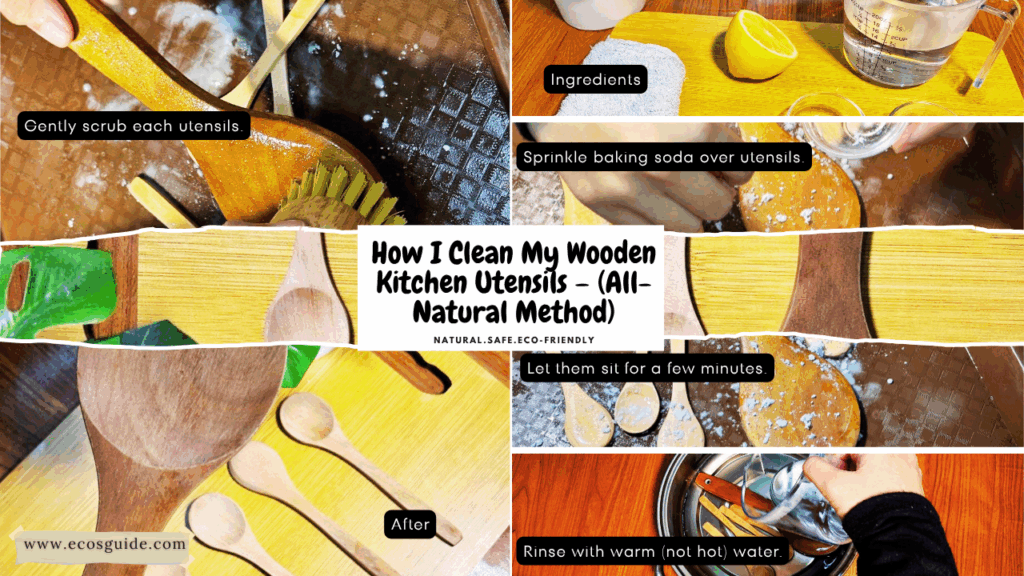
To clean wooden kitchen utensils, hand-wash them in warm soapy water right after use, rinse, and dry them upright immediately.
Never soak them and never put them in the dishwasher. That single habit does more for the lifespan of your utensils than anything else.
The Daily Clean
Right after cooking, wipe off any food, then wash the utensil in warm (not hot) soapy water with a soft bamboo dish brush or scrubber.
Rinse it under running water, give it a quick dry with a towel, then stand it upright in a jar or rack so air can reach all sides.
Standing them up rather than laying them flat is the small pro tip that keeps moisture from settling into one spot.
If a spoon picks up a stain or a bit of stuck-on food, sprinkle a little baking soda onto a cut lemon and scrub gently. The mild abrasion lifts it without sandpapering the wood.
Deep Cleaning and Deodorizing (Monthly Reset)
To remove odors from wooden spoons, scrub them with baking soda and a cut lemon (or a little white vinegar), rinse, and dry. No chemicals needed.
Once a month or so, I give my most-used pieces this reset to clear out the garlic, onion, and curry smells that build up over time.
If you want to use vinegar, wipe or scrub the utensil with a vinegar-dampened cloth, then rinse and dry. Do not soak it.
A long vinegar bath does the same damage as any other long soak. For a deeper look at gentle, natural options, my guide to an environmentally friendly disinfectant walks through what actually works without bleach.
How to Sanitize Wooden Utensils After Raw Meat
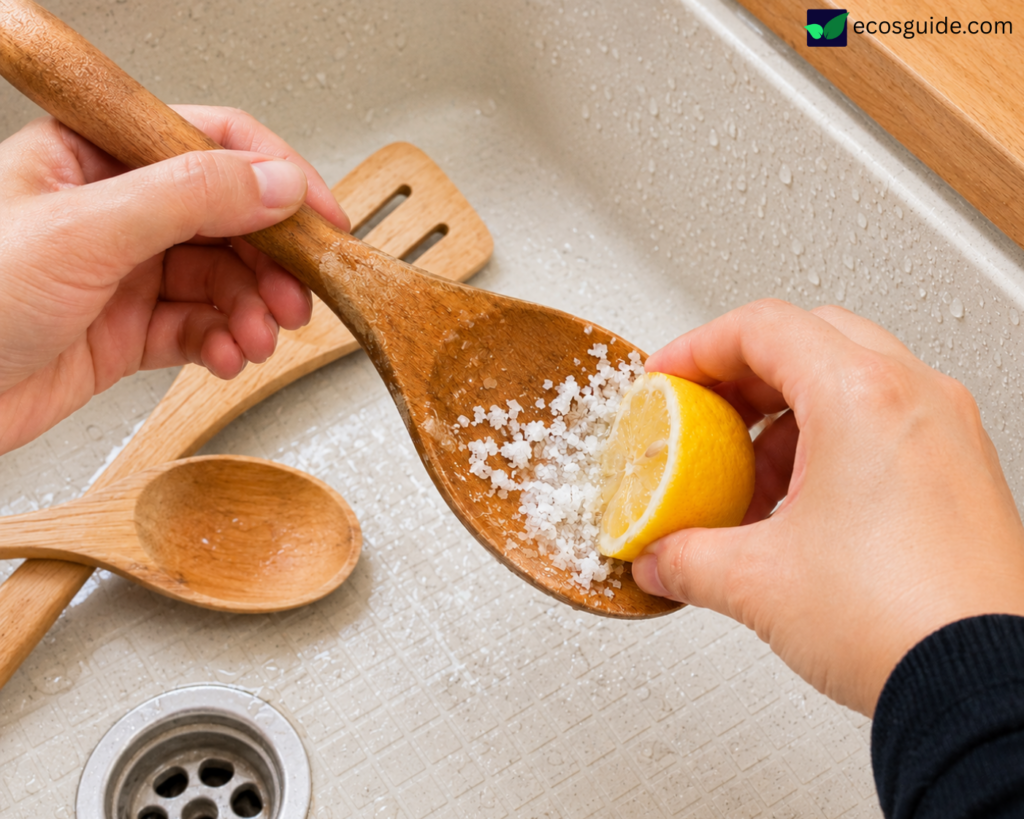
Wooden utensils can be sanitized. After raw meat, wash them in hot soapy water, then scrub with coarse salt and half a lemon, and dry them completely.
You do not need bleach, and you do not need to boil them.
I know the instinct after raw chicken is to reach for something drastic, but you can relax. Wash the utensil well in hot, soapy water first to physically remove the residue.
Then sprinkle coarse salt over it, take half a lemon, and scrub.
If you would like an extra step, you can carefully pour just-boiled water over the utensil. Keep it to a brief pour, not a soak and not a rolling boil, since prolonged heat and water are exactly what crack wood.
That water comes straight from your kettle, and if you are choosing a plastic-free electric kettle, I have rounded up the ones I would actually buy.
For more on sanitizing without harsh chemicals, the same chemical-free disinfecting methods apply here too.
Common Mistakes to Avoid
A few habits cause almost all the wooden-utensil heartbreak I see. Avoid these and your spoons will outlast most of the other tools in your kitchen.
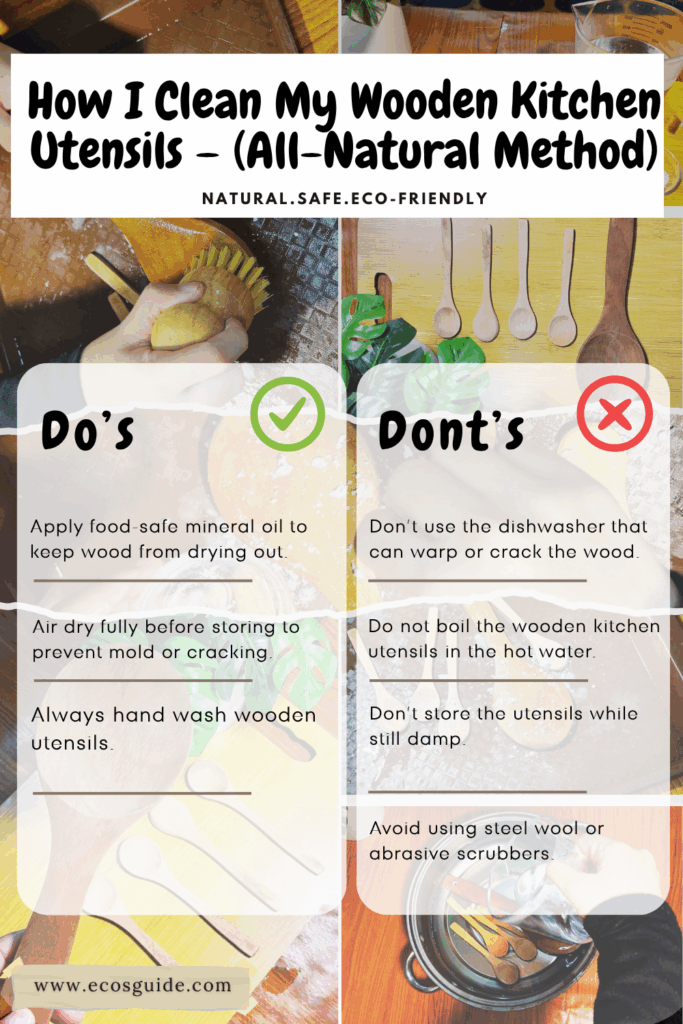
- Putting them in the dishwasher. The heat, the long water exposure, and the strong detergent together crack and warp wood faster than anything else.
- Boiling or submerging them. Do not boil or submerge them, because prolonged heat and water strip the natural oils and leave them brittle and splinter-prone.
- Using oils that go rancid. Olive, vegetable, and seed oils turn over time. Stick to food-grade mineral oil or beeswax.
- Not drying them. Leaving them wet, or flat in a damp spot, invites cracking and mold.
How to Maintain, Store, and Condition Wooden Utensils
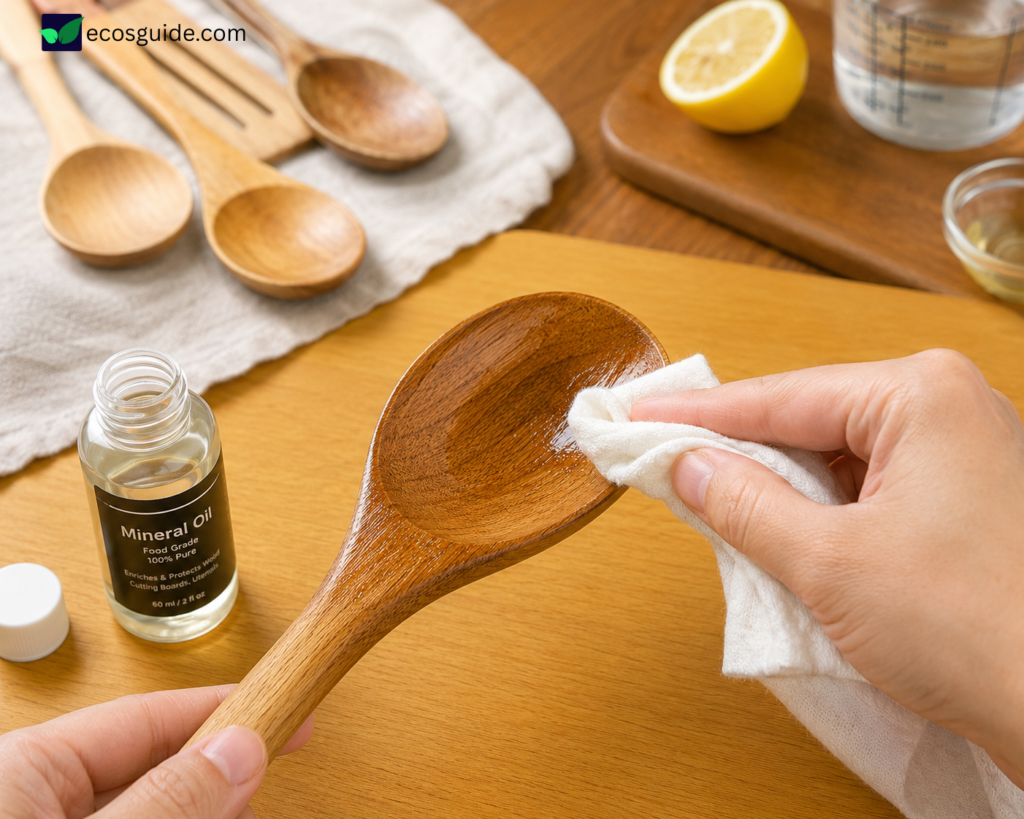
Use food-grade mineral oil or a beeswax conditioner on wooden utensils, and avoid olive, vegetable, and seed oils, which can turn rancid and smell.
Oiling is what keeps the wood from drying out, cracking, and looking gray. Once a month for everyday pieces, or whenever the wood starts to look dull and thirsty, is plenty.
To condition, make sure the utensil is clean and fully dry, then rub a small amount of oil over the whole surface with a cloth, going with the grain.
Let it sit for a few hours or overnight, then wipe off any excess. That is the whole job.
Storage matters more than people expect. Wooden utensils want air around them, so a crock or a jar on the counter, or an open rail, beats a sealed, airless drawer where damp lingers.
If you keep them in a drawer, make sure they are bone dry first and that the drawer is not trapping moisture. Good airflow is half the battle against odors and mold.
My everyday go-to is plain food-grade mineral oil. It is inexpensive, it never goes rancid, and it is the same thing sold in pharmacies, so it is easy to find.
The Thirteen Chefs Food Grade Mineral Oil is the one I would point you to first. If you would like a richer finish, a beeswax conditioner like the Howard Butcher Block Conditioner blends mineral oil with beeswax and carnauba for a slightly nicer feel.
And if you specifically want a plant-based option, walnut oil works well, with one important caveat: skip it entirely if anyone in your home has a nut allergy. Greener Chef Walnut Oil is a reliable choice there.
I have not personally tested every one of these in my own kitchen, but based on their ingredients and the reviews from eco-minded buyers, they check the right boxes.
One thing worth knowing: over time your utensils will darken and develop a soft, worn sheen.
That is patina, the natural aging of well-loved wood, and it is a sign of good care, not damage. Mine have it, and I love it.
Best Oils for Wooden Kitchen Utensils
| Oil or conditioner | Use it? | Why |
| Food-grade mineral oil | Yes, go-to | Inexpensive, easy to find, and never turns rancid. The reliable everyday choice. |
| Beeswax conditioner (with mineral oil) | Yes, upgrade | Adds a water-resistant finish and a richer look. A nice step up from plain oil. |
| Walnut oil | Yes, with caution | A food-safe plant-based option. Skip it entirely if anyone in your home has a nut allergy. |
| Fractionated coconut oil | Okay | Stays liquid and resists rancidity better than regular coconut oil. A fine natural alternative. |
| Olive oil | Avoid | Turns rancid over time and leaves utensils smelling off. |
| Vegetable and seed oils (including rapeseed and sunflower) | Avoid | Go rancid and can leave a sticky residue and sour smell. |
Why Are My Wooden Utensils Rough or Fuzzy? (And How to Fix Them)
Fuzzy or rough wooden utensils are not ruined. The grain has raised from water exposure, and you can smooth it back down with fine sandpaper, then re-oil.
This is a rescue, not a funeral.
When wood gets wet again and again, the tiny fibers on the surface swell and stand up, leaving that rough, fuzzy feel.
To fix it, let the utensil dry completely, then sand it lightly with fine-grit sandpaper, going with the grain, until it is smooth again. Wipe away the dust and condition it with your go-to mineral oil or beeswax.
The same approach revives a gray, dried-out piece: a light sand, a good oiling, and it often looks close to new.
When to Replace Your Wooden Utensils
Most wooden utensils last around five years or longer with good care. But a few signs mean it is genuinely time to let go.
Replace a piece when it has deep cracks or splinters that will not sand out, an odor that will not leave no matter how you clean, mold that keeps returning, or visible warping and flaking.
At that point the wood can harbor bacteria in places you cannot reach, and replacing it is the safer call.
When you do replace them, this is a lovely chance to choose better. I would look at an FSC-certified set, which means the wood comes from responsibly managed forests.
The Caraway 5-Piece Wooden Utensil Set is my eco pick: FSC-certified birch, non-toxic, and free of the microplastics that plastic utensils shed.
If that sits above your budget, the Pacific Merchants Beechwood Set is FSC-certified French beech at a friendlier price.
While you are refreshing your kitchen tools, it is worth swapping in other plastic-free basics too, like a reusable dish scrubber that will not crumble into microplastics over your sink.
Bonus Tips for Brand-New Wooden Utensils
A brand-new wooden utensil benefits from a little settling-in.
Give it a quick wash and dry, then a first coat of food-grade mineral oil before you put it to work, so the grain starts out sealed and protected. After that, just fold it into your normal routine and watch it develop character over the months.
New wood looks uniform and pale; well-used wood earns its color and grain.
If your new piece arrived already lightly oiled, you can skip straight to using it and oil it the first time it starts to look dry.
Some people like to give a brand-new spoon a brief rinse and let it rest for a day before the first oiling, which lets any factory dust wash away and the wood settle.
It is not essential, but it is a nice ritual, and it sets the tone for treating the piece gently from day one.
Why Choose Wooden Utensils Over Metal or Plastic?
Wood is gentle on your pots and pans, it will not scratch nonstick coatings the way metal can, and it stays comfortable to hold even next to a hot pan.
But the reason I trust it goes a little deeper. Research led by Dr. Dean Cliver at UC Davis found that bacteria applied to wood surfaces are quickly drawn into the grain.
There, they stop multiplying and die off. Scratched plastic, by contrast, holds bacteria on the surface where it can survive.
That is a big part of why a well-kept wooden utensil does not need bleach to be safe.
The same pattern shows up in wider cutting board food safety research: it is the deep knife grooves in old plastic that trap bacteria, not the wood.
For me, though, the real difference is what happens past my sink. A plastic utensil sheds microplastics into your food and your wastewater over its life, and the moment you bin it, it lingers for centuries.
A wooden one that you clean with baking soda and lemon and oil with mineral oil sends nothing harsh down the drain. When I think about where everything we rinse away actually ends up, that matters to me.
See It in Action
If you would rather watch than read, the short video below walks through my whole routine, from a quick wash to oiling a tired-looking spoon back to life.

Final Thought
Caring for wooden utensils comes down to a few gentle habits: wash quickly in warm soapy water, never soak or dishwasher them, dry them upright, oil them now and then, and reach for salt and lemon after raw meat.
Do that and they will serve you for years. I keep coming back to wood because it asks for so little and gives back so much, and because every small swap away from plastic and harsh chemicals is one less thing heading down the drain or into the ground.
If you are rethinking your other tools too, a few plastic-free kitchen swaps are an easy place to start.
- Why Do Wooden Utensils Need Special Care?
- What You Need to Clean Wooden Utensils
- How to Clean Wooden Kitchen Utensils Safely
- How to Sanitize Wooden Utensils After Raw Meat
- Common Mistakes to Avoid
- How to Maintain, Store, and Condition Wooden Utensils
- Why Are My Wooden Utensils Rough or Fuzzy? (And How to Fix Them)
- When to Replace Your Wooden Utensils
- Bonus Tips for Brand-New Wooden Utensils
- Why Choose Wooden Utensils Over Metal or Plastic?
- See It in Action
- Final Thought
- Frequently Asked Questions
Find More Tips At:


Frequently Asked Questions
How often should I boil my wooden spoons?
You do not need to boil them at all. Boiling or soaking wooden spoons exposes them to prolonged heat and water, which strips their natural oils and can crack the wood. After raw meat, a scrub with coarse salt and half a lemon sanitizes them safely, or you can carefully pour just-boiled water over them, never a soak.
Can you soak wooden spoons in vinegar?
No, you should not soak wooden spoons in vinegar or anything else. A long soak swells and weakens the wood. Instead, wipe or scrub them with a vinegar-dampened cloth to deodorize, then rinse and dry them right away.
Are wooden utensils safe after raw chicken?
Yes, wooden utensils are safe to use after raw chicken as long as you clean them properly. Wash them in hot soapy water to remove residue, then scrub with coarse salt and half a lemon and dry completely. Research on wood surfaces shows bacteria are drawn into the grain and die off rather than surviving on top, so bleach is not necessary.
What is patina?
Patina is the soft sheen and gradual darkening that wood develops with age and use. It is a sign of well-cared-for wood, not damage or dirt, and many people, myself included, think it is the most beautiful stage of a wooden utensil’s life.
